


How Much Does a Commercial Espresso Machine Cost in 2026?
|
|
Time to read 17 min
Your Cart
Your cart
Favorites





Shop by Brands

Shop by Brands
Shop by Brands


Shop by Brands


Shop by Brands
Shop by Brands
|
|
Time to read 17 min
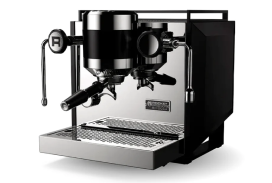
Commercial espresso machines range from $4,600 for a compact heat exchanger to over $32,000 for a handcrafted multi-boiler system. The price you'll actually pay depends on boiler architecture, group head count, automation level, and how the machine handles back-to-back extractions under pressure.
Price alone won't tell you which machine fits your café. A $13,000 dual boiler can outperform a $19,000 heat exchanger in shot-to-shot temperature accuracy. A $7,999 heat exchanger with volumetric controls may handle your morning rush better than a pricier semi-automatic. The architecture behind the price tag matters more than the number on it.
This guide organizes café espresso machine pricing by boiler type, explains what changes at each level, and covers the costs most buyers forget to include in their equipment budget.
Entry-level heat exchanger machines start at $4,600 for semi-automatic models and reach $9,900 for volumetric options with advanced thermal control.
Dual boiler machines in the $13,000 to $19,448 range offer independent brew and steam temperature control for tighter shot accuracy.
Premium multi-boiler machines with pressure profiling, saturated groups, and individual brew boilers start around $17,499 and can exceed $32,999 for high-output specialty platforms.
Total café equipment cost includes a commercial grinder ($949 to $6,210), water filtration, installation, and accessories on top of the machine price.
Boiler architecture is the single biggest factor separating price tiers, because it directly affects temperature recovery, extraction precision, and peak-hour output.
Café espresso machine cost isn't random. Each price jump reflects a specific engineering choice that affects daily performance. Here's how each factor moves the number.
This is the most important variable.
Heat exchanger (HX) machines use one boiler with a separate circuit for brew water. They allow simultaneous brewing and steaming at a lower cost. HX designs work well for cafés with steady, moderate output and milk-heavy menus. The trade-off is less precise brew temperature control compared to dual boiler or multi-boiler systems.
Dual boiler machines separate the brew and steam circuits into independent boilers. Each boiler holds its own temperature. This means tighter shot-to-shot accuracy and faster thermal recovery between pulls. Dual boilers are the standard choice for specialty cafés where extraction precision directly affects drink quality.
Multi-boiler machines dedicate an individual brew boiler to each group head. Every group maintains its own temperature, independently regulated by PID. Some multi-boiler designs also use saturated group heads, where the group is directly integrated with the boiler for maximum thermal stability. This architecture delivers the highest extraction repeatability under heavy, sustained use.
A 1-group machine handles lower daily volumes, typically up to 50 drinks per day. A 2-group machine covers most independent café volumes, roughly 100 to 200 drinks daily. A 3-group machine is built for high-traffic venues pulling 200 or more drinks during peak service. Each additional group head adds boiler capacity, plumbing, and heavier construction, all of which increase cost.
Semi-automatic machines require the barista to start and stop each shot manually. Volumetric machines let you program shot volumes so every extraction stops at the same point. Gravimetric (brew-by-weight) machines add another layer of precision by measuring the weight of liquid in the cup. More automation raises the price, but it also reduces barista error during busy shifts.
Stainless steel frames, copper or steel boilers, insulated steam lines, and commercial-grade wiring all affect cost. They also extend machine life, which matters when you're calculating cost per year of operation rather than purchase price alone.
Italian manufacturers like Nuova Simonelli, Rocket Espresso, Sanremo, and Astoria carry decades of commercial espresso engineering. American-built machines from Slayer, Synesso, and Mavam reflect specialty-focused design philosophies and premium component sourcing. Dutch manufacturer Kees van der Westen produces handcrafted, high-output machines with a focus on thermal engineering. You're paying for tested reliability, parts availability, and support infrastructure.
These machines serve small cafés, coffee carts, offices, restaurants, and low-to-moderate-volume shops pulling up to roughly 150 drinks per day. Most are 1-group or compact 2-group models with heat exchanger boilers.
Heat exchangers are a practical starting point for cafés focused on milk-based drinks at a moderate pace. They handle simultaneous brewing and steaming well. The limitation is the brew temperature precision. HX machines deliver good thermal stability, but they can't match the shot-to-shot accuracy of a dedicated brew boiler.
Here's how the entry-level lineup compares:
|
Machine |
Boiler |
Automation |
Drinks/Day Guide |
Price (USD) |
|
Appia Life Compact Semi-Auto (Nuova Simonelli) |
Heat Exchanger |
Semi-automatic |
Up to 80 |
$4,600 |
|
Classe 5 S Compact (Rancilio) |
Heat Exchanger (Steady Brew) |
Semi-automatic |
Up to 80 |
$4,900 |
|
Appia Life Compact (Nuova Simonelli) |
Heat Exchanger |
Volumetric |
Up to 100 |
$5,450 |
|
AB200 (Astoria) |
Heat Exchanger |
Volumetric |
Up to 100 |
$6,499 |
|
Sanremo ZOE Compact (Sanremo) |
Heat Exchanger |
Volumetric |
Up to 120 |
$6,800 |
|
Boxer Timer EVO (Rocket Espresso) |
Heat Exchanger |
Volumetric + Shot Timer |
Up to 150 |
$7,999 |
|
Sanremo D8 (Sanremo) |
Stainless Steel HX |
Volumetric |
Up to 150 |
$9,900 |
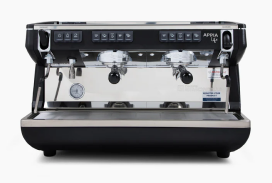
The Appia Life Compact Semi-Auto is the most affordable commercial machine in this collection. It gives the barista full manual control over shot timing, paired with Nuova Simonelli's Soft Infusion System for even puck saturation before full extraction pressure kicks in. For a startup café on a tight budget, this machine covers the essentials without paying for automation you might not need yet.
The Classe 5 S Compact uses Rancilio's Steady Brew circuit to keep extraction temperature more stable than older HX designs. It's a solid option for cafés that want heat exchanger simplicity with tighter thermal control. Brushed stainless steel construction and a compact footprint make it easy to place on smaller counters.
The volumetric version of the Appia Life Compact adds programmable shot volumes. Your barista presses a button, and the machine stops at the same volume every time. It also includes automated cleaning cycles via a digital display. Available in 1-group and 2-group compact configurations.
The AB200 brings LED lighting, auto-volumetric dosing, energy-saving modes, and a customizable exterior. Side panels can be swapped or painted to match your café branding. Available in black or white, with optional autosteam and a touchscreen display. At this price, it's a practical choice for food service counters where espresso is part of the menu but not the entire focus.
The ZOE Compact features programmable pre-infusion, volumetric controls, and Sanremo's hand-built Italian construction. It's compact enough for a small café or cart, with enough steam power for steady milk drink output. The ZOE strikes a balance between footprint and capability that works well for single-barista operations.
The Boxer Timer EVO is Rocket Espresso's flagship heat exchanger for commercial use. It includes digital shot timers, volumetric dosing, automatic backflush, and cool-touch steam wands. The 2-group version has a 13.2-liter steam boiler, giving it strong steam recovery for milk-heavy menus. At $7,999, it's the most capable heat exchanger in this collection.
The Sanremo D8 pushes the upper edge of entry-level pricing. It features a stainless steel boiler, adjustable group temperature control, volumetric dosing, and Sanremo's energy-saving insulation. The D8 bridges the line between entry-level heat exchangers and mid-range machines, making it a good fit for growing cafés that want more thermal control without jumping to a dual boiler.
This tier is where boiler architecture shifts. Instead of a single boiler with a heat exchange circuit, these machines use dedicated, independently controlled brew and steam boilers. The result is tighter brew temperature accuracy, faster recovery between shots, and more consistent extraction under sustained use.
Dual-boiler and multi-boiler machines in this range suit cafés pulling 150 to 300+ drinks per day, specialty shops that prioritize extraction quality, and operators who need predictable output across multiple baristas.
Here's how the mid-range options line up:
|
Machine |
Boiler |
Key Feature |
Drinks/Day Guide |
Price (USD) |
|
RE Doppia (Rocket Espresso) |
Dual Boiler, Saturated Groups |
PID + 4.3" TFT display |
150-250 |
$13,000 |
|
F18 (Sanremo) |
Multi-Boiler |
Real-Time Stability Group (±0.2°C) |
200-350 |
$19,200 |
|
Steam EP (Slayer) |
Multi-Boiler |
Volumetric + pre-infusion |
200-350 |
$19,380 |
|
Tempesta (Barista Attitude) |
Multi-Boiler |
Live pressure/flow graph per shot |
200-350 |
$19,448 |
The RE Doppia is a dual boiler with saturated group heads. The brew boiler is PID-controlled for stable extraction temperature, while a pressure transducer manages the steam boiler for fast steam recovery. A 4.3-inch TFT front panel display handles programming, with Wi-Fi module support for browser-based recipe management. Available in 2-group and 3-group configurations, in Chrome, White, Black, Blue, or custom color. At $13,000 for the 2-group, it's the most accessible dual boiler with saturated groups in this collection.
The F18 is a multi-boiler machine with Sanremo's proprietary Real-Time Stability Group technology. This keeps each group at the programmed temperature within ±0.2°C accuracy, even during heavy back-to-back extraction. Four programmable volumetric buttons per group, low-pressure pre-infusion with 0.1-second tolerance, an energy-saving system that cuts consumption by up to 40%, and an automatic cleaning cycle are all standard. The cockpit-inspired design puts all controls within easy reach. Available in 2-group and 3-group.
The Steam EP is built in Seattle by a team of former café owners and baristas. Individual brew boilers with pre-heated water feed each group for rock-solid temperature stability. PID is adjustable in 0.1° increments per group head. Pre-infusion is programmable, and the machine offers 4 volumetric shot volumes per group. The low-profile countertop design improves barista-customer interaction. Electronic solenoid steam valves improve reliability and simplify maintenance. The EP is a fully volumetric machine with no manual paddle controls, making it ideal for multi-barista operations that need consistent output without relying on individual technique.
The Tempesta is the official machine of the World Barista Championship (through 2025). It features independent brew boilers, adjustable heaters in each group, and a large insulated steam boiler. The 5-inch touchscreen on each group displays a live graph of pressure and flow rate during every shot, giving baristas real-time extraction feedback. Volumetric programs include a timed pre-infusion stage of up to 10 seconds, with 6 shot profiles per group. Energy-saving eco modes can reduce costs by up to 47%. At $19,448 for a 2-group, it's aimed at specialty operators who want deep control over every variable.
This tier includes the machines that specialty cafés, flagship locations, roaster showrooms, and competition-level programs reach for. Every machine here uses a multi-boiler layout with individual brew boilers per group. Most include pressure profiling, saturated group heads, or both. Build quality, thermal engineering, and design all operate at the highest level.
Here's how the premium machines compare:
|
Machine |
Boiler |
Key Feature |
Price (USD) |
|
R9V (Rocket Espresso) |
Multi-Boiler, Saturated Groups |
5 programmable pressure profiles |
$17,499 |
|
Steam LP (Slayer) |
Multi-Boiler |
Manual paddle + volumetric record/replay |
$22,705 |
|
MACH Series (Mavam) |
Multi-Boiler |
Low-profile on-counter design |
$23,950 |
|
Café Racer (Sanremo) |
Multi-Boiler |
17 lb steel heating chambers per group |
$24,750 |
|
Black Eagle Maverick (Victoria Arduino) |
Multi-Boiler |
T3 + PureBrew + Gravimetric option |
$26,650 |
|
Under Counter (Mavam) |
Multi-Boiler |
Under-counter design, open-bar workflow |
$31,350 |
|
Spirit (Kees Van Der Westen) |
Multi-Boiler + HX hybrid |
2.1L brew boilers, 2 external pumps |
$32,999 |
The R9V is a true multi-boiler with saturated group heads. Each group gets its own independently controlled 1.9-liter brew boiler, plus PID controllers for both brew and steam. The defining feature is programmable pressure profiling with 5 preset programs that can be modified, plus a semi-automatic mode for full manual control. Volumetric shot programming and cool-touch steam wands are standard. For specialty cafés that want to dial in pressure curves for different roast profiles, the R9V delivers that control at a lower entry price than most profiling platforms. Available in 2-group and 3-group.
The Steam LP is Slayer's flagship. It provides both manual paddle controls and volumetric dosing. Baristas can "record" a manual shot during dial-in, then "replay" it volumetrically for the rest of the day. Individual brew boilers with pre-heated water, PID adjustable in 0.1° increments per group, and pre-infusion up to 10 seconds. The LP is the machine of choice for specialty cafés that want hands-on profiling capability alongside automated repeatability. Available in 2-group and 3-group, with color options including Matte Black, Bone Beige, Glossy White, Stainless, and Turquoise Blue. Comes with free installation and a 15-month parts warranty.
The MACH Series is Mavam's on-counter platform. Multi-boiler architecture, auto-volumetric dosing, and a low-profile modern design make it a strong choice for design-forward cafés that still need serious commercial output and temperature stability.
The Café Racer uses individual 17 lb (8 kg) steel heating chambers for each group, providing competition-level temperature control. Integrated digital screens on each group, adjustable pre-infusion for tailored volumetric profiles, cool-touch steam wands, and an energy-saving insulation system are all standard. The motorcycle-inspired design and customizable finishes (including wood accents) make the Café Racer a visual centerpiece. Multi-boiler with independent PID across all boilers. Available in 2-group and 3-group. Includes free installation.
The Black Eagle Maverick is the evolution of Victoria Arduino's World Barista Championship platform. T3 technology lets the barista independently set three temperatures: brewing group, water infusion, and steam. PureBrew technology uses pulsating water pressure frequencies to extract different flavor profiles based on coffee origin and freshness. Available in both volumetric and gravimetric configurations. The gravimetric option displays brew weight on the group screen, allowing extraction to stop at a target weight. Energy savings of 37% compared to the previous model. Comes with a 24-month parts warranty (standard) or a Gold Warranty that adds free installation plus 12 months of labor coverage.
The Mavam Under Counter removes the traditional countertop machine entirely. The boiler and plumbing live below the counter. Only group heads and steam wands appear at bar level. This opens sightlines between barista and customer. The patented Heated Hose Transfer System maintains temperature stability across all groups. Individual brew boilers and pumps per group head. Winner of the Best New Product award at Coffee Fest.
The Spirit represents the top of Kees van der Westen's handcrafted line. It uses a hybrid thermal approach: one large steam boiler paired with exceptionally large independent brew boilers (2.1 liters each) for every group head. Brew boilers receive water pre-heated via heat exchanger for maximum temperature stability. Two external pumps ensure brew pressure isn't affected by steam boiler refills. Saturated group heads, pre-infusion pressure profiling, shot timers above each group, an illuminated rear panel (customizable with your café logo), and built-in eco mode. Available in 2-group (Duette) and 3-group (Tripette). Handcrafted in the Netherlands. At $32,999 for the 2-group, it's the most expensive machine in this collection and built for the most demanding coffee programs.
The espresso machine is the highest single cost, but it's not the only one. A realistic equipment budget accounts for at least three other categories.
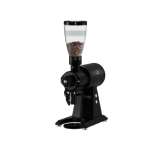
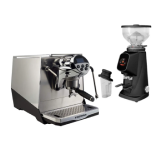
A commercial espresso grinder typically costs $649 to $16,899, depending on burr size, dosing method, and brand. Grind quality directly affects extraction. Inconsistent particle sizes lead to uneven extraction, which means wasted coffee and drinks that don't taste right. Buying the grinder alongside the machine as a bundle can sometimes reduce the combined cost.
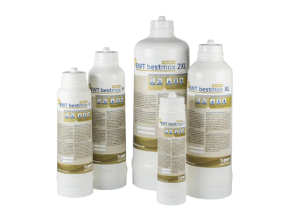
Scale buildup from hard water clogs boilers, corrodes internal parts, and shortens machine life. Water filtration products range from $26 for a basic sediment filter to $3,829 for a full reverse osmosis system. Most cafés land somewhere in the middle, with a cartridge filter and filter head setup costing $180 to $390. Replacement cartridges are an ongoing expense. Skipping filtration voids most manufacturer warranties.
Commercial machines typically need 220V power, a dedicated circuit (30A to 50A depending on the machine), and direct plumbing. Installation costs vary by location and depend on whether the space was previously wired for espresso service. A licensed plumber and electrician may both be needed. Get quotes from contractors before finalizing your equipment budget, since electrical and plumbing work can add a meaningful amount to total costs.
Tampers, knock boxes, cleaning chemicals, portafilter baskets, milk pitchers, and scales complete the setup. The total varies based on what you already have and the quality level you choose.
These numbers don't include coffee beans, furniture, POS systems, or rent. They cover the equipment needed to pull espresso and steam milk on day one.
Renewed (refurbished) commercial espresso machines can lower your equipment cost meaningfully, especially when you're stretching a startup budget or opening a second location.
The difference between a renewed machine that performs and one that creates problems comes down to the renewal process. A credible process includes descaling with non-toxic agents, replacing parts based on engineered lifespan (not just current condition), testing boilers and electrical systems for safety, and running the machine for hours to confirm thermal stability and flow rate consistency. Look for a seller who backs renewed machines with a 12-month parts warranty.
The savings from buying renewed can free up budget for a better grinder or a proper filtration system. Renewed machines are worth considering when your budget is tight, you want commercial capability at a lower entry cost, or you're equipping a second location.
Financing is available on most commercial espresso machines, grinders, and bundles. It spreads the cost over months instead of requiring the full amount at purchase.
For a café startup, this can keep cash reserves intact for rent, inventory, and payroll during the first few months of operation. A $19,200 machine financed over 24 months may be more manageable than a single upfront payment, especially when you're also buying a grinder, filtration, and accessories.
Financing doesn't reduce the total cost. It changes the cash flow timeline. For buyers who have revenue coming in, it's a practical tool. For buyers still finalizing their business plan, it's worth mapping out monthly payments alongside projected sales before committing.
Picking the right price tier depends on how your café actually operates. Here's how to think through the decision.

Under 100 drinks per day works well with a compact 1-group heat exchanger in the $4,600 to $7,999 range. Between 100 and 250 drinks per day calls for a 2-group dual boiler or entry multi-boiler in the $13,000 to $19,448 range. Above 250 drinks, you're looking at high-end multi-boiler systems starting at $17,499 and up.
Peak-hour demand matters more than total daily count. A café that pulls 80% of its drinks between 7 and 10 AM needs more headroom than one with even traffic all day.
A menu heavy on lattes, cappuccinos, and flat whites demands strong steam power and fast recovery. Heat exchanger machines handle this fine at moderate volumes. Multi-boiler machines maintain steam pressure more reliably under heavy, sustained load. If your menu is espresso-forward with fewer milk drinks, steam capacity matters less than shot precision.
Volumetric machines reduce barista error. Semi-automatic machines give skilled baristas more control. If you're hiring entry-level staff, volumetric dosing and features like automatic tamping cut training time. Auto-steam wands, available on models like the La Cimbali M26 TE and Astoria AB200, remove another variable from your team's plate.
A 1-group compact machine fits tight spaces like a coffee cart, small kiosk, or office break room. Larger 2-group and 3-group machines need more counter depth, wider electrical hookups, and direct plumbing. If counter space is limited, the Mavam Under Counter design moves the machine body below the bar entirely.
Many cafés spend more than they need to. A small café pulling 80 drinks per day doesn't need a $24,750 multi-boiler. A heat exchanger or entry-level dual boiler handles that volume without strain. Match the machine to your actual demand, not your projected best-case scenario. You can always upgrade later, but overspending on equipment at launch puts pressure on your cash flow when you can least afford it.
Choosing the right boiler architecture is the most consequential equipment decision you'll make. Here's a quick framework.
Heat exchanger machines ($4,600 to $9,900) are the right fit for cafés with moderate volume, milk-heavy menus, budget-conscious startups, food service counters, and coffee carts. They handle simultaneous brewing and steaming at a lower cost than dual-boiler or multi-boiler platforms. The trade-off is less precise brew temperature control.
Dual boiler machines ($13,000 to $19,448) make sense for specialty cafés, operators who need tighter extraction accuracy, and shops where shot quality is a core part of the brand. Independent temperature control for brew and steam circuits delivers faster recovery and more repeatable results across shifts.
Multi-boiler machines ($17,499 to $32,999+) are built for high-volume specialty operations, flagship locations, competition programs, and cafés that demand maximum extraction precision under sustained load. Individual brew boilers per group, saturated group heads, and pressure profiling give baristas the deepest level of control available.
Commercial espresso machine pricing follows boiler architecture more than any other factor. Heat exchanger machines from Nuova Simonelli, Rancilio, Rocket Espresso, Astoria, and Sanremo cover the $4,600 to $9,900 range. Dual boiler and entry multi-boiler machines from Rocket Espresso, Sanremo, Slayer, and Barista Attitude fill the $13,000 to $19,448 range. Premium multi-boiler platforms from Rocket Espresso, Slayer, Mavam, Sanremo, Victoria Arduino, and Kees Van Der Westen push into $17,499 to $32,999 territory.
Choose a machine that matches your current demand without limiting future growth. Start with your peak-hour drink count, your menu's milk-to-espresso ratio, and your team's skill level. Add a grinder, water filtration, installation, and accessories to the machine price to get your true equipment budget.
Pro Coffee Gear carries every machine in this guide with free shipping, financing options, and lifetime technical support. Explore the full commercial espresso machines collection to compare specs and pricing across all boiler types.
Plan for $4,600 to $13,000 for the machine, depending on whether you choose a heat exchanger or dual boiler. Add a commercial grinder ($949+), water filtration, and installation costs to get your full equipment budget.
A heat exchanger uses one boiler with a separate brew water circuit. A dual boiler uses independent boilers for brewing and steaming with separate temperature control. Dual boilers deliver tighter shot-to-shot accuracy and faster thermal recovery.
Multi-boiler machines matter most for high-volume specialty cafés, competition programs, and operations above 200 drinks per day. For moderate-volume cafés with standard menus, a well-chosen dual boiler or heat exchanger handles the job.
A properly renewed machine with warranty coverage can deliver strong value. Look for sellers who replace parts based on engineered lifespan, test for safety and thermal stability, and offer at least a 12-month parts warranty.
With proper maintenance and water filtration, a commercial espresso machine from a reputable manufacturer can last 8 to 15 years. Water quality is the single biggest factor in machine longevity.
Financing is available on machines, grinders, and bundles. Terms vary by purchase amount. Most machines from Pro Coffee Gear qualify for monthly payment plans, with options starting at 0% APR through Affirm.
Our team can help you find the best fit based on your space, volume, and budget.
Talk to a Specialist

