


Mahlkönig Sanremo Partnership 2026: Why Sync Matters for Modern Cafés
|
|
Time to read 17 min
Your Cart
Your cart
Favorites





Shop by Brands

Shop by Brands
Shop by Brands


Shop by Brands


Shop by Brands
Shop by Brands
|
|
Time to read 17 min
Every café owner understands the challenge of serving a perfect espresso shot while balancing speed, consistency, and flavor under pressure. You, as a specialty café operator, understand how even a slight grind mismatch can turn a promising morning into frustrated baristas and dissatisfied guests.
This is where the Mahlkönig-Sanremo partnership comes into play, seamlessly syncing grinders and espresso machines, ensuring each shot hits the sweet spot without the need for constant adjustment.
In this blog, we will break down how both brands work individually, the mahlkonig sanremo partnership, compare models, and show you how this integration transforms your daily café workflow.
The Mahlkönig Sanremo partnership ensures consistent espresso quality by synchronizing the communication between machines and grinders.
Sync technology reduces manual dial-in effort while maintaining precise control over espresso extraction variables.
Integrated Sanremo machines and Mahlkönig grinders stabilize workflow across shifts, staff changes, and peak service hours.
The Mahlkönig Sanremo partnership supports scalable café operations without increasing training or calibration complexity.
Investing in synchronized espresso systems prepares cafés for long-term consistency, efficiency, and connected equipment ecosystems.
Maintaining perfect espresso quality in cafés is increasingly complex. High customer expectations, diverse menu offerings, and rapid service demands create pressure on baristas, making consistency a persistent challenge.

Here are the key factors driving the demand for the Sanremo–Mahlkönig integration:
Workflow Consistency Challenges Across Shifts: High staff turnover and varying skill levels lead to inconsistencies between espresso shots. A standardized system is essential to ensure every drink matches the intended flavor profile, regardless of who’s behind the machine.
Intensified Speed and Service Pressure: Peak hours demand rapid throughput without sacrificing quality. Manual adjustments for grind size or extraction parameters slow service and increase error rates. Integrated systems allow automatic synchronization, reducing delays and maintaining peak performance.
Complex Menu Demands and Specialty Offerings: Modern cafés increasingly offer diverse espresso-based beverages requiring precise grind and extraction adjustments for each recipe. Managing these manually creates operational inefficiencies, highlighting the need for machine-grinder integration.
Rise of Connected Espresso Ecosystems: Digital connectivity and IoT-enabled coffee equipment enable real-time monitoring and adaptive adjustments. Cafés are seeking solutions where machines and grinders communicate seamlessly to optimize workflow and maintain consistency at scale.
Operational Reliability and Predictable Output: Equipment failures or inconsistencies directly affect customer satisfaction. Integrating grinders and machines through systems like the Mahlkönig–Sanremo Sync ensures predictable shot quality, reducing waste, and minimizing corrective interventions.
Data-Driven Decision Making: Cafés are increasingly understanding operational data to refine workflows and menu offerings. Synchronization between the machine and grinder provides actionable insights on performance, shot variance, and productivity, supporting smarter management decisions.
Future-Proofing Café Operations: As consumer expectations change and café competition grows, adopting integrated systems positions cafés to scale efficiently, maintain quality standards, and adapt quickly to changes in demand or menu complexity.
The growing demand for the Mahlkönig Sanremo partnership in 2026 has led cafés to closely examine Sanremo’s brand philosophy, technical foundations, and role in modern specialty coffee operations.
Sanremo has earned its reputation for precision engineering, innovative design, and a commitment to professional espresso preparation. Over the years, the brand has transitioned from conventional espresso machines to highly performance-driven systems designed for specialty cafés and competition environments.
Below are the key elements defining Sanremo’s history, philosophy, and industry position:
Founding Background and Italian Craftsmanship: Sanremo was established in Italy with a strong emphasis on quality engineering and meticulous manufacturing standards. From its inception, the company combined traditional craftsmanship with modern production techniques, ensuring each machine delivers consistent and reliable performance.
Focus on Barista-Centric Innovation: Sanremo machines are designed to provide baristas with full control over extraction variables while integrating intuitive interfaces. This approach allows professionals to execute complex recipes with precision, supporting both creative expression and operational efficiency.
Commitment to Specialty and Competition Cafés: By emphasizing advanced technology, durability, and responsiveness, Sanremo has become a preferred choice for specialty cafés and barista competition venues. Machines are optimized for high performance in demanding settings, where consistency, speed, and precision are critical.
Global Recognition and Industry Influence: Sanremo’s reputation extends internationally, with widespread adoption in cafés that prioritize specialty coffee quality. Its machines consistently earn recognition for innovation, reliability, and the ability to maintain flavor integrity at scale.
Focus on Long-Term Reliability and Serviceability: Each machine is designed for durability, with components engineered for longevity and easy maintenance. This approach ensures minimal downtime, supporting cafés in delivering consistent quality over years of intensive use.
Advanced Technology and Barista-Centric Workflow: Sanremo machines combine precision engineering, temperature stability, programmable pressure profiling, and intuitive interfaces to deliver consistent espresso while allowing baristas to fine-tune extraction.
Their design supports high-volume workflows, reduces errors, and prepares cafés for integration with connected grinders like Mahlkönig for synchronized operations.
Also Read: Rocket R58 Cinquantotto vs R Nine One: Key Differences and Buying Guide 2026
Sanremo’s emphasis on precision engineering and barista-centric workflow naturally leads to understanding Mahlkönig’s role in professional grinding, highlighting why the Mahlkönig Sanremo partnership creates a fully synchronized espresso ecosystem.
Mahlkönig has established a legacy as a precision-focused manufacturer of professional coffee grinders, renowned for their performance, reliability, and innovation.

Below are the key aspects of Mahlkönig’s history, reputation, and professional role:
Founding Origins and German Engineering Excellence: Mahlkönig was founded in Germany with a mission to combine mechanical precision and innovative engineering.
Reputation in Specialty Coffee and Competition Environments: Mahlkönig grinders have become a standard in specialty coffee shops and barista competitions worldwide.
Focus on Grind Consistency Across Bean Types: Precision-engineered burrs ensure uniform particle size distribution, reducing shot variability and improving extraction quality. This capability is essential for high-volume environments where flavor consistency directly impacts customer satisfaction and operational efficiency.
Advanced Burr Engineering and Material Selection: Mahlkönig invests in high-quality steel burrs designed for durability, thermal stability, and low retention. Burr geometry and rotation speed are optimized to minimize heat transfer and preserve flavor integrity during continuous operation.
Dosing Accuracy and Repeatable Performance: The company emphasizes exact dosing and calibration, allowing baristas to reproduce recipes with minimal variance. Consistent dosing reduces waste, streamlines workflow, and supports standardized beverage quality across multiple locations.
Reliability and Maintenance-Friendly Design: Mahlkönig grinders are designed for long-term use with easily serviceable components, modular assemblies, and built-in diagnostics. This ensures minimal downtime, predictable maintenance schedules, and uninterrupted café operations.
Innovation Toward Connected Grinding Systems: Recognizing the shift toward integrated café ecosystems, Mahlkönig has developed grinders capable of communicating with espresso machines.
Connected Grinding and Sync Integration: Mahlkönig grinders combine precision burr engineering with real-time connectivity, enabling automatic adjustments in grind size and dosing. This innovation supports consistent espresso, reduces manual calibration, and enhances workflow efficiency.
Mahlkönig’s expertise in precision grinding complements Sanremo’s machine control, highlighting how each brand’s role differs yet aligns within a professional espresso setup.
Espresso quality relies on the harmonious operation of two distinct systems working in sequence, rather than isolation.
Below is a structured comparison of responsibilities, challenges, and complementary factors:
|
Aspect |
Sanremo Machines vs Mahlkönig Grinders |
Complementary Insight / Implications |
|
Primary Function |
Sanremo: Controls water flow, boiler stability, pressure, and extraction mechanics. Mahlkönig: Manages grind size, burr geometry, dosing, and particle distribution. |
Shared precision engineering allows the machine and grinder to work together, ensuring consistent espresso outcomes. |
|
Recipe Execution & Workflow |
Sanremo executes recipes based on machine parameters. Mahlkönig prepares coffee independently, without knowledge of downstream brewing conditions. |
Sync integration enables real-time communication, reducing manual recalibration and improving workflow efficiency. |
|
Responsibility Handoff |
The machine governs extraction once coffee enters the portafilter. Grinder's responsibility ends at coffee preparation. |
System-level thinking and aligned control logic allow dynamic adjustments and predictable extraction across baristas and shifts. |
|
Operational Challenges |
Manual dialing, inconsistent output across shifts, high dependency on skilled baristas, and workflow slowdowns under peak service. |
Integration reduces human error, stabilizes output, and scales high-volume operations without compromising quality. |
|
Scalability & Performance |
Both brands are used in specialty cafés, competitions, and high-volume multi-location setups. |
Complementary design philosophies support consistent performance, reproducibility, and Sync system operation across locations. |
Also Read: Espresso Leveling: How to Improve Extraction Consistency at Home
Now, the role of Sanremo machines becomes clear within the Mahlkönig Sanremo partnership, serving as the control center that activates and directs synchronized grinder behavior.
Sanremo machines act as intelligent control hubs within connected espresso ecosystems. Their software-driven architecture allows brewing intent, extraction targets, and operational signals to be shared seamlessly with compatible grinders.

Below is how this integration is structured across key functional layers:
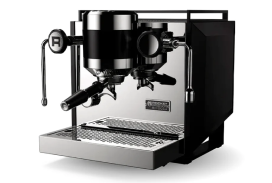
Sanremo Café Racer is built for cafés that demand repeatable precision under sustained volume. Below are the key integration capabilities and operational use cases:
Designed For High-Volume Specialty Cafés: The Café Racer is positioned for professional environments where speed, consistency, and workflow reliability are non-negotiable, including multi-group cafés, flagship stores, and competition-style service bars.
Group-Level Temperature Stability As A Sync Foundation: Individual steel heating chambers per group ensure stable and isolated thermal conditions, allowing grinder-side adjustments to remain meaningful and accurate across simultaneous extractions.
Recipe-Driven Brewing Control: Programmable volumetric buttons, adjustable pre-infusion, and PID-regulated boilers provide clearly defined extraction parameters that can be mirrored by the grinder during synchronized operation.
Digital Interface For Data Transmission: Integrated group displays and centralized monitoring systems enable precise communication of brew parameters, forming a reliable reference point for automated grind alignment.
Consistency Across Multi-Group Operation: Stable pressure delivery from the volumetric pump machines ensures uniform extraction behavior across groups, allowing grinder calibration logic to remain consistent during parallel service.
Reduced Operator Dependency During Peak Hours: Automated grind alignment supports consistent output even when barista attention is divided, minimizing quality drift during high-demand periods.
Operational Efficiency and Energy Stability: Insulated boilers and energy-saving systems maintain thermal equilibrium with reduced fluctuation, supporting predictable extraction inputs for grinder synchronization.
The Sanremo Café Racer demonstrates Sync system efficiency for precision-focused cafés, while the Sanremo F18 showcases how the integration performs in high-volume, multi-barista environments.
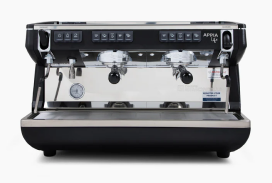
Sanremo F18 is engineered for cafés where multiple baristas operate simultaneously under continuous demand. Below are the key performance advantages in synchronized, high-volume settings:
Optimized For Multi-Barista Operation: Multiple programmable volumetric buttons and independent group control allow different baristas to work concurrently without introducing extraction variability that could disrupt grinder calibration logic.
Real-Time Group Temperature Accuracy: The Real-Time Stability Group design maintains temperature within ±0.2°C per group, ensuring grinder-side adjustments remain precise even during sustained peak service.
Consistent Pressure Behavior Under Load: Dedicated brew and steam boilers prevent pressure drops during heavy use, enabling the grinder to rely on predictable extraction resistance signals.
Speed-Driven Workflow Without Manual Compromise: Automated volumetric dosing and programmable pre-infusion reduce decision-making time per shot, allowing faster service while maintaining alignment with synchronized grind parameters.
Controlled Pre-Infusion For Extraction Uniformity: Low-pressure pre-infusion with fine time tolerance supports even puck saturation, stabilizing flow behavior that informs grinder calibration decisions.
Reduced Physical Strain And Error Risk: Ergonomic steam controls and automated group functions minimize operator fatigue, indirectly supporting consistency during extended service periods.
Energy Stability Supporting Continuous Operation: Adaptive energy-saving systems maintain thermal equilibrium across long service windows, reducing environmental fluctuations that could otherwise affect grind alignment.
The Sanremo F18 highlights Sync system advantages for fast-paced, high-volume settings, while the Sanremo D8 illustrates how growing cafés can achieve consistency and reduce dialing errors with integrated automation.
Sanremo D8 is designed for cafés transitioning from foundational setups to professional-grade consistency. Below are the key benefits of growing café operations:
Accessible Entry Into Professional Synchronization: The heat exchanger architecture with stable stainless steel boiler performance provides consistent extraction conditions, allowing grinder automation to function effectively without the complexity of multi-boiler systems.
Individual Group Temperature Control: Adjustable temperatures at each group enable precise brewing parameters, giving the grinder clear and consistent reference points for maintaining grind alignment.
Programmable Dosing With Manual Oversight: Up to seven programmable dose settings support repeatable shot volumes while allowing baristas to retain decision-making authority over recipe selection.
Shot Time Visibility For Calibration Awareness: The integrated digital shot timer provides immediate feedback on extraction behavior, reinforcing the relationship between grind adjustments and brew outcomes.
Reduced Dialing Errors During Training Phases: Automated grind alignment minimizes common calibration mistakes as teams gain experience, reducing waste without removing hands-on learning.
Optional Connectivity For Operational Monitoring: IoT-enabled diagnostics and remote monitoring support proactive maintenance and parameter oversight, contributing to stable synchronization over time.
Scalable Configuration For Expanding Teams: Modular options, multiple group sizes, and customizable layouts allow the system to grow alongside service volume without disrupting synchronized workflows.
By combining controlled automation with visible extraction feedback, the D8 supports consistent quality while allowing cafés to scale skills and service with confidence.
Also Read: How Hard Should You Tamp Espresso for Perfect Extraction
With Sanremo machines establishing extraction intent, the Mahlkönig Sanremo partnership relies on compatible Mahlkönig grinders to execute those parameters through synchronized grinding performance.
Mahlkönig grinders designed for Sync integration are built with precision, stability, and seamless communication with compatible espresso machines. These grinders enhance workflow efficiency, maintain particle size consistency, and enable automated adjustments aligned with changing extraction parameters.
Below are the primary grinder models suited for synchronized operation:
The Mahlkönig E65 Series is engineered for cafés that require repeatable grind accuracy throughout extended service periods. Its balance of burr geometry, motor stability, and digital control makes it well-suited for synchronized espresso systems.
Below are the core attributes that support synced workflows:
65 mm Flat Burr Platform For Balanced Extraction: The burr size offers an optimal balance between grinding speed and particle uniformity, supporting stable flow behavior that synchronized systems rely on for accurate adjustment logic.
Consistent Particle Distribution Under Load: Engineered burr geometry minimizes fines fluctuation during continuous grinding, allowing automated calibration systems to make precise, predictable corrections.
Low Retention Design For Rapid Parameter Response: Reduced grind retention ensures that automated adjustments take effect immediately, preventing delayed feedback that could disrupt synchronization accuracy.
Digitally Controlled Adjustment Interface: Electronic grind control allows fine, repeatable adjustments that align with machine-driven calibration commands rather than manual intervention.
Thermal Stability During Peak Service: Motor and burr cooling design reduces heat buildup, maintaining grind integrity during long service windows where synchronized calibration must remain reliable.
Workflow-Oriented Speed Without Overcorrection: Grinding performance is tuned to maintain shot-to-shot consistency without excessive speed that could destabilize extraction feedback signals.
Building on the E65’s precise, daily workflow stability, the E80 Series scales Sync automation for high-volume environments, ensuring consistency and throughput under intense café demand.
The Mahlkönig E80 Series is built for environments where sustained output and thermal control directly affect espresso quality. Below are the factors that make sync automation especially effective in high-volume use:
80 mm Flat Burrs For High Throughput Stability: The larger burr set enables faster grinding with reduced mechanical strain, preserving particle consistency during continuous operation.
Advanced Thermal Management Architecture: Integrated cooling systems limit heat transfer to the burrs, ensuring grind size remains stable as volume increases and service intensity rises.
Predictable Output Under Sustained Load: Motor performance is optimized to maintain consistent torque, allowing synchronized calibration systems to rely on stable resistance patterns.
Lower Sensitivity To Environmental Drift: Enhanced thermal and mechanical stability reduces the frequency of grind deviation caused by ambient temperature or prolonged use.
Greater Impact of Automated Corrections at Scale: In high-volume settings, automated micro-adjustments prevent cumulative extraction errors that would otherwise require frequent manual recalibration.
Minimal Downtime During Peak Service: Rapid adjustment response and low retention ensure corrections are applied between shots without disrupting service flow.
Consistency Across Multiple Baristas And Stations: Stable grind behavior allows synchronized systems to maintain uniform output across parallel workflows, even with varied operator experience.
In high-output environments, the E80 Series amplifies the value of synchronization by maintaining grind stability where manual control becomes increasingly impractical.
After identifying compatible Mahlkönig grinders, the practical value of the Mahlkönig Sanremo partnership becomes evident in how both systems operate together during real café service.
In café service, Sanremo machines and Mahlkönig grinders operate as a coordinated system rather than independent tools. Brewing intent is defined at the machine level, while grind output adapts automatically, allowing consistency, speed, and quality to coexist under real operational pressures.
Below is how this system functions across practical service scenarios:
Modern cafés change espresso recipes frequently to respond to seasonal coffees, roast development, and service conditions. Below are the primary triggers that initiate Sync responses:
Brew Ratio & Yield Changes: Grinder recalibrates automatically to maintain flow resistance for new targets.
Shot Time Modifications: Grind fineness adjusts to meet revised extraction durations.
Pressure & Temperature Changes: Automated alignment maintains puck resistance and solubility balance.
Recipe Switching & Seasonal Updates: Instant grinder synchronization prevents inconsistencies across coffees or menus.
By responding directly to recipe-level changes, synchronized systems maintain extraction consistency while allowing cafés to adapt menus and workflows without disruption.
Consistency becomes increasingly difficult as teams grow and schedules rotate. In synchronized espresso systems, extraction quality is stabilized at the system level.
Below are the operational effects on skill management and training:
System-Controlled Calibration: Automatic grind alignment prevents quality drift between operators.
Lower Skill Dependency: New staff achieve reliable results without extensive manual dialing experience.
Standardized Outcomes: Synchronized recipes ensure uniform extraction across all teams.
Faster Training: Focus shifts to workflow and service rather than prolonged dialing instruction.
Seeing the Mahlkönig Sanremo partnership in daily café workflows makes the contrast clear when compared directly with traditional manual espresso setups.
Manual espresso setups rely heavily on human judgment to manage changing variables, which becomes increasingly difficult as volume, staff size, and service speed increase.
Below is a side-by-side comparison highlighting how both setups perform across critical café operations:
|
Operational Area |
||
|
Workflow Speed And Dial-In Time |
Initial dialing requires trial-and-error adjustments. Re-dialing is often necessary throughout the day as conditions change. |
Initial calibration is recipe-driven, with automated micro-adjustments maintaining alignment without repeated manual intervention. |
|
Ongoing Adjustment Effort |
Baristas must monitor shot behavior continuously and intervene during service, often under time pressure. |
Adjustments occur automatically between extractions, allowing service to continue uninterrupted. |
|
Consistency And Error Margin |
Shot quality varies across operators, shifts, and service intensity, increasing the likelihood of extraction drift. |
Extraction targets remain stable, with narrow error margins maintained through system-level feedback. |
|
Shot Repeatability |
Repeatability depends on individual skill and attentiveness, leading to variable outcomes. |
High repeatability is achieved through continuous calibration against defined parameters. |
|
Waste Reduction |
Higher coffee waste from misdialed shots, especially during peak hours or staff transitions. |
Reduced waste due to fewer incorrect extractions and faster stabilization after changes. |
|
Training And Operational Dependency |
Strong reliance on senior staff for dialing, troubleshooting, and quality control. |
Reduced dependency on advanced calibration skills, allowing broader staff participation. |
|
Scalability Across Locations |
Difficult to replicate results consistently across multiple cafés or teams. |
Standardized performance enables consistent output across locations, shifts, and staff profiles. |
This comparison highlights how synchronization fundamentally changes espresso operations by reducing variability, improving efficiency, and supporting scalable consistency without increasing complexity.
Also Read: How to Calibrate Your Coffee Grinder for Precision Brewing
The differences between manual workflows and the Mahlkönig Sanremo partnership naturally raise the question of which cafés gain the most value from a Sync-based espresso system.

Not every café faces the same operational pressures. The Sanremo-Mahlkönig Sync System is best suited for businesses where consistency, control, and scalability are strategic priorities rather than optional upgrades.
Below are the café profiles that benefit most from this system-level approach:
Specialty Cafés Focused on Consistency: Automated alignment ensures repeatable flavor profiles and precise brewing across all service periods.
Multi-Location Businesses Seeking Standardization: Replicates espresso performance across locations, reducing variability from staff practices or environmental differences.
Cafés With High Staff Turnover: Maintains stable output without relying on long-term barista expertise, minimizing quality disruptions during onboarding.
High-Volume Operations With Limited Downtime: Continuous calibration preserves consistency without slowing workflow during peak service.
Growth-Oriented or Training-Focused Programs: Supports predictable performance for expanding concepts and reinforces best practices for new staff.
Now, let us explore what this partnership signals for the future of connected coffee equipment.
The collaboration between Sanremo and Mahlkönig reflects a broader shift in specialty coffee toward systems thinking. Below are the future-facing implications of this partnership:
Acceleration Toward Integrated Espresso Ecosystems: The partnership signals a move away from isolated equipment upgrades toward fully connected environments where machines and grinders share responsibility for extraction quality.
Data-Driven Equipment Design as a Standard: Brewing and grinding decisions increasingly rely on measurable performance data, allowing equipment to respond dynamically rather than relying solely on operator intervention.
Collaborative Innovation Over Proprietary Silos: Cross-brand partnerships enable deeper technical integration than closed systems, resulting in faster innovation cycles and more adaptable workflows.
Higher Expectations For Workflow Automation: Automated calibration and system-level feedback are becoming baseline requirements rather than premium features, especially in high-volume specialty operations.
Long-Term Investment Focused On Adaptability: Cafés are encouraged to evaluate equipment based on future compatibility, software evolution, and integration potential rather than single-feature advantages.
Shift In Barista Roles Toward Quality Oversight: As systems handle calibration stability, baristas increasingly focus on sensory evaluation, service execution, and customer engagement.
Also Read: Mahlkönig X54 vs Baratza Encore ESP: 2026 Prosumer Grinder Comparison Guide
This forward-looking partnership sets the stage for evaluating how integrated espresso and grinding ecosystems influence purchasing decisions, operational strategy, and long-term value.
The Mahlkönig-Sanremo partnership represents a shift from manual espresso control to integrated, system-driven performance. By synchronizing machine-level brewing intent with grinder-side calibration, cafés can achieve higher consistency, faster workflows, and reduced dependence on individual skill levels.
For tools, accessories, and parts that support professional coffee workflows, Pro Coffee Gear offers a curated collection built for durability and performance. Explore the Sanremo Café Racer, Sanremo F18, Sanremo D8, and compatible Mahlkönig E65 and E80 grinders today. Build a future-ready espresso system with equipment designed for consistency, scale, and control.
Yes, the Sync System can be configured to support multiple compatible grinders connected to a single espresso machine. Each grinder can be assigned specific recipes or coffee types, allowing cafés to run multiple espresso offerings simultaneously without compromising calibration accuracy or extraction consistency.
Yes, automated adjustments can be overridden when manual control is required for testing, training, or sensory evaluation. This ensures baristas retain creative and technical control while still benefiting from automated stabilization during regular service and high-volume operating periods.
The system adapts to different roast levels through recipe-based parameters. By defining specific targets for light, medium, or dark roasts, the grinder adjusts grind size accordingly to maintain optimal flow resistance and extraction balance across varying coffee densities.
Internet connectivity is not required for core synchronization during daily service. The system operates locally between the machine and grinder, while internet access is typically used for software updates, diagnostics, or optional remote monitoring and maintenance support.
No, the system does not replace sensory evaluation or quality control. It stabilizes technical variables, allowing baristas and managers to focus more consistently on taste, balance, and customer experience rather than constant mechanical recalibration.
Our team can help you find the best fit based on your space, volume, and budget.
Talk to a Specialist

