


Espresso Leveling: How to Improve Extraction Consistency at Home
|
|
Time to read 11 min
Your Cart
Your cart
Favorites





Shop by Brands

Shop by Brands
Shop by Brands


Shop by Brands



Shop by Brands
Shop by Brands

|
|
Time to read 11 min
If you’ve ever wondered why your espresso sometimes tastes sour, bitter, or just “off,” you’re not alone. Many home baristas struggle with this issue despite investing in good machines and beans. The problem usually comes from poor puck preparation, specifically, how evenly the coffee grounds are leveled before brewing.
That’s where espresso leveling makes all the difference. This simple yet essential step helps water flow evenly through your coffee grounds, leading to balanced extraction and a richer flavor. Leveling isn’t just for professional baristas; it’s the foundation of every consistent, café-quality shot you create.
With the right technique, a few affordable tools, and a bit of practice, you can easily master espresso leveling at home, no commercial setup or barista certification needed. This guide will walk you through everything you need to know about espresso leveling, from the science behind it to the tools, techniques, and common mistakes to avoid, so you can start pulling shots that taste as good as they look.
Key Highlights
Espresso leveling helps even out coffee grounds to prevent sour or bitter flavors and ensures consistent extraction.
Balanced extraction depends on uniform resistance in the puck, which is achieved through proper leveling and espresso distribution techniques.
Using tools like dosing funnels, WDT tools, distributors, and tampers allows you to level more precisely and prevent espresso channeling, achieving repeatable results.
Maintaining a consistent grind size, proper tamping, and clean equipment is key to improving espresso extraction at home.
Espresso leveling refers to the process of ensuring your coffee grounds are evenly distributed and flat in the portafilter before tamping. This small yet crucial step makes the difference between a bitter, uneven shot and a smooth, balanced espresso.

Here’s why it matters:
Promotes even extraction: A level coffee bed ensures every particle gets saturated evenly, preventing weak or bitter spots.
Improves consistency: Each shot extracts under consistent pressure, giving predictable and repeatable flavor results.
Reduces channeling: Proper leveling helps prevent espresso channeling, creating smoother extractions and a more uniform crema.
Enhances flavor clarity: Balanced water flow brings out complex coffee notes instead of masking them with uneven bitterness.
When hot water passes through the puck under high pressure (typically around 9 bars), it extracts soluble compounds from the coffee grounds that define your espresso’s flavor, aroma, and mouthfeel. The key is maintaining uniform resistance—if parts of the puck are denser than others, water will flow unevenly.
Over-extracted areas (where water lingers longer) taste bitter or burnt.
Under-extracted areas (where water flows too quickly) taste sour or weak.
Proper leveling minimizes these differences. It ensures each micro-channel in the puck offers equal resistance, giving consistent flow, balanced flavor, and a crema that’s dense and golden, not patchy or thin.
In short: even distribution = even extraction = better-tasting espresso.
In the following section, let’s look at the essential tools that help you achieve precision in espresso leveling.
While your hands can do a decent job of distributing grounds, using the right tools greatly improves precision and repeatability. Modern espresso accessories simplify puck preparation and make leveling more foolproof.
Here are some essential tools every home barista should consider.
|
Tool |
Purpose |
Tip |
|
Dosing Funnel |
Prevents coffee grounds from spilling over during grinding or distribution, keeping your station tidy. |
Choose a funnel that fits your portafilter snugly to maintain an accurate dose (e.g., 18g for a double shot) without mess or loss. |
|
Distributor / Leveler Tool |
Spreads coffee grounds evenly across the portafilter for uniform density before tamping. |
Adjustable depth tools, such as the Mahlkönig Distribution Tool (Beech) from Pro Coffee Gear, help achieve a flat coffee bed without early compression. |
|
WDT (Weiss Distribution Technique) Tool |
Breaks up clumps and balances coffee puck density for consistent flow and shot quality. |
Use fine needles (~0.3–0.4 mm thick) to stir grounds gently in circular motions, ensuring smooth water flow. |
|
Tamper |
Compresses the coffee grounds evenly into a solid puck, providing consistent resistance for extraction. |
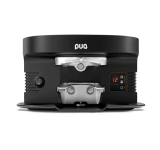
Flat-based tampers like the PUQ Gen 5 M4 ensure uniform pressure across the coffee bed for balanced shots. |
|
Bottomless Portafilter |
Lets you observe espresso extraction directly, revealing flow patterns and potential channeling issues. |
Watch the flow during extraction; spurting indicates uneven leveling or tamping. Adjust technique as needed. |
Each of these tools plays a role in your espresso leveling process, helping you move from guesswork to precision. Next, let’s move on to the exact steps you can follow to master espresso leveling at home.
Espresso leveling may seem complicated at first, but it’s actually a series of small, deliberate steps. Follow the steps below to refine your technique and produce balanced shots every time.

Getting the grind size right is the foundation of espresso consistency. If it’s too fine or too coarse, even perfect leveling won’t save your shot. Aim for a grind that allows water to extract flavors evenly under pressure.
Start Fine: Begin with a fine grind similar to table salt. It helps create enough resistance for a 25–30 second extraction window.
Adjust Gradually: If your shot runs too quickly and tastes sour, go finer. If it’s too slow and bitter, adjust slightly coarser.
Consistency Counts: Always grind fresh before brewing and ensure your grinder is calibrated properly to maintain repeatable results.
Finding the right grind sets the foundation for espresso leveling to work effectively in later steps.
A dosing funnel helps keep your workspace neat and your dose accurate. It prevents coffee from spilling and ensures you work with the exact amount of grounds every time.
Prevent Spillage: The funnel eliminates waste by stopping grounds from spilling over the edge while grinding.
Ensure Accuracy: Maintaining a consistent coffee dose (e.g., 18g for a double shot) improves extraction consistency.
Cleaner Workflow: Less mess means faster prep time and fewer variables affecting your coffee bed.
This simple tool keeps your dosing precise, a key factor in achieving consistent espresso leveling results.
Before tamping, make sure your coffee bed is flat and evenly spread. Uneven piles cause uneven resistance during extraction.
Use Gentle Shakes: Lightly tap or shake the portafilter to help the grounds settle naturally without compacting them.
Level the Surface: Run a finger or distribution tool across the top to remove mounds or gaps.
Check Consistency: The goal is a flat bed that looks uniform from edge to edge—no visible slopes or air pockets.
Even distribution prevents water from rushing through weaker areas, laying the groundwork for perfect leveling.
Proper distribution and leveling ensure your coffee bed is even, unclumped, and resistant to channeling.
How to do it:
Use WDT first: Stir gently with fine needles (0.3–0.4 mm) to break clumps and equalize density.
Flatten the surface: Lightly shake, tap, or use your finger to remove high spots.
Perfect with a distributor: Rotate a leveler tool 2–3 times for a uniformly flat surface.
This combined method ensures the coffee bed is even, smooth, and ready for tamping, improving water flow and flavor consistency. Try a WDT tool from Pro Coffee Gear for precise leveling at home.
Leveling ensures your tamper presses evenly against a flat surface. Without it, even the best tamper can’t prevent uneven extraction.
Visual Check: Look at the puck’s surface—it should appear flat and even before tamping.
Use Gentle Taps: Lightly tap the portafilter on the counter or with your palm to even out any ridges.
Confirm Consistency: Run a finger across the surface—if it feels smooth and level, you’re ready to tamp.
Taking a short pause before tamping helps avoid slanted pucks and ensures balanced resistance during extraction.
Tamping compresses your coffee evenly, creating the right resistance for pressurized water flow. Consistency matters just as much as pressure.
Keep Tamper Level: Hold the tamper flat and apply firm, steady pressure—around 30 pounds (13.6 kg) is ideal.
Avoid Over-Twisting: Twisting or rocking the tamper can disturb the surface and create uneven edges.
Maintain Routine: Apply the same pressure every time to standardize your results across shots.
A well-tamped, level puck brings all your careful preparation together for perfect extraction.
Even with perfect leveling, small changes in dose or yield can shift flavor significantly. Treat this as your fine-tuning phase.
Start with a 1:2 Ratio: Use 18g of coffee for a 36g espresso yield—a classic balance between sweetness and body.
Taste and Adjust: If shots are sharp or sour, increase yield slightly; if bitter or harsh, reduce it.
Track Variables: Keep notes on grind size, dose, and yield to identify patterns and build consistency.
Experimenting systematically helps you fine-tune your preferred balance for every bean or roast.
A bottomless portafilter lets you see your espresso’s behavior during extraction, revealing how well your leveling technique is working.
Observe the Flow: A perfect extraction begins at the center and flows evenly with no spurts or sprays.
Diagnose Issues: Spraying indicates channeling or uneven density; adjust your leveling or tamping accordingly.
Refine Consistency: Regular observation builds awareness, helping you improve technique over time.
Visual feedback from a bottomless portafilter transforms espresso leveling from guesswork into precision.
Clean tools protect espresso flavor and guarantee consistent results. Oils and old grounds can easily disrupt flow and taste.
Rinse Regularly: Clean your portafilter, basket, and tools after each use to prevent buildup.
Deep Clean Weekly: Use cleaning tablets like Urnex Rinza M61 and a group head brush to remove oils and residue.
Maintain Your Grinder: Brush out old grounds and recalibrate your burrs periodically for consistent grind size.
Clean equipment not only extends tool life, but it also ensures every shot starts from a fresh, neutral base.
In the next section, let's discuss the common leveling errors and how to fix them effectively.
Even experienced home baristas sometimes face small leveling mistakes that affect extraction consistency. Let’s look at the most common issues and how to fix them.

|
Mistake |
Description |
How to Fix |
|
Uneven Distribution |
When coffee grounds pile higher on one side, water channels through the looser area, causing thin, under-extracted espresso. |
– Use a WDT tool to break up clumps and spread grounds evenly. – Rotate a distributor tool gently to create a flat, uniform surface before tamping. – Double-check the coffee bed visually; no slopes or mounds should remain. |
|
Inconsistent Tamping Pressure |
Uneven or excessive pressure creates variations in puck density, leading to unbalanced flow and flavour. |
– Keep your wrist and elbow aligned for even force distribution. – Use a calibrated tamper such as the PUQ Gen 6 Q for uniform compression. – Avoid pressing too hard—firm, steady pressure (around 30 lbs) is enough. |
|
Incorrect Grind Size |
If espresso runs too quickly or too slowly despite good leveling, the grind is likely off. Too coarse = fast/sour. Too fine = slow/bitter. |
– Adjust the grinder in small increments, finer for faster shots, coarser for slower ones. – Aim for a 25–30 second extraction time with a texture similar to table salt. – Remember: leveling improves consistency but can’t fix the wrong grind size. |
|
Overfilling or Underfilling the Portafilter |
Using too much or too little coffee distorts leveling and tamping depth, affecting water flow and puck stability. |
– Weigh doses precisely; typically 18–20g for a double shot. – Ensure the tamper compresses evenly without touching the basket rim. – If espresso tastes hollow or watery, slightly increase dose and retest. |
|
Dirty Equipment |
Old coffee oils and residue alter puck texture and water flow, and negatively affect taste. |
– Wipe the portafilter basket before every use. – Clean grinders weekly and run cleaning pellets monthly to remove buildup. – Keep distribution and tamping tools free from old grounds for accurate results. |
By addressing these small errors, you’ll see great improvement in flavor balance, crema texture, and shot repeatability.
Mastering espresso leveling is key to achieving café-quality espresso at home. When you combine proper dosing, distribution, leveling, tamping, and maintenance, you eliminate much of the guesswork and variability that keep home baristas chasing better shots.
We at Pro Coffee Gear believe precision matters. Whether you’re looking for a high-quality WDT tool or a bottomless portafilter to fine-tune your shots, we offer tools designed to make your espresso leveling effortless and reliable.
Shop now at Pro Coffee Gear to find the perfect tools for your next brew and elevate your home espresso experience.
Yes, the type and quality of tamper or distributor directly affect extraction consistency. A flat, well-fitted tamper and a precise distributor ensure even coffee bed density and reduce channeling, helping water flow uniformly for balanced flavor and optimal espresso extraction.
Grind size determines how evenly water flows through the coffee puck. Too fine a grind can cause over-extraction and channeling, while too coarse leads to weak shots. Consistent leveling complements the right grind size by maintaining uniform resistance and balanced extraction.
You can level by hand effectively with practice, but a leveling tool ensures more precision and repeatability. Tools minimize human error, creating a consistently flat surface, which is especially beneficial if you’re aiming for professional-quality espresso at home.
Yes, single and double shots may need slightly different leveling techniques. Single baskets require gentler, more precise distribution due to their smaller volume, while double baskets benefit from more even tamping pressure to maintain balance across a wider surface.
Recalibrate or review your leveling process every few weeks or whenever you change beans, grind size, or equipment. Regular checks ensure consistent puck density and extraction quality, helping you maintain a balanced flavor profile in every espresso shot.
Espresso leveling helps distribute coffee evenly in the portafilter, reducing channeling and improving extraction consistency. While it can mitigate minor grind inconsistencies, it cannot fully correct major issues caused by an uneven or inappropriate grind size. Proper grinding remains essential.
Yes, different roasts affect coffee density and flow. Darker roasts are more porous and may need gentler leveling to prevent over-extraction, while lighter roasts may require firmer, uniform tamping. Adjusting the leveling technique based on roast ensures balanced extraction and optimal flavor.
Our team can help you find the best fit based on your space, volume, and budget.
Talk to a Specialist

