

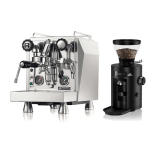
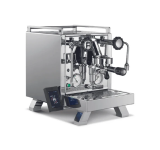

Rocket R58 vs R Nine One: Which Espresso Machine Should You Buy? (2026)
|
|
Time to read 8 min
Your Cart
Your cart
Favorites





Shop by Brands

Shop by Brands
Shop by Brands


Shop by Brands


Shop by Brands
Shop by Brands
|
|
Time to read 8 min
Our pick for most buyers: the Rocket R58 Cinquantotto.It gives you true dual boiler espresso, a programmable PID for each boiler and a commercial rotary pump in a compact 64 lb body that plugs straight into a normal 110V outlet.
The Rocket R Nine One is the flagship. Choose it if you want volumetric dosing, up to five pressure profiles and multi-boiler power for a busy setup, and you can accommodate its larger footprint and a dedicated 220V circuit.
Both machines pull a superb shot. The R58 is the smarter home dual boiler, while the R Nine One is a serious step into cafe grade control and volume.
|
Rocket R58 (Cinquantotto) |
Rocket R Nine One |
|
|
Our rating |
4.6 / 5 |
4.7 / 5 |
|
Best for |
Home enthusiasts wanting dual boiler precision in a compact machine |
Power users and light commercial setups wanting volumetric, multi-boiler control |
|
Key difference |
Single group, dual boiler, plug-and-play 110V |
Two groups, multi-boiler, pressure profiling, needs 220V |
Customers rate the Rocket line 4.8 out of 5 across 59 reviews.
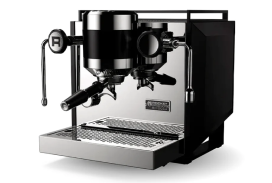
The Rocket R58 is one of the most loved home dual boiler machines on the market. It packs independent brew and steam boilers, PID control and a commercial rotary pump into a slim single group body that fits a home counter.
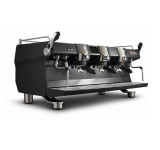
The Rocket R Nine One sits far higher in the range. It is a multi-boiler, twin group flagship built around volumetric dosing and full pressure profiling, closer in spirit to a compact commercial machine than a countertop home unit.
So this is not really an upgrade of the same machine. It is a decision about how far you want to go, how much space and power you have, and whether you are brewing for a household or a much busier setting. This guide breaks down exactly what separates them.
Both are Rocket machines with saturated group heads and PID temperature control, so they share the same commitment to shot stability. The real differences come down to boiler layout, group count, power draw and sheer size.
|
What matters |
Rocket R58 |
Rocket R Nine One |
|
Boiler |
Dual boiler (0.58L brew, 1.8L steam) |
Multi-boiler (2x1.9L brew, 9L main) |
|
Groups |
1 group, semi-automatic |
2 groups, auto-volumetric |
|
Shot control |
Programmable PID per boiler |
PID, volumetric dosing, up to 5 pressure profiles |
|
Power |
1600W, 13A, 110V/120V |
5900W, 30A, 220V |
|
Size and weight |
11.8 x 17.3 x 15 in, 64 lbs |
29.92 x 23.2 x 19.6 in, 104.5 lbs |
These specs are pulled from the live Pro Coffee Gear product pages for each machine. Side by side they show two very different classes of machine that happen to share the same maker.
|
Specification |
Rocket R58 |
Rocket R Nine One |
|
Manufacturer |
Rocket |
Rocket Espresso |
|
Boiler type |
Dual boiler |
Multi-boiler |
|
Group |
1 |
2 |
|
Brew boiler capacity |
0.58 L |
2 x 1.9 L |
|
Steam / main boiler capacity |
1.8 L |
9 L |
|
Machine type |
Semi-automatic |
Auto-volumetric |
|
Width x Depth x Height |
11.8 x 17.3 x 15 in |
29.92 x 23.2 x 19.6 in |
|
Voltage |
110V / 120V |
220V |
|
Amperage |
13 A |
30 A |
|
Wattage |
1600 W |
5900 W |
|
Weight |
64 lbs |
104.5 lbs |
|
Certification |
ETL, NSF |
UL, NSF |
Winner: R Nine One for presence, R58 for practicality. Both are premium stainless steel machines with insulated boilers and Rocket's fully saturated group heads, so each feels rock solid to use.
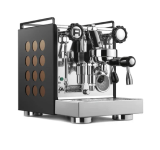
The R58 is the sensible countertop size at 11.8 inches wide and 64 lbs, with height adjustable feet and a detachable communication pod that keeps the look clean. It fits a home kitchen without dominating it.
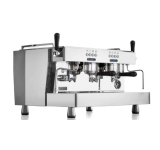
The R Nine One is a different beast. At nearly 30 inches wide and 104.5 lbs with a twin group frame and a large touch display, it is built to be a centerpiece and to keep up with real volume.
Winner: R Nine One, with the R58 close behind. Both share saturated groups and PID control, so temperature stability and raw espresso quality are excellent on either machine.
The R58 gives you independent brew and steam boilers, so you can pull a shot and steam milk at the same time with strong, consistent steam. For a single group home machine, its stability is hard to fault.
The R Nine One adds pressure profiling, letting you shape the shot with long pre-infusions and gradual pressure declines across up to five profiles. If you like to experiment and chase the absolute best from each coffee, this is where it pulls ahead.
Winner: depends on the job. The R58 is the more approachable machine. A digital shot timer, a simple touch pod and an auto on function make daily use easy, and the 110V plug means no special install.
The R Nine One is built for throughput. Volumetric dosing lets you program shot volume to the milliliter, so back to back drinks stay identical without you watching the timer, and two groups let you work in parallel.
That power comes with setup: the R Nine One needs a 220V, 30A circuit, so it suits a planned space rather than a quick countertop swap.
Winner: tie, both NSF certified. Both machines are hand built by Rocket in stainless steel to a high standard, and both carry NSF certification for materials and sanitation.
The R58 adds ETL certification, while the R Nine One carries UL. Both are recognized safety marks, so either machine is well suited to demanding use, including light commercial settings where certification is required.
Winner: R58 for most buyers. For a home enthusiast, the R58 delivers the dual boiler experience, PID and a rotary pump at a much lower price and in a far more manageable size.
The R Nine One is a bigger investment and asks for the space and wiring to match. It earns its price if you genuinely need two groups, volumetric consistency and pressure profiling.
If you are brewing for a household, the R58 is the value pick. If you are outfitting a busy space, the R Nine One is worth every bit of the step up.
The Rocket R58 is for the home enthusiast. If you want genuine dual boiler espresso, simultaneous brewing and steaming, and PID control in a machine that fits a normal kitchen and a normal outlet, the R58 is made for you.
The Rocket R Nine One is for the power user or small venue. If you want two groups, volumetric dosing, pressure profiling and the headroom to serve a lot of drinks, and you can supply the space and a 220V circuit, the R Nine One is the flagship to reach for.
Both are excellent Rocket machines. The right pick depends on your space, your power supply and how many drinks you pull.
Best for most home buyers: Rocket R58. Dual boiler precision in a compact, plug-and-play package.
Best for a busy household or milk drinks: Rocket R58. Independent boilers let you brew and steam at once with ease.
Best for pressure profiling and experimentation: Rocket R Nine One. Up to five programmable profiles give you full control of the shot.
Best for volume and back-to-back consistency: Rocket R Nine One. Volumetric dosing and two groups keep every drink identical.
Best for a light commercial or office setup: Rocket R Nine One. Multi-boiler power and a 220V install handle sustained demand.
If you are cross-shopping the R58 against the R Nine One, you are really deciding between a top tier home machine and an entry into commercial grade control. Both are strong, so let your space and volume guide the choice.
If you want to see where each sits in the wider lineup, or compare them against other dual boiler and prosumer options, browse the full Rocket espresso machines collection.
The Rocket R58 Cinquantotto and the Rocket R Nine One are both in stock now at Pro Coffee Gear, each backed by free US shipping, warranty coverage and our lifetime Pro support.
Not sure which fits your kitchen or venue? Our team sets up and dials in these machines every day and can help you choose.
Free shipping within the contiguous US
Full manufacturer warranty on both machines
Lifetime Pro support: setup, dial-in and troubleshooting
The Rocket R58 and the R Nine One are both outstanding machines, but they are built for very different buyers.
For most people, the R58 is the machine to buy: true dual boiler espresso, PID control and a rotary pump in a compact body that plugs into a standard outlet. It is the sweet spot of quality, size and price for a serious home setup.
Choose the R Nine One if you want the flagship experience of volumetric dosing, pressure profiling and multi-boiler power, and you have the space and a 220V circuit to support it. Reach out or book a consultation and our team will help you land on the right one.
It depends on your needs. The R Nine One adds volumetric dosing, up to five pressure profiles, two groups and multi-boiler power, which are worth it if you brew high volume or want to shape every shot. If you are a home user, the R58 delivers dual boiler quality for far less money and in a much smaller machine.
The R58 is a single group, dual boiler home machine on 110V, while the R Nine One is a twin group, multi-boiler flagship that runs on 220V and adds volumetric dosing and pressure profiling. In short, the R58 is a top home machine and the R Nine One steps into cafe grade control and capacity.
For a home, the R58 is the natural fit thanks to its compact size and standard outlet. For a cafe, office or other busy setting, the R Nine One's two groups, volumetric dosing and larger boilers are built to keep up with sustained demand.
The R58 runs on a standard 110V/120V, 13A outlet and its rotary pump can draw from the internal reservoir or a plumbed water line. The R Nine One needs a dedicated 220V, 30A circuit, so it suits a planned installation rather than a quick countertop setup.
Yes. The R58 uses separate insulated brew and steam boilers, so you can pull a shot and steam milk together. The R Nine One goes further with a multi-boiler layout and two groups, letting several drinks come together at once.
Our team can help you find the best fit based on your space, volume, and budget.
Talk to a Specialist

