


Best Espresso Machine for Restaurant Use: Types, Tips, and More
|
|
Time to read 12 min
Your Cart
Your cart
Favorites





Shop by Brands

Shop by Brands
Shop by Brands


Shop by Brands


Shop by Brands
Shop by Brands
|
|
Time to read 12 min
A restaurant espresso setup has to work around dinner service, brunch rushes, bar tickets, and staff who may not be full-time baristas.
The wrong machine can slow the drink prep, crowd your counter, or create extra training work during already busy shifts.
For restaurants, the decision is less about buying the most advanced machine and more about choosing one that fits your real service pattern. A small dinner-focused restaurant, a hotel breakfast program, and a busy brunch spot all need different levels of output, automation, and support.
This guide will help you compare the best espresso machines for restaurant use by workflow, staff ease, footprint, power needs, new vs. renewed value, and long-term support. By the end, you should have a clearer way to shortlist machines that fit your restaurant’s daily operation.
Mobile coffee setups in restaurants must balance service volume, staff skill, and limited counter space.
Choose an espresso machine that matches workflow, peak periods, and operator experience.
Automation level, semi-automatic, volumetric, or super-automatic; it affects speed, consistency, and training needs.
Plan for utilities, including power, plumbing, water filtration, and maintenance access.
Evaluate new vs. renewed machines based on budget, warranty, and long-term reliability.
Supporting gear like grinders, refrigeration, and cleaning tools ensures smooth, consistent service across shifts.
Choosing the right espresso machine for your restaurant requires balancing staff skill, service volume, and workflow. Restaurants face unique challenges: limited bar or kitchen space, high-demand periods like brunch or after-dinner service, and the need to integrate espresso preparation with food service.
The best machine fits your space, power setup, and staff capabilities while supporting consistent drink quality throughout busy shifts.
Different service types demand different machine capacities. Your espresso machine should handle occasional after-dinner orders as well as peak service periods without slowing staff or creating bottlenecks.
Low-volume dinner service
Brunch or breakfast rushes
Bar or lounge coffee service
Hotel or multi-shift restaurant use
Staffing levels and training determine how much manual control your team can manage. Automation choices influence consistency, speed, and ease of use across shifts.
Semi-automatic: better for trained staff who can manage shot timing
Volumetric: better for repeatable recipes when multiple operators are involved
Super-automatic: better for simple operation and consistent output with minimal training
Your machine must fit the available bar, counter, or kitchen space and work with existing utilities. Planning for proper installation avoids workflow issues and unexpected costs.
Counter depth and clearance
110V vs. 220V requirements
Water line and drainage
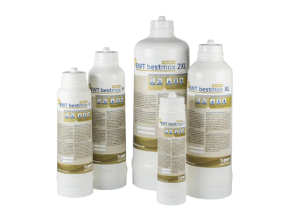
Filtration needs
Technician access
Considering volume, staff skill, automation, space, and utilities helps you shortlist machines that fit your restaurant’s workflow.
Also Read: Rocket Boxer vs Nuova Simonelli Compact: Detailed Comparison for Cafes & Home Bars

These five Pro Coffee Gear options fit different restaurant workflows, from compact bar setups to mixed-skill staff environments and premium coffee programs.
Before choosing, confirm current availability, installation needs, voltage, and whether the machine fits your staff workflow and service volume.
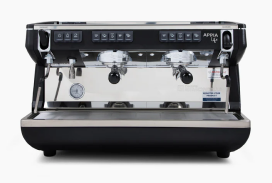
The Nuova Simonelli Appia Life is a strong overall fit for restaurants that need reliable commercial espresso performance without making drink preparation overly complicated for staff. It includes auto-volumetric controls, a heat exchanger design, Soft Infusion System, four-hole steam wands, and raised group heads.
The auto-volumetric controls help stop brewing at programmed shot volumes, which can support consistency when multiple staff members use the machine across shifts.
Best-fit restaurant type: Restaurants with moderate to high espresso and milk drink volume
Workflow benefit: Volumetric dosing helps staff repeat recipes with less manual timing
Service benefit: Four-hole steam wands support cappuccinos, lattes, and other milk drinks
Training fit: Soft Infusion System can help reduce extraction issues tied to tamping variation
Setup note: Available in 2-group and 3-group configurations, so restaurants should match group count to peak drink volume
The Appia Life is a practical first shortlist option for restaurants that want a strong balance of price, performance, staff usability, and serviceability.
The Astoria AB200 is a better commercial recommendation than a prosumer-style compact machine for restaurants with limited bar space. It is designed for cafés, restaurants, and offices that need professional espresso performance with straightforward operation and flexible configuration options.
The AB200 includes auto-volumetric operation, a heat exchange design, intuitive controls, shot counters, steam wand options, and removable side panels for service access.
Best-fit restaurant type: Restaurants serving coffee as a secondary offering
Space benefit: Compact, workflow-friendly design helps fit tighter bar or service areas
Operator benefit: Straightforward controls make it easier for rotating staff to use
Service benefit: Easy internal access can simplify maintenance and upkeep
Setup note: Available in 2-group and 3-group options, with autosteam configurations depending on the selected variant
The AB200 works well for restaurants that want commercial capability without overbuilding the coffee station.
The Rocket RE Doppia is a strong fit for restaurants that see clustered espresso demand during brunch, dessert service, or bar programs. It includes auto-volumetric controls, a dual boiler design, saturated groups, electronic temperature control, and a front panel display.
The dual boiler setup separates brewing and steaming, which helps support simultaneous espresso and milk drink preparation during busy periods.
Best-fit restaurant type: Brunch restaurants, dessert-focused service, hotel dining, and higher-volume restaurant bars
Rush-hour benefit: 2-group and 3-group options help support clustered drink orders
Milk-drink benefit: Dedicated steam power supports cappuccinos and lattes during peak windows
Consistency benefit: Volumetric controls and PID temperature control help staff repeat drinks more easily
Setup note: Requires 208–240V power, so restaurants should confirm electrical capacity before purchase
The RE Doppia is a strong mid-range restaurant option when drink volume is high enough to justify more output and stronger steam performance.
The Sanremo D8 is a good fit for restaurants that need consistent results across multiple operators without moving into a fully automatic machine. It includes auto-volumetric operation, adjustable group temperature, a stainless steel boiler, and up to seven programmable doses.
That combination can help restaurants maintain repeatable espresso service when bartenders, servers, or rotating staff share drink preparation responsibilities.
Best-fit restaurant type: Restaurants with mixed-skill staff and steady espresso demand
Workflow benefit: Volumetric controls help reduce manual shot timing across shifts
Training benefit: Programmable doses can make recipes easier to repeat
Flexibility benefit: Adjustable group temperature gives more control for different coffee programs
Budget note: The D8 can be positioned as a more budget-focused commercial option compared with higher-investment restaurant machines
The Sanremo D8 is a practical option when a restaurant wants commercial consistency, lower training friction, and a more accessible path into multi-operator espresso service.
Each machine solves a different restaurant problem. Start with your busiest coffee window, then compare group count, automation level, voltage, footprint, steam needs, and staff training requirements before finalizing a shortlist.
When comparing multiple restaurant espresso machines, it can be helpful to group options by service level and investment range. For a quick shortlist, here are additional restaurant espresso machine options grouped by service level.
|
Tier |
Restaurant Fit |
Machines to Compare |
|---|---|---|
|
Entry Level |
Restaurants that need reliable espresso service without a large specialty coffee buildout |
Nuova Simonelli Appia Life, Astoria AB200 Compact, Sanremo D8, Rocket Boxer Timer EVO |
|
Mid-Range |
Restaurants with busier coffee demand, brunch service, dessert rushes, or stronger milk drink volume |
Rocket RE Doppia, Sanremo F18, Barista Attitude Tempesta, Slayer Steam EP |
|
High End |
Premium restaurants, hotels, hospitality groups, and serious coffee programs |
Slayer Steam LP, Kees Van Der Westen Spirit, Sanremo Café Racer, Victoria Arduino Black Eagle Maverick, Sanremo Opera, Rocket R9V |
Choosing the right type of espresso machine is about matching your restaurant’s service style, staff skill, and daily drink volume.
Semi-automatic, volumetric, and super-automatic machines each serve different operational needs. Selecting the correct type helps maintain drink consistency, speed of service, and staff efficiency, especially during peak dining or brunch hours.
Understanding these differences ensures you equip your restaurant with a machine that supports both workflow and quality, without overcomplicating training or maintenance.
|
Machine Type |
Best For |
Key Benefits |
Considerations |
|---|---|---|---|
|
Semi-Automatic |
Restaurants with trained bar staff |
Offers precise control over extraction, flexible shot timing, and allows skilled staff to craft drinks to specification |
Requires experienced operators and careful workflow planning to maintain consistency during busy periods |
|
Volumetric |
Multi-shift restaurants or locations with multiple operators |
Programmed shot volumes reduce human error, ensuring consistent drinks across staff members and shifts |
Less flexible for highly customized drinks; still requires basic operator knowledge |
|
Super-Automatic |
Restaurants needing speed and simple operation |
Automates grinding, dosing, tamping, and brewing for fast, repeatable service; reduces staff training time |
Machines still require cleaning and maintenance routines; less control over fine-tuned extraction |
With this framework, you can now evaluate specific machines based on your restaurant’s output, space, and operator skill before shortlisting options that fit your workflow and menu demands.
Also Read: The Complete Guide to Coffee Pressure Brewers: Taste, Extraction, and Control

When choosing an espresso machine, it's important to match the equipment to the daily service patterns of your business, not just the brand or appearance. Demand can spike during brunch, after-dinner coffee, or bar service, while limited counter space and staffing constraints shape what’s practical.
The right machine supports your busiest hours without slowing servers or overcomplicating operations.
Peak espresso demand often coincides with meals, weekend brunch, or bar service, so plan your machine choice accordingly.
Weekend brunch
After-dinner espresso and cappuccino orders
Bar or lounge service
Hotel breakfast service
Operators may include bartenders, servers, baristas, or managers working different shifts. Match machine controls, automation, and complexity to staff skill and scheduling to ensure consistent drinks without disrupting workflow.
A restaurant espresso setup requires more than just the machine. Proper placement and access support smooth operations.
Grinder placement
Water filtration
Knock box
Cleaning products
Storage for routine supplies
Planning around service volume, staff, and space helps you select machines that support daily operations efficiently. Once workflow needs are clear, you can narrow options by automation, capacity, and installation requirements to find the best fit for your restaurant.
“Should you go fresh off the line, or is second-hand still gold?”
Choosing the best espresso machine for restaurant use often boils down to balancing performance, cost, and operational fit.
Both new and renewed machines can serve your restaurant well, but the right choice depends on your workflow, staff, and service rhythm.
New espresso equipment is often the best choice when your operation demands predictability and full manufacturer backing. Consider new machines if you:
Are opening a new restaurant and need precise buildout compatibility
Require specific machine features or configurations
Value full manufacturer warranty coverage
Want minimal unknowns regarding prior usage or wear
Prioritize the latest technology and controls
Renewed machines can deliver commercial reliability while easing upfront investment. Restaurants may consider them if they:
Need commercial-grade equipment at a lower listed cost
Can confirm machine condition and recent testing
Want structured support and parts availability
Appreciate Pro Coffee Gear’s in-house renewal process and 1-year parts warranty
Are willing to integrate verified, renewed machines into the existing workflow.
Whether new or renewed, the right espresso machine must match staff skills, peak service demands, and kitchen or bar space. Understanding your volume, workflow, and maintenance capacity ensures consistent coffee service without surprises.
Also read: Important Features to Consider When Buying an Espresso Machine
Even seasoned restaurant operators can stumble when selecting an espresso machine. Mismatched equipment can slow service, create inconsistencies in drink quality, and increase maintenance headaches.
Recognizing common pitfalls ahead of time helps you avoid wasted time and ensures the machine supports your staff and workflow efficiently.
Café machines are designed for counter-centric service and may not suit restaurant bars or kitchen stations.
What to check instead:
Assess available space and clearance behind the bar or in the kitchen
Consider staff movement during peak service hours
Match machine output to the timing of meals and drink orders
Installation details are critical, especially in older buildings or layouts with fixed electrical panels.
What to check instead:
Confirm voltage and amperage meet machine requirements
Ensure proper water line placement and drainage
Plan for filtration needs that maintain taste and equipment longevity
A machine is only one piece of a complete espresso workflow. Skipping these checks can affect consistency and staff efficiency.
What to check instead:
Verify grinder placement supports workflow without congestion
Plan for easy access to cleaning supplies and knock boxes
Consider routine maintenance schedules and storage for tools
By reviewing these common mistakes, you can safeguard service speed and consistency, prevent unexpected downtime, and ensure your espresso setup supports your restaurant’s unique workflow and volume.
Also read: Understanding Espresso Shot Measurements: Grams and Ounces
From space constraints to staff skill levels, daily service patterns shape which machines will perform reliably. Understanding workflow, volume, and menu needs first allows you to make informed comparisons before committing to a purchase.
Pro Coffee Gear focuses on matching equipment to operational realities, not just brand names.
We help match equipment to your restaurant setup
Evaluate drink volume needs, from after-dinner espressos to brunch rushes
Align machine automation with staff skill levels and training
Confirm available bar or kitchen space for machine and accessories
Check voltage, plumbing, and utilities to prevent installation surprises
Compare costs and support options within your restaurant budget
We support machines, grinders, parts, and trade buying paths
Pro Coffee Gear offers guidance on commercial machines, renewed equipment, grinders, water filtration, accessories, parts, bundles, and trade accounts, helping restaurants, hotels, cafés, and wholesale buyers make practical, long-term decisions.
With a clear understanding of workflow and equipment capabilities, you can confidently shortlist the best espresso machine for restaurant service and maintain consistent quality across every shift.
Selecting the right espresso machine for your restaurant is about balancing drink volume, staff skill, space, and workflow. This guide walked you through matching machine capacity to service patterns, evaluating automation levels, and considering utilities and maintenance needs.
With careful planning and attention to these factors, your team can serve consistent, high-quality espresso without slowing down the kitchen or bar.
Pro Coffee Gear supports your restaurant in making these decisions with practical expertise and commercial-focused solutions. Whether you’re exploring new or renewed machines, grinders, or trade account options, we provide guidance and reliable equipment built for daily operations.
Compare commercial espresso machines that match your service needs.
Discover restaurant-ready commercial espresso machines, grinders, and trade solutions with expert guidance from Pro Coffee Gear. Contact Us Today.
The best espresso machine for a restaurant depends on several operational factors. Consider your daily drink volume, the skill level of staff, available counter space, power requirements, menu complexity, and the level of support you need for maintenance and repairs before making a decision.
Restaurants that serve espresso, cappuccinos, lattes, or after-dinner coffee drinks generally benefit from a commercial espresso machine. These machines are designed for higher output, durability, and consistent performance, which helps maintain service speed and quality during busy meal periods.
Super-automatic machines can be a strong fit for restaurants seeking fast, repeatable espresso service with minimal training. They are particularly useful for mixed-skill staff, though operators should still follow cleaning, maintenance, and ingredient handling procedures to maintain quality.
Power requirements vary by machine model and size. Consider voltage, amperage, plug type, and circuit capacity. It’s important to have a licensed electrician confirm your setup meets these requirements to ensure safe and reliable operation.
New machines are ideal for exact buildout needs, full manufacturer coverage, and predictable performance. Renewed machines can offer value, providing commercial-grade capability at a lower cost, provided testing, condition, warranty, and support are clear.
Our team can help you find the best fit based on your space, volume, and budget.
Talk to a Specialist

