


The Complete Guide to Coffee Pressure Brewers: Taste, Extraction, and Control
|
|
Time to read 7 min
Your Cart
Your cart
Favorites





Shop by Brands

Shop by Brands
Shop by Brands


Shop by Brands


Shop by Brands
Shop by Brands

|
|
Time to read 7 min
Did you know? The globally accepted espresso standard is built around 9 bars of pressure, a specification commonly defined by the Italian Espresso National Institute to ensure consistent extraction, balanced flavor, and proper crema formation.
This benchmark helped establish pressure as a critical variable in modern coffee brewing, not just an optional feature.
A coffee pressure brewer uses applied pressure to force hot water through coffee grounds, rather than relying on gravity alone. This added force changes how compounds are extracted, influencing everything from body and sweetness to bitterness and aroma.
In this article, we explain how pressure works in coffee brewing, how it shapes taste and extraction, and how different pressure-based brewing methods use it to produce distinct results.
Pressure drives extraction speed: A coffee pressure brewer uses force to extract flavors faster and more efficiently than gravity-based methods.
Balance matters more than high pressure: Better coffee comes from balanced pressure and temperature—not higher bar numbers.
Flavor changes with pressure: Lower pressure highlights clarity, moderate pressure promotes balance, and higher pressure increases intensity and body.
Different brewers apply pressure differently: Espresso machines, moka pots, and AeroPress all use pressure, but in distinct ways that shape taste and texture.
Understanding pressure leads to better choices: Knowing how pressure works helps us choose equipment and recipes based on extraction—not assumptions.
A coffee pressure brewer is a brewing device that uses applied pressure to push hot water through coffee grounds instead of relying only on gravity. This added force changes how water interacts with the coffee bed, allowing for faster, more controlled extraction and a more concentrated result.
Why pressure accelerates extraction:
Pushes water through the coffee bed with greater force
Increases contact between water and soluble coffee compounds
Speeds up the dissolution of oils, acids, and sugars
Allows the use of finer grind sizes without slowing flow
Produces stronger extraction in shorter brew times
|
Pressure Level |
Typical Flavor Outcome |
|
Low pressure |
Cleaner, lighter body |
|
Moderate pressure |
Balanced extraction |
|
High pressure |
Intense, heavier body |
Pressure-based brewing differs fundamentally from gravity-based brewing, which depends on water flowing naturally through coffee at a slower pace.
The comparison below highlights how these two approaches contrast.
|
Feature |
Pressure-Based Brewing |
Gravity-Based Brewing |
|
Water movement |
Water is forced through coffee using applied pressure |
Water flows naturally through coffee using gravity |
|
Extraction speed |
Fast and controlled |
Slow and gradual |
|
Typical grind size |
Fine to medium-fine |
Medium to coarse |
|
Flavor profile |
More concentrated, heavier body |
Cleaner, lighter body |
|
Common methods |
Espresso machines, AeroPress, moka pots |
Pour-over, drip coffee makers |
This distinction explains why coffee pressure brewers are commonly associated with richer texture and higher intensity, while gravity-based methods emphasize clarity and nuance.
Understanding how pressure influences flavor makes it easier to see why different brewing devices apply pressure in distinct ways, each producing a unique style of coffee.
Coffee pressure brewers apply pressure in different ways, which directly affects extraction speed, flavor concentration, and overall mouthfeel. Some rely on mechanical pumps, others use steam pressure or manual force, but all use pressure to extract coffee more efficiently than gravity-based methods.

Below are some of the most common types of coffee pressure brewers and how each uses pressure differently.
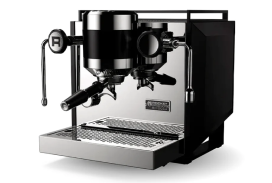
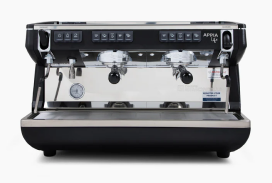
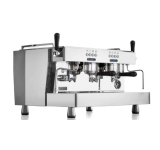
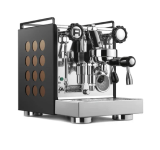
Espresso machines are the most widely recognized pressure-based brewers and are designed to deliver highly concentrated coffee in a short amount of time. They rely on controlled, consistent pressure to achieve balanced extraction.
Typical pressure range: Around 9 bars, the established standard for espresso
Why pressure consistency matters: Stable pressure promotes even extraction and helps avoid sour or bitter flavors
Extraction time vs flavor concentration: Short extraction times produce a dense, intense coffee with a heavy body and crema
Moka pots use heat and steam to generate pressure, offering a simpler and more traditional approach to pressure brewing. While they operate at lower pressure than espresso machines, they still produce a bold cup.
Steam-generated pressure: Created as water heats and expands in the lower chamber
Pressure level: Lower than espresso, but higher than gravity brewing
Flavor impact: Produces strong coffee with a heavier texture than drip, but less concentration than espresso
The AeroPress combines immersion brewing with manual pressure, giving brewers significant control over extraction variables. Its design allows for experimentation across a wide range of styles.
Manual pressure control: Pressure is applied by hand during brewing
Flexibility: Supports varying pressure levels, brew times, and grind sizes
Why it bridges immersion and pressure brewing: Coffee steeps before pressure is applied, blending immersion extraction with pressure-driven flow
Also Read: Comparing Coffee Brewing Methods to Make the Best Cup at Home
Pressure alone doesn’t control extraction, water temperature works alongside it to shape how flavors are released.
Pressure gets a lot of attention in brewing, but on its own, it doesn’t decide how good your coffee tastes. Extraction is a balancing act, and water temperature is the other half of the equation. Pressure controls how fast water moves through coffee. Temperature controls how much it can dissolve while doing it.
Hotter water increases solubility, meaning flavors dissolve more easily. Add pressure, and that extraction happens even faster. When both variables are aligned, you get a balanced cup. When they’re not, things fall apart quickly.
That’s where most brewing problems come from, not too much pressure or too much heat, but the wrong combination of the two.
|
Imbalance |
What Happens |
Result in the Cup |
|
High pressure + high temperature |
Extraction happens too aggressively |
Over-extraction, bitterness, harsh finish |
|
Low pressure + low temperature |
Coffee compounds don’t dissolve efficiently |
Under-extraction, sourness, thin body |
Even small shifts can make a noticeable difference. A few degrees too hot or a little too much force can push extraction past the sweet spot faster than expected.
This leads to a common misconception.
Is higher pressure always better?
Not even close.
More pressure doesn’t automatically mean better flavor
Excess pressure can extract bitter compounds too quickly
Balanced pressure helps control flow, not overpower it
Each brewing method has its own ideal pressure range
Espresso, moka pots, and AeroPress all use pressure, but in very different ways
The key isn’t chasing higher numbers. It’s understanding how pressure and temperature work together within a specific brewing method.
Also Read: Understanding PID Temperature Control in Espresso Machines
Once you understand how pressure and temperature shape extraction, the next step is choosing a coffee pressure brewer that matches how you like to brew.
Choosing the right coffee pressure brewer isn’t about chasing the highest pressure or the most features, it’s about matching how pressure is applied to the kind of coffee experience you actually want. Different brewers prioritize control, consistency, speed, or flexibility, and those differences show up clearly in the cup.
The right choice depends on how much involvement you want in the process, how forgiving the brewer is, and how adaptable it is to different coffees and recipes.
Instead of focusing on obvious factors like price or counter space, it’s more useful to think about pressure behavior, learning curve, and how much variability you want day to day.
|
Decision Factor |
Espresso Machines |
Moka Pots |
AeroPress |
|
Pressure behavior |
Fixed, pump-driven and highly consistent |
Variable, steam-driven and heat-dependent |
Fully manual and user-controlled |
|
Margin for error |
Low — small changes impact extraction quickly |
Moderate — forgiving but heat-sensitive |
High — adaptable to mistakes |
|
Learning feedback |
Immediate and obvious |
Gradual and intuitive |
Experimental and flexible |
|
Recipe repeatability |
Very high once dialed in |
Moderate |
Variable by design |
|
Style range |
Narrow but precise |
Narrow but bold |
Wide, from clean to concentrated |
|
Control over extraction speed |
High but mechanical |
Limited |
High and manual |
|
Best for |
Users who want precision and consistency |
Users who want strong coffee with minimal setup |
Users who enjoy experimenting and adjusting |
Use the table as a filter, not a checklist, it’s designed to help you rule things out just as much as it helps you choose.
When a coffee pressure brewer applies pressure in a balanced way, extraction becomes more controlled, repeatable, and intentional. That understanding helps us make better decisions, whether we’re refining a brewing method or selecting new equipment.
It shifts the focus away from chasing higher pressure numbers and toward recognizing how brewer design and pressure control shape flavor.
At Pro Coffee Gear, we focus on understanding how equipment design influences extraction and flavor. By grounding our approach in how pressure truly works, we help brewers choose tools that support better coffee, not just more powerful brewing.
Does a coffee pressure brewer need specific coffee beans to work well?
No. A coffee pressure brewer works with any coffee, but pressure highlights flaws quickly. Fresher beans and even roasts tend to produce more balanced results because extraction happens fast.
This is usually caused by grind inconsistency or dosing issues. Pressure magnifies uneven extraction, so small errors show up more clearly in the cup.
Only partially. Pressure increases concentration, but it can’t compensate for stale beans, poor water quality, or incorrect brew ratios.
Because pressure is applied differently. Variations in flow path, resistance, and contact time change how extraction unfolds, even at similar pressure levels.
Using pressure as a fix. Increasing pressure often worsens imbalance—adjusting grind size, dose, or temperature usually delivers better results first.
Our team can help you find the best fit based on your space, volume, and budget.
Talk to a Specialist

