


Why Use a Bottomless Portafilter for Better Espresso Extraction
|
|
Time to read 14 min
Your Cart
Your cart
Favorites





Shop by Brands

Shop by Brands
Shop by Brands


Shop by Brands


Shop by Brands
Shop by Brands
|
|
Time to read 14 min
Many espresso shots look normal from the spout, while extracting badly underneath. That is what makes puck preparation issues so difficult to identify.
Channeling, uneven flow, and weak distribution often stay hidden for months while people keep adjusting grind size, changing beans, or blaming the espresso machine itself. A bottomless portafilter removes that cover instantly.
The first spray, drip, or uneven stream tells you exactly where the extraction is failing and why the shot tastes thinner, harsher, or less balanced than it should. That is why serious home baristas and specialty cafés use them to improve consistency faster.
In this guide, we break down why use a bottomless portafilter, what it actually improves in espresso extraction, and when it makes more sense than a traditional spouted setup.
Key Takeaways:
A Bottomless Portafilter Reveals Extraction Problems in Real Time: It exposes channeling, uneven flow, weak saturation, and early blonding that traditional spouted portafilters usually hide during espresso extraction.
Visual Feedback Improves Espresso Technique Faster: Grind size, tamping, dosing, and distribution mistakes become instantly visible, helping baristas build more consistent puck preparation habits over time.
Grinder Quality Has a Bigger Impact in Bottomless Workflows: Clumping, uneven particle size, and retention issues show up quickly during extraction, making precision grinders and puck prep tools far more important.
Spouted Portafilters Still Work Better for Some Setups: High-volume cafés, beginners using pre-ground coffee, and casual home users may prefer traditional workflows that prioritize speed, cleaner counters, and easier shot management.
Most Spraying Comes From Puck Preparation Errors: Coarse grind size, uneven distribution, tilted tamping, and incorrect dosing are the most common causes of spraying during bottomless espresso extraction.
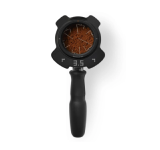
Also known as a naked portafilter, a bottomless portafilter is one of the most effective tools for espresso extraction troubleshooting because it exposes channeling, uneven flow, and puck preparation errors that would otherwise remain hidden.
Bottomless portafilters are widely used by specialty cafés, espresso trainers, and serious home baristas because they turn espresso extraction into a visual feedback tool. Uneven tamping, poor distribution, grinder inconsistency, and channeling become immediately visible through sprays, uneven streams, or broken flow patterns during the shot.
Unlike traditional spouted portafilters designed mainly for cleaner workflow and split shots, bottomless portafilters prioritize extraction visibility, puck preparation feedback, and espresso diagnostics.
Beyond everyday brewing, they are commonly used for:
Barista training programs
Espresso competitions
New coffee recipe development
Café quality control
Dialling in new coffees
A bottomless (naked) portafilter and a traditional spouted portafilter serve the same purpose, but they offer very different brewing experiences. Here's a quick comparison of how they differ in extraction visibility, workflow, and everyday use.
|
Feature |
Bottomless (Naked) Portafilter |
Spouted Portafilter |
|---|---|---|
|
Extraction Visibility |
Full view of extraction |
Hidden beneath spouts |
|
Channeling Detection |
Immediate |
Difficult to spot |
|
Learning the Espresso Technique |
Excellent |
Limited feedback |
|
Counter Cleanliness |
Can spray if puck prep is poor |
Cleaner workflow |
|
Shot Splitting |
Not possible |
Easy |
|
Barista Training |
Widely used |
Less useful for diagnostics |
|
Espresso Competitions |
Commonly used |
Rare |
|
Recipe Development |
Excellent |
Less visual feedback |
|
Beginner Friendliness |
Moderate learning curve |
Easier starting point |
Once the entire extraction becomes visible, it becomes much easier to understand why bottomless portafilters improve espresso technique so quickly.
Most espresso tools only show the final result after the shot is already finished. A bottomless portafilter shortens that feedback loop by showing extraction behavior while the shot is happening. That changes how quickly baristas adjust technique because small puck preparation mistakes become easier to connect directly to the espresso outcome instead of relying only on taste.

This is one reason many specialty cafés and espresso trainers use bottomless portafilters during dialing-in and barista training. Faster feedback usually leads to faster correction, more consistent puck preparation, and better extraction habits over time.
With a bottomless setup, uneven extraction patterns become easier to identify early during the shot instead of after multiple failed attempts. Baristas can adjust grind size, tamp pressure, or puck distribution more accurately because the espresso flow reacts immediately to those changes.
Bottomless portafilters make consistency easier to evaluate. Small improvements in puck prep, leveling, distribution, and dosing become more noticeable shot after shot, which helps baristas build stronger extraction habits much faster through repetition and visual confirmation.
Bottomless extractions respond very differently depending on grinder consistency. Clumping, uneven particle size, and retention issues become more obvious during extraction, which is why precision espresso grinders matter more in bottomless workflows.
Instead of troubleshooting espresso only after tasting the shot, baristas can diagnose flow imbalance, weak saturation, or early blonding, where the espresso lightens in color before extraction is complete, signaling under-extraction. That makes dialing in new beans faster and improves consistency across repeated shots.
Also Read: Espresso Portafilter Sizes: Choose the Right One for Consistent Extraction
Beyond improving extraction technique, bottomless portafilters also make several parts of daily espresso workflow easier and more practical over time.
Beyond extraction training and puck preparation, bottomless portafilters also improve several parts of the espresso workflow that many baristas do not notice until they start using one regularly.
Here are a few:
Cleaner Flavor With Less Residue Buildup: Traditional spouted portafilters can trap coffee oils inside the spouts over time. Bottomless portafilters are easier to clean and reduce stale residue buildup during repeated daily use.
More Cup Clearance for Scales and Taller Cups: Removing the bottom spouts creates extra space beneath the group head, making it easier to fit espresso scales, shot glasses, and taller cups during extraction.
Faster Cleaning and Maintenance: Bottomless portafilters have fewer enclosed areas where coffee residue can collect, which simplifies rinsing and daily maintenance.
Quicker Dialing-In for New Beans: Changes in grind size and extraction behavior become easier to monitor shot by shot, helping reduce wasted coffee while dialing in new roast profiles.
Better for Espresso Training and Coffee Content: The exposed extraction flow makes espresso easier to demonstrate during barista training, café education, and coffee filming setups.
More Direct Espresso Flow Into the Cup: Espresso flows straight from the basket into the cup without passing through metal spouts first, creating a cleaner visual presentation during specialty espresso brewing.
Yes, but expectations matter. A bottomless portafilter makes preparation mistakes highly visible, which can feel frustrating at first. For beginners who want to learn espresso technique quickly, that feedback is valuable. Those using pre-ground coffee or entry-level grinders may find a spouted portafilter easier until they develop a more consistent workflow.
Even with those advantages, bottomless portafilters are not always the most practical choice for every espresso setup or brewing style.
Bottomless portafilters are extremely useful for espresso training and extraction diagnostics, but they are not always the most practical option for every brewing setup. In some workflows, a traditional spouted portafilter can still make more sense because it prioritizes speed, cleaner operation, and easier shot management during daily use.
The difference usually comes down to the type of workflow, grinder setup, and how much extraction control the brewing routine actually needs day to day:
|
Brewing Situation |
Why a Bottomless Portafilter May Not Work Best |
Better Alternative |
|---|---|---|
|
High-volume café rush |
Faster workflows often need split shots, cleaner counters, and less interruption from spraying during service |
Spouted portafilter |
|
Beginners using pre-ground coffee |
Inconsistent grind size usually creates channeling, spraying, and unstable extraction |
Pressurized or spouted setup |
|
Low-quality grinder setups |
Uneven particle size and clumping become much more obvious during extraction |
Better burr grinder before switching |
|
Shared office or casual home setups |
Convenience usually matters more than extraction diagnostics for occasional brewing |
Traditional spouted workflow |
|
Frequent milk-based drink service |
Speed and cleaner shot splitting are often more practical than visual extraction feedback |
Dual-spout portafilter |
|
Baristas still learning puck prep basics |
Bottomless setups can become frustrating early on because every preparation mistake becomes visible immediately |
Start with spouted practice first |
Many espresso professionals also recommend improving grinder consistency and puck preparation before switching fully to a bottomless workflow. Otherwise, the setup can expose extraction flaws faster than the brewing routine is ready to manage consistently.
Once the workflow side is handled, the next step is improving the tools around the bottomless setup that directly affect extraction consistency and shot quality.
A bottomless portafilter clearly exposes extraction quality, which also means the surrounding espresso tools matter much more. Grinder consistency, puck preparation, tamping stability, and basket precision all directly affect how cleanly espresso flows during extraction.

WDT tools help break up coffee clumps and distribute grounds more evenly before tamping, which reduces channeling and spraying during bottomless extractions. This becomes especially important because bottomless portafilters expose uneven puck density much faster during the shot.
WDT tools help break up coffee clumps and distribute grounds more evenly before tamping, which reduces channeling and spraying during bottomless extractions. This becomes especially important because bottomless portafilters expose uneven puck density much faster during the shot.
To improve puck preparation consistency, explore our Espresso Accessories Collection, which includes distribution tools, WDT tools, dosing accessories, and other workflow essentials commonly used in espresso preparation.
These tools help improve puck consistency, reduce weak spots in the coffee bed, and create cleaner extraction flow during bottomless espresso shots.
Bottomless portafilters make inconsistencies in extraction easier to see. While grinder quality plays an important role, distribution technique, tamping consistency, basket quality, and puck preparation can also affect extraction performance.
Uneven grinding often appears immediately through unstable flow, channeling, or spraying during extraction, making grinder choice one of the most important decisions in a bottomless workflow.
Explore our range of commercial and home espresso grinders designed to improve particle consistency, retention control, and overall extraction quality.
Standard espresso baskets are stamped from sheet metal, producing holes that vary in size, spacing, and depth. Precision baskets are machined or laser-cut to tighter tolerances, creating a more uniform hole pattern across the entire basket floor.
That uniformity directly affects extraction resistance, water flow, and puck saturation. It also becomes important with a bottomless portafilter because any inconsistency in the basket floor is immediately reflected in the extraction flow.
Precision baskets and compatible bottomless portafilters help create more predictable extraction and improve diagnostic visibility during espresso preparation.
Browse our Portafilters Collection to explore options compatible with different machine brands and basket sizes.
Also Read: A Complete Guide to Ridged vs Ridgeless Portafilter Baskets
Stable, consistent tamping becomes much more important when using a bottomless portafilter because uneven compression shows up immediately during extraction. Even small differences in tamp angle or pressure create visible flow imbalance, channeling, or spraying during the shot.
Consistent tamping helps reduce uneven puck density and minimizes the risk of channeling during extraction.
Read our Automatic Tamper Guide for a deeper look at improving tamp consistency and building a more repeatable espresso workflow.
You can also explore our Automatic Espresso Tampers Collection to compare available options.
A puck screen sits on top of the coffee bed inside the portafilter basket, between the tamped puck and the group head shower screen. It helps distribute water more evenly across the puck surface at the start of extraction, which reduces the chance of early channeling caused by uneven water contact.
For bottomless portafilter users, puck screens are worth paying attention to because uneven water distribution at the shower screen is one of the less obvious causes of channeling that grind adjustment and tamping alone cannot fix. If the extraction flow still runs unevenly after dialing in grind, dose, and tamp, a puck screen is a low-cost variable worth testing.
They also keep the shower screen cleaner between flushes, which reduces the chance of old coffee residue affecting fresh extractions during repeated daily use.
With the right tools in place, the next step is making sure the preparation routine itself is dialed in correctly from the start.
Spraying is the most common frustration when switching to a bottomless portafilter for the first time. The good news is that it is almost always caused by a fixable preparation mistake, not the portafilter itself. Work through these steps one at a time until the flow runs clean.
Step 1: Dial In Your Grind Size. A grind that is too coarse is the most frequent cause of spraying. Water moves through the puck too quickly and channels instead of flowing evenly. Go finer than you think you need and adjust from there until the flow is steady from the start of the shot.
Step 2: Distribute Grounds Evenly. If grounds are piled unevenly in the basket, tamping locks that imbalance in place and create weak spots where water will channel. Use a WDT tool or distribution tool to level the coffee bed before tamping.
Step 3: Tamp Level Every Time. A tilted tamp creates a thinner section on one side of the puck where water will always find a way through. Press straight down with even pressure and confirm the puck surface looks flat before locking into the group head.
Step 4: Check Your Dose. Too much coffee compresses unevenly against the shower screen. Too little leaves the puck loose under pressure. Weigh every dose and stay within the recommended range for your basket, typically 18 to 21 grams depending on your basket size and roast profile.
Step 5: Watch the First Few Seconds. A brief moment of uneven dripping at the start of extraction while the puck saturates is normal. Minor asymmetry during the first few seconds of extraction can also be normal, especially with lighter roasted coffees. If the flow never evens out or sprays sideways throughout the shot, that points to a grind or distribution issue rather than machine pressure. Persistent spraying or uneven flow throughout the shot is a more reliable indicator of channeling.
Step 6: Change One Thing at a Time. Changing grind size, dose, and distribution all at once makes it impossible to know what fixed the problem. Adjust one variable per shot, watch what changes in the extraction, and move to the next only when needed. Bottomless portafilters give you real-time feedback on every adjustment, which makes this faster than it sounds.
Once the preparation is consistent and the extraction runs clean, the bigger question for many home baristas is whether the switch is worth making in the first place.
The honest answer is: it depends on what you are trying to get out of your espresso setup.
A bottomless portafilter is not a tool that makes espresso taste better on its own. It is a diagnostic tool that makes it easier to see what your preparation is doing wrong and fix it faster. If that kind of feedback loop interests you, it is absolutely worth it.
If you just want a clean, repeatable morning shot without the extra attention, a traditional spouted portafilter may suit your routine better.
Here is what home baristas typically find after making the switch:
It can accelerate learning significantly. Baristas who use bottomless portafilters tend to improve their puck preparation technique faster than those who rely only on taste. Seeing exactly where the shot is channeling or spraying makes it much easier to connect preparation mistakes to extraction outcomes.
It exposes grinder quality quickly. If your grinder produces inconsistent particle sizes or clumps frequently, a bottomless portafilter will make that obvious during extraction. This is useful information, but it can also be frustrating if your grinder is not yet up to the task.
It rewards consistency. Once your grind, dose, distribution, and tamp are dialed in, a bottomless portafilter becomes a reliable confirmation tool. A clean, even stream every shot means your preparation is consistent. Any deviation shows up immediately, which helps catch problems before they become habits.
It is not ideal for every home setup. If you use a lower-end grinder, pre-ground coffee, or are still building foundational technique, a bottomless portafilter can feel more punishing than helpful early on. Getting the grinder and puck preparation sorted first will make the experience far more productive.
For home baristas who are serious about improving their espresso and already have a capable grinder, a bottomless portafilter is one of the most useful and affordable upgrades available. For those still building the basics, it is worth having on the horizon as a natural next step once the fundamentals are in place.
Not directly. A bottomless portafilter does not create more crema than a spouted portafilter. However, because it helps identify channeling and extraction issues more quickly, it can improve shot consistency. Better extraction often results in richer, more stable crema, but the improvement comes from technique rather than the portafilter itself.
Either way, understanding what a bottomless portafilter actually does and does not do makes the decision much easier to get right.
A bottomless portafilter will not fix a bad grind or cover up poor puck preparation. What it will do is show you exactly where the problem is, whether that is uneven distribution, a tilted tamp, or a grinder producing inconsistent particle sizes, so you can correct it shot by shot instead of guessing for months.
For home baristas with a capable grinder and solid basic technique, it is one of the most affordable and impactful upgrades available. For cafés running multiple baristas, it is one of the fastest ways to standardize puck preparation and reduce shot-to-shot variation across a full service.
Not sure where to start? The team at Pro Coffee Gear will help match the right grinder, tamper, and portafilter to your specific machine and workflow.
A spouted portafilter has one or two metal spouts underneath that direct espresso into the cup. A bottomless portafilter removes those spouts entirely, so espresso flows directly from the filter basket. This exposes the full extraction in real time, making channeling, uneven flow, and puck preparation mistakes immediately visible instead of hiding them behind enclosed metal channels.
Not on its own. A bottomless portafilter is a diagnostic tool, not a flavor upgrade. What it does is help you identify and fix preparation mistakes faster, which leads to more consistent extraction over time. Better consistency is what improves taste, and a bottomless portafilter speeds up the process of getting there.
Spraying is almost always caused by one of four things: grind too coarse, uneven ground distribution, a tilted tamp, or an incorrect dose. Work through each variable one at a time, starting with grind size, until the flow runs clean and even from the start of the shot.
No, but the portafilter needs to be compatible with your machine's group head size, typically 58mm for most commercial and prosumer machines, or 54mm for compact home machines such as those from Breville, Sage, and select DeLonghi models. Always confirm the group head diameter and lug configuration before purchasing. Compatibility depends on both the basket diameter and the portafilter lug configuration used by the machine.
For home baristas who already have a capable burr grinder and understand basic puck preparation, yes. The visual feedback accelerates technique improvement faster than taste alone. For those still using pre-ground coffee or an entry-level grinder, improving those first will make the bottomless portafilter experience far more productive and less frustrating.
Our team can help you find the best fit based on your space, volume, and budget.
Talk to a Specialist

