


Kees Van Der Westen Speedster Espresso Machine Review
|
|
Time to read 13 min
Your Cart
Your cart
Favorites





Shop by Brands

Shop by Brands
Shop by Brands


Shop by Brands


Shop by Brands
Shop by Brands
|
|
Time to read 13 min
Choosing an espresso machine often comes down to balancing style and performance. Some machines look sleek but struggle under heavy use, while others deliver consistent results without demanding attention. This is where many baristas start asking questions: what if a machine could blend visual appeal with smooth day-to-day performance, and still feel rewarding to use?
The Speedster espresso machine review is particularly relevant for those who want a responsive machine, one that reacts immediately to every adjustment, like a finely tuned sports car. But does it maintain this responsiveness when steaming multiple milk pitchers or switching between beans throughout the day?
In this speedster espresso machine review, you’ll explore the details that help answer these questions and see how this machine shapes the brewing experience from shot prep to milk work. Let’s move into the overview.
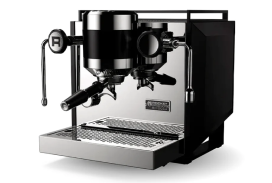
The Speedster espresso machine review highlights a compact single-group setup with dual boilers, supporting café-level brewing in smaller spaces.
Adjustable pre-infusion and PID-controlled temperature make the Speedster ideal for experimenting with different roast profiles.
A 3.5-liter steam boiler ensures smooth milk texturing and consistent performance for multiple milk-based drinks.
The Speedster’s design balances aesthetics and ergonomics, making workflow efficient while looking striking on any counter.
Adhering to recommended water and power specifications ensures reliable long-term performance.
The Speedster appeals to those seeking a compact single-group machine that still delivers consistent, café-quality performance in smaller specialty setups. It’s ideal for baristas who switch between light and dark roasts throughout the day, maintaining consistent performance without slowing down. The Speedster provides precise control while remaining intuitive and easy to operate.
Before moving into the feature breakdown, here is a quick look at what the Speedster brings to the table based on its core build and setup:
Single Group Format: Designed for focused brewing needs where one group is enough for a steady drink flow.
Dual Boiler Build: One boiler for brewing and one for steaming, so each part of the process has its own heating system.
Electronic Temperature Control: Uses a PID system to adjust and hold temperature across different heat loads.
Oversized Coffee Boiler: Helps maintain brewing temperature even when preparing multiple back-to-back shots.
Two Variants Available: Standard model or Idro-matic model that offers adjustable progressive pre-infusion.
Steam Boiler with Heat Exchanger: Incoming water is pre-heated before entering the coffee boiler.
Mixed Hot Water Dispenser: Lets users pull hot water at a milder temperature for Americanos or teas.
220 to 240 V Compatibility: Suitable for setups with a higher voltage supply.
Dimensions: 48" L × 25.6" D × 14.6" H.
Weight: Built with strong components at 99.21 lbs.
After understanding the Speedster espresso machine review, let’s dive into its design and build quality to see how form meets function.
The Speedster is built for users who want a machine that looks special on the counter while still being tough enough for steady daily brewing. Many users select the Speedster for its one-group design that doubles as a visually striking centerpiece. Before getting into the finer details of its look, handling, and upkeep, here is how the build quality sets the stage for what you will see across the next points.

Here is how the Speedster approaches design and construction in a way users generally find reassuring:
Striking metal frame: The body uses polished metal surfaces that make the machine stand out as a display piece.
Clean curved lines: The rounded frame gives it a smooth presence without looking heavy on the counter.
Crafted front panels: Each panel is shaped and fitted in a way that feels handmade rather than factory-stamped.
Balanced proportions: At 48 inches long, 65 inches deep, and 37 inches tall, it has an imposing stance while still suiting smaller setups.
Purposeful accents: Small design touches, like angled edges and visible metalwork, add a sense of intentional finishing.
Straightforward paddles: The paddles feel responsive, giving a clear sense of action when you start or stop brewing.
Clear button layout: Buttons sit where your hands naturally move, so you are not hunting for controls during a busy moment.
Easy reach steam wand: The placement helps you switch from brewing to steaming without shifting your posture too much.
Comfortable group head height: The group sits at a workable level so you can load and unload the portafilter without awkward angles.
Ergonomic layout: Minimizes hand movement during back-to-back drink preparation for smoother workflow.
Accessible boilers: The dual boiler system is arranged so a technician can reach service areas without pulling the whole machine apart.
Direct access panels: Panels can be removed quickly for cleaning or checks, which helps during routine service cycles.
Clear water quality needs: It works best with water at 40 to 70 ppm alkalinity, zero chloride, and pH near 7, reducing mineral buildup.
Structured parts support: The model includes a 12-month parts warranty along with eligibility for the standard 30-day return inspection.
Durable construction: The 99.2 lb frame and sturdy assembly provide long-term stability, even with regular use and maintenance.
Also Read: Finding the Best Espresso Grinder for Home Use
With the Speedster espresso machine review in mind, let's explore its key features and performance to see what powers every cup.
The Speedster is designed to give users more control over how their coffee behaves during brewing, steaming, and water output. Each feature is built around supporting a steady workflow while helping users get repeatable results even during long hours of use. Before getting into the individual performance points, here is how these abilities shape what you get from the machine.

Here are the key performance functions that define how the Speedster operates:
Independent brewing and steaming: Dual boilers allow simultaneous espresso extraction and milk steaming, eliminating downtime between tasks.
Heat exchanger support: The steam boiler includes a heat exchanger that preheats incoming water before it reaches the coffee boiler.
Oversized coffee boiler: The larger brewing boiler helps the machine hold its temperature during long runs.
Electronic temp control: The PID-driven control lets you set boiler pressure on the LCD, helping you match the machine to the roast you use.
Why it matters: A machine that recovers heat quickly helps you avoid flavor changes during a busy session.
Adjustable chamber design: The machine wets the coffee puck at lower pressure before full brewing, giving the grounds time to open up.
Progressive Idro-matic option: Users who choose the Idro-matic setup get more control over how the pressure ramps up.
Helps with puck coverage: A slower start reduces uneven flow during extraction.
Analogy: Like pre-soaking a dry sponge, adjustable pre-infusion allows water to penetrate the coffee evenly for consistent extraction.
Example: Light roasts that tend to resist water can settle more evenly during a slow-starting pre-infusion.
Strong 3.5-liter steam boiler: The large capacity supports extended steaming without power drops.
Responsive wand control: The wand reacts quickly, giving you smoother handling while stretching milk.
Quick heating: The dual boiler and heat exchanger combo means the steam stays ready even while you pull shots.
Milk texturing: Steady steam pressure produces smooth, fine microfoam ideal for latte art.
Tip for buyers: If you prepare back-to-back milk drinks, stronger steam recovery keeps you from slowing down.
Voltage and amperage: Works on 220 to 240 volts at 10 to 14 amps, with wattage ranging from 2200 to 3100 watts.
Water limits: Ideal water falls between 40 to 70 ppm alkalinity, zero chloride, and about pH 7 to protect the boilers.
Water supply: Use filtered water to protect boilers from scale buildup and ensure consistent performance.
Why it matters: Following these limits keeps the internal parts healthier and avoids warranty issues.
Important tip: If you run a café with a variable water supply, regular testing helps you stay within the machine’s safe range.
Standard or Idro-matic: Buyers can choose between the semi-automatic version or the Idro-matic setup for progressive pre-infusion.
Finish variations: Panels and exterior surfaces can be selected based on the visual style you prefer.
Accessory options: You can add supportive parts that match your workflow needs.
Adjustable pre-infusion: The Idro-matic option provides precise control over pressure ramp-up during extraction.
Customer question: Would an adjustable pre-infusion system make your dial-in process easier on a daily basis?
Looking to elevate your espresso game with a single-group powerhouse? The Kees Van Der Westen Speedster at Pro Coffee Gear delivers precise temperature control, strong steam power, and adjustable pre-infusion for café-quality shots every time, are you ready to bring professional-level brewing to your counter?
Now that we’ve covered the Speedster espresso machine review and its features, let’s see how it performs when brewing espresso and steaming milk.
The Speedster is designed to support users who switch between different coffee styles throughout the day, especially when handling lighter or more complex roasts. Since it carries a dual boiler setup, a large 3.5-liter steam boiler, and adjustable pre-infusion.
Despite its compact single-group design, it delivers café-quality performance throughout the day. Before exploring how this translates into everyday use, here are the performance points that stand out during normal brewing and steaming sessions.
Here are the real performance traits you can expect from the Speedster:
Better puck wetting: Adjustable pre-infusion gives the coffee bed time to take in water more evenly, especially helpful for lighter beans.
Shot flexibility: Users can shift between fast and slow extractions depending on how the coffee behaves.
Steam strength for milk drinks: The 3.5-liter steam boiler gives ample power for latte or cappuccino service without waiting.
Responsive steam wand: Enables smooth milk texturing and fine microfoam for latte art.
Predictable workflow: Dual boilers keep brewing and steaming separate, helping users avoid sudden drops in heater response.
Having seen the Speedster espresso machine review in action, it’s time to weigh its pros and cons to help you make an informed choice.
The Speedster is built for users who want a compact single-group that can still support café-style brewing and milk service. Its mix of dual boilers, adjustable pre-infusion, and a 3.5-liter steam boiler makes it practical for both home bars and small commercial setups. Before you decide if it fits your workflow, here is a clear look at its strengths and the areas that need small adaptations.
Here are the pros and cons to help you understand the machine better:
Pros
Dual boiler setup: Helps you brew and steam at the same time without waiting between drinks.
Adjustable pre-infusion: Allows users to fine-tune the way different beans take in water.
Large steam boiler: The 3.5-liter capacity provides strong and steady steaming for multiple milk drinks.
Oversized coffee boiler: Helps hold heat during repeated brewing sessions.
Mixed water outlet: Supports drinks like Americanos and teas with a more suitable water temperature.
Compact single-group body: Easier to place in smaller bars without losing key features found in bigger machines.
Cons with solutions
Learning curve: New users may find pre-infusion and extraction adjustments complex initially.
Solution: Start with mid-range settings and adjust gradually based on flavor changes.
Needs proper water management: Hard water can affect performance over time.
Solution: Use filtered water and test levels regularly to stay within recommended ranges.
A larger steam boiler may take longer to warm up: The 3.5-liter size needs a bit more time before steaming is ready.
Solution: Turn the machine on a few minutes earlier, especially during rush periods.
Higher cost: Premium components and build quality place the Speedster in a higher price range, but it offers long-term reliability.
Solution: Users who want long-term reliability and a stable daily workflow often find it worth the investment.
With the pros and cons of the Speedster espresso machine review clear, let’s compare it to similar high-end machines to see how it stacks up.
The Speedster is often chosen by users who want a compact single group that feels like a scaled-down version of a full commercial setup. But how does it stack against larger multi-boiler machines like the Kees Van Der Westen's Spirit espresso and Slim Jim, which are built for heavy volume and multi-group operation? To help you see the differences clearly, here is a feature-by-feature comparison.
Here is a table outlining how these machines differ in size, boiler setup, controls, and workflow style:
|
Features |
|||
|
Boiler Type |
Dual Boiler |
Multi-Boiler |
Multi-Boiler |
|
Group Heads |
1 |
Duette or Tripette |
2 or 3 |
|
Steam Boiler Capacity |
3.5 L |
10.5 L or 19.5 L |
10.5 L |
|
Coffee/Brew Boiler |
Oversized single brew boiler |
2.1 L per group (independent) |
Independent brew boiler by group |
|
Temperature Control |
Electronic temperature control system (PID) |
Independent PID for each boiler |
Electronic temperature control system (PID) |
|
Pre-Infusion |
Adjustable pre-infusion chamber (optional Idro-Matic) |
Pre-infusion pressure profiling |
Pre-infusion chamber |
|
Hot Water System |
Mixed hot water outlet |
Standard hot water |
Mixed hot water dispenser |
|
Operation Style |
Semi-automatic |
Auto-volumetric with lever controls |
Auto-volumetric |
|
Heating Power |
2200 to 3100 W |
7300 to 7600 W or 9400 to 10100 W |
6325 to 7525 W |
|
Voltage |
220–240 V |
220–240 V |
220–240 V |
|
Machine Length |
48 in |
45.3 in or 49.6 in |
36.6 in |
|
Depth |
25.6 in |
28 in |
27.9 in |
|
Height |
14.6 in |
17.7 in |
16.1 in |
|
Weight |
99.2 lbs |
198.5 lbs or 275.6 lbs |
275.5 lbs |
|
Suitable For |
Small specialty cafés or home bars |
High-output specialty coffee bars |
Medium to high-volume bars needing multi-group flexibility |
Also Read: A Guide to Different Types of Coffee Makers and Brew Methods
After comparing the Speedster espresso machine review with other high-end models, let’s dive into a buying guide and practical tips to help you choose wisely.
Choosing a machine like the Speedster often comes down to how you brew, how much you brew, and how much control you want over the process. Since the Speedster blends a compact footprint with features usually seen on larger multi-boiler setups, it helps to look at the practical factors that matter before making a purchase. Here are some points that simplify the decision and guide you toward picking the right configuration.

Here are the key buying pointers and helpful tips to consider before choosing the Speedster:
Check your daily drink volume: A single group works well if you're making drinks steadily throughout the day, not rapid-fire batches.
Decide between Standard or Idro-Matic: The Idro-Matic option helps if you often switch between light and medium roasts.
Confirm power availability: The Speedster draws between 2200 and 3100 watts, so verify that your 220 to 240 volt supply can support it.
Plan your counter space: At 48 inches long, it needs more room than most single-group machines.
Match your milk routine: If you prepare many milk-based drinks, the 3.5-liter steam boiler offers enough steam strength to keep up.
Think about water quality: Follow the manufacturer’s water requirements to avoid internal scale or damage.
Prepare for maintenance access: Regular cleaning and backflushing will help maintain smooth extractions and consistent steam performance.
With these buying tips in mind, the Speedster espresso machine review wraps up with key takeaways to help you make the best choice for your setup.
The Speedster espresso machine review shows why this single-group model stands out for users who want commercial output without stepping into multi-group territory. Its dual-boiler setup, oversized coffee boiler, and adjustable pre-infusion make it appealing for those who enjoy dialing in roasts and pushing flavor development beyond the basics.
For tools, accessories, and parts that support professional coffee workflows, Pro Coffee Gear offers a curated collection built for durability and performance. If your goal is to prepare café-style espresso, test different profiles, or build a more reliable daily routine, the Speedster fits naturally into that path.
Ready to elevate your espresso setup? The Speedster delivers precise brewing, strong steam, and adjustable pre-infusion, making it a standout choice for focused, café-quality performance at home or in small specialty bars.
Thanks to its dual boilers, the Speedster reaches optimal brewing and steaming temperature in roughly 10–15 minutes. This helps users start pulling shots faster without waiting for long warm-up cycles. It is helpful for busy mornings or small cafés with steady traffic.
Yes, beginners can use it, but they should expect a learning curve since the machine offers advanced controls. Once familiar with the workflow, the levers, pre-infusion adjustments, and shot monitoring become easier. Many users find it rewarding because it encourages steady improvement.
Using filtered water protects the boilers, prevents scale buildup, and ensures consistent espresso flavor. Since water composition affects taste and machine health, filtration helps avoid mineral buildup. It also keeps the Speedster functioning closer to its intended performance.
The Idro-matic option is most helpful for users who enjoy experimenting with pressure changes during pre-infusion. Home users who pull multiple shots a day may appreciate the extra control. Those who want a simpler workflow may prefer the standard version.
Daily group cleaning and backflushing keep the internal components in good condition. Wiping the body and the steam wand after every session helps prevent buildup. A deeper clean can be scheduled weekly, depending on usage.
Our team can help you find the best fit based on your space, volume, and budget.
Talk to a Specialist

