


Best Office Coffee Maker Guide 2026: How They Work & What to Consider
|
|
Time to read 8 min
Your Cart
Your cart
Favorites





Shop by Brands

Shop by Brands
Shop by Brands


Shop by Brands


Shop by Brands
Shop by Brands

|
|
Time to read 8 min
Coffee is still one of the biggest productivity drivers in the workplace, and in 2026, offices are investing more than ever in better brewing solutions. But with so many machines on the market, it can be hard to know which one actually fits your team’s needs.
If you're searching for the best office coffee maker, understanding how different coffee machines work is the first step to making a smart, long-lasting choice.
In this guide, we break down the core mechanics behind today’s most popular coffee maker machines, how they differ, and the key factors to consider before buying.
Match the machine to your team's rhythm: The best office coffee maker handles peak demand without slowing workflow.
Brewing style matters: Drip, pod, bean-to-cup, and espresso systems each serve different office cultures and drink habits.
Real-world factors drive success: Ownership, maintenance, waste, and user behavior matter more than specs alone.
Think long-term value: Cost per cup and uptime impact your budget far more than the upfront price.
Right machine, better workplace: A well-chosen office coffee maker elevates morale, convenience, and daily team routine.
A coffee maker is a brewing system designed to heat water, move it through ground coffee at a controlled rate, and produce a cup with consistent flavor and strength. While that sounds simple, today’s machines rely on very different internal mechanisms to get there.

And if we’re comparing options or helping you choose the best office coffee maker, understanding these core mechanics is essential.
Below is a breakdown of the main coffee maker types and how each one works:
Drip brewers heat water and disperse it over coffee grounds in a filter basket, allowing gravity to draw the brewed coffee into a carafe below. The steady flow rate and larger batch size make them ideal for keeping teams supplied without constant refills.
How it works:
Heats water and delivers it evenly over the grounds
Gravity pulls brewed coffee through a paper or metal filter
Collects in a glass or thermal carafe
Output style: Carafe (8–12+ cups)
Ideal office use: Larger teams that want simple, reliable, all-day coffee with minimal fuss.
Single-serve systems pierce a sealed pod or capsule and force hot water through it at a controlled pace. Because every pod is pre-dosed, these machines deliver extremely consistent results with almost no cleanup.
How it works:
Water heats rapidly
Machine punctures a pod and pushes water through pre-packed coffee
Brews directly into a mug
Output style: One cup at a time
Ideal office use: Teams that value speed, convenience, and minimal mess, especially in high-traffic areas.
These machines grind whole beans fresh, tamp automatically, and brew using internal espresso-style mechanics. Many also steam milk or offer multiple drink profiles, all with a single button press.
How it works:
Built-in grinder doses fresh coffee
Internal brewing unit tamps and extracts under pressure
Adjusts grind, temperature, and recipe profiles automatically
Output style: Espresso, Americanos, Lattes, specialty drinks
Ideal office use: Offices wanting café-quality drinks with no barista skills required.
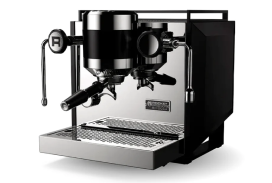
Espresso machines heat water and deliver it at high pressure through finely ground coffee. They allow the most control: dose, tamp, time, pressure, but require a trained user to get consistent results.
How it works:
Heats water to precise espresso temperatures
Uses a pump to push water through compacted grounds at 9+ bars of pressure
Offers manual or semi-automatic shot control
Output style: Espresso-based drinks
Ideal office use: Teams with trained coffee enthusiasts or small cafés inside workplace settings.
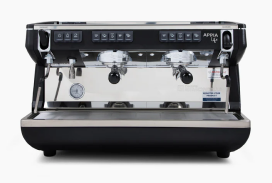
These machines are built for constant use, offering multiple drink options with little to no user interaction. They’re engineered for high throughput and minimal downtime.
How it works:
Automated internal mechanisms mix hot water with coffee, powders, or fresh ingredients
Often plumbed-in for a continuous water supply
Designed for rapid, unattended dispensing
Output style: Single cup or high-volume servings
Ideal office use: Large offices, reception areas, waiting rooms, and spaces needing reliable 24/7 service.
Before we decide which machine belongs in your workplace, we need to look at the factors that actually influence daily use, cost, and team satisfaction.
When we help offices choose a coffee maker, we’re not just looking at brewing specs; we’re looking at how a machine behaves in the real rhythm of a workday. The right office coffee maker has to survive the morning rush, stay intuitive for a rotating cast of users, and deliver consistent results even when no one is paying attention to settings or maintenance.

That’s why understanding a few key considerations upfront makes all the difference:
We don’t just look at how many people are in the office; we look at how they drink.
Two offices with 20 people can have completely different coffee needs.
Map out peak demand windows (usually 8–10 am and right after lunch).
Estimate cups per hour, not per day – that’s what reveals whether a single drip machine is fine or you need a bean-to-cup or high-capacity brewer.
If people queue or give up because the machine is always “busy”, even a great coffee maker will feel like a bad investment.
A simple rule: if more than 5–6 people regularly want coffee within the same 15–20 minutes, we start looking at higher-capacity or faster workflows.
In most offices, machines fail not because they’re bad, but because no one feels responsible for them.
We always ask:
Who cleans it daily? (Person, team, or cleaning contractor?)
Who refills beans, water, pods, milk?
Who calls for service when there’s an error code?
If everything falls on “whoever notices”, the machine ends up dirty, underused, and resented.
Choosing a simpler machine with clear cleaning reminders, easy access to parts, and obvious error messages is often better than a complex system no one wants to touch.
The best office coffee maker isn’t always the fanciest one — it’s the one your team will actually use every day.
We look at:
Fuel-only teams – just want fast, hot coffee that doesn’t taste burnt. A solid drip or reliable pod system might be enough.
Mixed crowd – some care about taste, some just want caffeine. Bean-to-cup can keep both groups happy if it stays simple to operate.
Coffee-obsessed offices – people talk about origin, roast, and grind. Here, bean-to-cup or espresso setups make sense, as long as a few “champions” are happy to learn the machine.
If your culture doesn’t care about lattes and flat whites, paying for advanced milk systems or complex drink menus doesn’t add value.
In an office, downtime hurts more than bad coffee. A broken machine at 9:00 am on Monday is a morale killer.
When we recommend a machine, we think about:
How quickly can someone diagnose issues in the office? Simple interfaces and clear error codes matter.
Are spare parts and service support easy to get? Especially important for commercial or super-automatic machines.
Can the machine limp along in a reduced mode (e.g., black coffee only) if the milk system is down?
If your office is remote or doesn’t have easy access to technicians, a slightly simpler, more robust machine usually wins over a feature-heavy, fragile one.
A lower upfront price can still end up costing more over time. We like to frame the budget in terms of cost per cup:
Pods & capsules – higher cost per cup, super convenient, great for small teams or low usage.
Beans + bean-to-cup – higher machine cost, but much lower cost per cup over time.
Bulk drip – cheapest per cup, best when you know big batches will be consumed quickly.
If your team is buying coffee outside the office today, compare machine + beans vs the current café spend. Many offices find that a higher-end machine pays for itself surprisingly quickly.
We always picture where the machine will sit before recommending anything.
Ask:
Is it going in a quiet office where grinder noise will be annoying?
Is there enough counter depth and height (especially under cupboards)?
Do you have access to power and, ideally, plumbing if you ever upgrade to a plumbed-in system?
Sometimes the smartest move is choosing a slightly smaller, quieter machine that fits the space perfectly, instead of forcing a large commercial unit into a cramped kitchenette.
For many teams, how the coffee is made matters almost as much as how it tastes.
We look at:
Waste profile – pods vs beans vs ground coffee filters.
Recycling or compost options — does your office already manage waste streams?
Energy use — machines that can go into eco or standby modes outside peak times.
If your company talks a lot about sustainability, a high-waste system (like heavy capsule use) can feel off-brand fast.
Also Read: Finding the Best Espresso Grinder for Home Use
With the right guidance and a clear understanding of what matters most, choosing the best office coffee maker becomes far less of a guessing game.
What we’ve learned working with countless workplaces is that the best office coffee maker doesn’t just brew coffee, it quietly shapes culture. It influences how people gather, how they pause, and how they reset between moments of deep work.
At Pro Coffee Gear, we help offices move beyond one-size-fits-all solutions by matching teams with machines that actually support the way they work.
If you’re ready to upgrade your workspace, explore Pro Coffee Gear’s range of office-ready coffee makers and find the system that elevates your team’s daily routine.
High-volume teams benefit from plumbed-in machines to avoid constant refills. Smaller teams usually prefer tank-fed models for easier placement.
Yes — modern bean-to-cup units brew quickly and often cut wait times by producing higher-quality coffee at a faster pace during peak hours.
Waste. Pods, stale drip batches, and unused milk can drive up long-term costs. Matching the machine to real usage patterns keeps waste — and expenses — low.
Choose a machine with simple menus, clear icons, and automatic cleaning prompts. A straightforward interface gives the most consistent results in busy offices.
Often yes — not for features, but for reliability. Better machines deliver hot, consistent coffee and avoid the downtime common with cheaper models.
Our team can help you find the best fit based on your space, volume, and budget.
Talk to a Specialist

