


Top Rated Espresso Machines Under $3000
|
|
Time to read 10 min
Your Cart
Your cart
Favorites





Shop by Brands

Shop by Brands
Shop by Brands


Shop by Brands


Shop by Brands
Shop by Brands
|
|
Time to read 10 min
Buying an espresso machine under $3000 often feels like a balancing act between performance, durability, and long-term value. At this price point, many machines can look similar on paper, but the wrong choice may lead to inconsistent shots, slow extractions, or weak milk texture during daily use. With 71% of coffee drinkers now preparing coffee exclusively at home, consistent daily performance matters more than ever.
The right choice comes down to how well a machine fits your workflow, not just its feature list. In this range, you can access dual boilers, PID temperature control, and commercial-grade build quality that supports real espresso performance day after day. The key is knowing which setup matches your routine, whether you need faster milk steaming, tighter temperature stability, or a more hands-on brewing experience.
This guide breaks down the top-rated espresso machines under $3000 so you can focus on what actually matters for your setup and choose with confidence.
Key Highlights:
Espresso machines under $3000 balance performance, durability, and workflow efficiency, with features like PID temperature control, dual boilers, and commercial-grade build quality that play a key role in consistent daily performance.
“Top-rated” models are defined by real-world usability, including temperature stability, steam power, pressure consistency, build quality, and ease of maintenance rather than brand popularity alone.
Options in this range include semi-automatic, heat exchanger, dual boiler, and super-automatic machines, each suited to different needs such as milk-heavy routines, precision control, or convenience.
The right choice depends on daily usage, drink preferences, control level, space, grinder pairing, and long-term usability, ensuring the machine fits your workflow rather than just its specifications.
A machine being labeled “top rated” in this price range is not just about popularity or brand recognition. It is evaluated based on how well it supports daily use, especially when consistency matters across multiple drinks.
Below are the main factors that separate a top-rated machine from an average one in the under-$3000 range.
Temperature Stability: Consistent brew temperature helps produce repeatable espresso shots. Machines with PID temperature control reduce fluctuations that can affect flavor and extraction quality.
Boiler Configuration: Dual-boiler machines are highly rated because they allow simultaneous brewing and steaming. This improves workflow, especially for users making multiple milk-based drinks.
Steam Performance: Strong steam pressure creates smoother microfoam and shortens milk preparation time. This becomes important for latte and cappuccino-focused routines.
58mm Commercial Portafilters: Many top-rated machines use 58mm portafilters because they improve accessory compatibility and support more consistent extraction performance.
Build Quality: Stainless steel construction, durable internal components, and serviceable parts help machines last longer under regular use.
Workflow Efficiency: A well-designed machine reduces waiting time and unnecessary adjustments. Faster recovery times and intuitive controls improve daily usability.
Pressure Consistency: Stable pump pressure supports balanced extraction and improves shot repeatability across different coffee beans and grind settings.
Pre-Infusion Features: Machines with programmable pre-infusion gradually saturate the coffee puck before full pressure extraction, helping improve shot consistency.
Ease of Maintenance: Accessible water tanks, removable drip trays, and easier cleaning routines contribute to a better long-term ownership experience.
Upgrade Potential: Top-rated machines often support aftermarket accessories such as precision baskets, bottomless portafilters, and upgraded tamping tools.
Footprint and Kitchen Fit: Compact machines with efficient internal layouts are often preferred when counter space is limited, but performance expectations remain high.
In simple terms, a top-rated espresso machine under $3000 should help you make better coffee with less effort, not require constant adjustments or workarounds.
Also Read: Best Office Coffee Maker Guide 2026: How They Work & What to Consider
Espresso machines in this range fall into distinct categories based on automation level, boiler configuration, and user control. Understanding these types helps narrow choices before comparing specific models.
These machines give the user control over grinding, tamping, and shot timing while automating pressure and temperature stability. They are popular among serious home users who want flexibility without fully manual brewing.
Semi-automatic machines are often the best balance between control and consistency. They allow skill development without overwhelming the user with too many variables in daily use.
Heat exchanger machines use a single boiler system that handles both brewing and steaming through different internal pathways. This allows simultaneous espresso extraction and milk steaming, which is useful for milk-based drink workflows.
They are known for strong steam performance but require more understanding of temperature management, especially cooling flush techniques, before brewing to maintain stable extraction temperatures.
Dual boiler systems separate brewing and steaming into two independent boilers. This allows precise temperature control and simultaneous operation without compromise.
This setup is widely considered the most stable and efficient for users making multiple milk-based drinks in sequence. It is also the most forgiving in terms of consistency, making it a preferred choice for advanced home users and small café setups.
These machines automate grinding, dosing, tamping, brewing, and sometimes even milk frothing. They prioritize convenience over manual control.
While they are easy to use, they often limit customization and are less preferred by users who want to fine-tune espresso quality in everyday brewing.
Machines in this price range are selected based on temperature stability, boiler configuration, build quality, and workflow efficiency. The focus is on models that perform consistently in both home and light commercial-style environments.
|
Machine |
Boiler Type |
Best For |
|
Sanremo Cube R |
Heat Exchanger |
Modern features & compact footprint |
|
Rocket Appartamento |
HX |
Entry-level prosumer buyers |
|
Rocket Appartamento TCA |
HX + temp adjustment |
Users wanting more temperature control |
|
Rocket Giotto Fast V |
HX |
High-volume home use |
|
Rocket Mozzafiato Fast V |
HX |
Performance-focused enthusiasts |
Let’s explore espresso machines in detail:
The Sanremo Cube R is the most premium-feeling option in this group, especially if you value quieter operation and a cleaner installation path. Its heat exchanger layout, rotary pump, and mechanical pre-infusion give it a more refined workflow than many compact machines in this price band.
Price: $2,799.
Key Specs:
Heat exchanger boiler with a 1.9L steam boiler capacity.
1-group machine with an E61 thermosiphon group head.
Rotary pump for quieter pressure delivery and steadier extraction.
1.8L removable water tank for flexible placement and easier refilling.
120V, 12.5A, 1500W, with a 61 lb build that feels substantial on the counter.
Pros:
Feels closer to a premium home setup than a basic prosumer machine.
The rotary pump helps keep noise lower and pressure delivery more controlled.
Mechanical pre-infusion adds a useful layer of shot consistency.
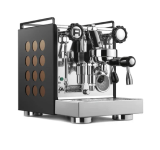
The Rocket Appartamento is the most space-conscious pick here, and that matters if your kitchen layout is tight. It keeps the workflow simple with manual controls, a heat exchanger boiler, and a compact stainless steel body that still feels premium.
Price: $1,950.
Key Specs:
Heat exchanger boiler with a heated group head for steadier brewing temperature.
1-group machine with a vibration pump.
Compact footprint, with dimensions listed at 10.7" L x 16.7" D x 14" H.
110V operation, 10A draw, and 1350W wattage.
Built 100% in stainless steel.
Pros:
The lowest-priced machine in this group, which leaves more budget for a grinder.
Its small footprint works well in tighter kitchens or apartment counters.
Manual controls keep the workflow straightforward for users who like a hands-on routine.
The Appartamento TCA is the smarter, more temperature-focused evolution of the classic Appartamento. It keeps the same compact Rocket feel, but adds a 4-setting temperature control system and an updated frame, so it appeals to buyers who want more control without jumping into a much larger machine.
Price: $2,300.
Key Specs:
Heat exchanger boiler with E61 group heads.
1-group machine with a vibratory pump and motor.
110-120V operation, 10A amperage, and 1300W wattage.
Dimensions listed at 10.63" L x 17.63" D x 14" H.
48.5 lb machine weight, which keeps it substantial but still manageable for home use.
Pros:
The 4-setting temperature control is the biggest upgrade here, especially for users who want more roast flexibility.
It includes energy-saving behavior, which adds a practical ownership benefit.
It keeps the familiar Rocket format while improving temperature management and overall refinement.
The Giotto Fast V stands out for speed and everyday efficiency. Its approximately 12-minute heat-up time makes it a practical choice for users who want a machine that becomes ready quickly without giving up the classic heat exchanger workflow.
Price: $2,750.
Key Specs:
Heat exchanger machine with semi-automatic operation.
Approximately 12-minute heat-up time.
OLED display for clearer feedback and diagnostics.
Dual pressure gauges for better extraction monitoring.
1.8L boiler capacity with boiler insulation and a vibration pump.
Pros:
The fast heat-up time is ideal for users who do not want a long wait before brewing.
The OLED display and pressure gauges make the machine easier to monitor at a glance.
It has a more modern operational feel than many traditional heat exchanger machines.
The Mozzafiato Fast V is the most control-oriented machine in this lineup. It pairs Rocket’s heat exchanger design with programmable PID temperature control, a dual pre-infusion E61 group head, and noise-dampening touches that make daily use feel more polished.
Price: $2,750.
Key Specs:
Heat exchanger system with semi-automatic operation.
Programmable PID with four adjustable settings for temperature management.
E61 group head with dual pre-infusion support.
Dual pressure gauges for extraction monitoring.
Noise-dampening features, a vibration pump, and height-adjustable feet.
Pros:
The programmable PID gives it a clear edge for temperature-sensitive users.
The dual pre-infusion setup adds a more refined extraction profile.
Noise suppression and adjustable feet make it feel better finished for daily home use.
Also Read: Espresso Shot Pitcher for Perfect Brewing
Choosing the right espresso machine under $3000 depends less on brand preference and more on how the machine fits your daily workflow.
Start with how the machine will actually be used each day. This shapes almost every other decision more than specs or brand.
Focus on espresso-only use if milk drinks are occasional
Prioritize steam performance if lattes and cappuccinos are frequent parts of your routine
Choose simple controls if multiple people will use the machine
Consider speed and ease if it’s part of a busy morning routine
This keeps the choice practical and avoids overpaying for features you won’t use.
Your preferred drinks determine which features matter most in real use.
Espresso-focused users should prioritize shot stability and consistency
Milk-heavy users should focus on steam strength and speed
Casual users benefit from simple, quick-start machines
High-frequency users need smooth back-to-back performance
This helps align machine capability with actual consumption patterns.
Different machines offer different levels of hands-on control during brewing.
Choose manual control if you enjoy adjusting variables during brewing
Choose semi-automated settings for repeatable results
Use programmable features for a balance between control and ease
Avoid complexity if consistency is more important than tweaking
The right level of control should match your comfort, not just curiosity.
A machine must work in your physical space as smoothly as it works technically.
Measure counter space before comparing models
Check clearance for filling water and accessing components
Consider ease of maintenance and cleaning access
Ensure power and placement won’t cause daily inconvenience
A good fit reduces friction every time you use the machine.
Beyond performance, ownership experience matters for long-term satisfaction.
Prefer machines with accessible parts and service support
Consider how often routine cleaning will be needed
Evaluate whether features will remain useful over time
Balance upfront price with long-term reliability
This ensures the machine stays practical beyond the initial purchase phase.
Espresso quality depends heavily on grind consistency, not just the machine.
Pair the machine with a capable espresso grinder
Ensure fine adjustment control for dialing in shots
Treat the grinder and machine as a single system for consistent results
Prioritize consistency over aesthetics or branding
This pairing often makes a bigger difference than upgrading the machine alone.
The best choice is one that still fits as your skills and preferences evolve.
Choose flexible machines if you plan to refine your espresso skills
Choose simple setups if you want low-effort daily use
Pick stronger steam systems if milk drinks may increase over time
Consider support and service stability for long-term confidence
This helps ensure the machine stays relevant as your routine changes.
Espresso machines under $3000 today deliver a level of performance that was once limited to commercial environments. With dual boiler systems, PID temperature control, and commercial-grade components now widely available, this category offers serious value for both home users and small-scale professional setups.
The right machine depends on how you want to interact with your coffee routine. For buyers comparing options in this segment, focusing on workflow fit, long-term reliability, and support availability will lead to a much better ownership experience than choosing based on specifications alone.
If you are narrowing down options for a home or small office setup, explore the prosumer espresso machine collection at Pro Coffee Gear to compare build quality, performance features, and workflow fit in more detail.
You’ll typically need a good burr grinder, a calibrated tamper, a milk frothing pitcher, a knock box, and a distribution tool. A digital espresso scale and cleaning kit are also essential for consistency and proper maintenance.
With proper care, most machines last 5–10 years, while well-built prosumer models can exceed a decade. Lifespan depends heavily on maintenance, water quality, and usage frequency, especially descaling and routine cleaning.
Yes, many models include programmable shot volumes, temperature control (PID), and pre-infusion settings. Higher-end machines in this range often allow custom espresso profiles and automated dosing for consistent brewing.
Most machines come with a 1–2 year warranty, while premium brands may offer up to 3 years. Coverage usually includes manufacturing defects but excludes wear parts like gaskets, seals, and damage from poor maintenance.
Most require about 12–18 inches of width, 12–16 inches of depth, and clearance above for steam wand use. Prosumer models can be bulkier, so plan for stable space plus room for the grinder and accessories nearby.
Our team can help you find the best fit based on your space, volume, and budget.
Talk to a Specialist

