


Coffee Cart Equipment Guide for Mobile Businesses
|
|
Time to read 10 min
Your Cart
Your cart
Favorites





Shop by Brands

Shop by Brands
Shop by Brands


Shop by Brands


Shop by Brands
Shop by Brands
|
|
Time to read 10 min
Running a mobile coffee business comes with unique challenges that aren’t always obvious until you’re on the road.
Limited space, unpredictable power sources, and tight workflow constraints can quickly turn a busy event or morning rush into a logistical headache. One misstep in equipment selection can disrupt service, slow down orders, or compromise drink quality, affecting both revenue and reputation.
Adding to the pressure, mobile setups must meet health codes while maintaining consistent beverage quality. Using consumer-grade machines or poorly matched gear often leads to downtime, extra maintenance, and frustrated staff. Without careful planning, even small carts can struggle to handle peak demand efficiently.
This guide helps you confidently choose coffee cart equipment, from espresso machines and grinders to water systems and refrigeration, so your mobile business runs smoothly, serves consistent drinks, and stays profitable.
Mobile coffee operations face space constraints, high service volume, and strict health requirements.
Essential coffee cart equipment includes commercial espresso machines, grinders, water filtration, and refrigeration.
Proper layout and workflow planning keep staff efficient and drinks consistent during busy events.
Power systems and compliance planning prevent service interruptions and regulatory issues.
Supporting tools like POS, serving supplies, and maintenance kits streamline operations and reduce errors.
Choosing between new and renewed equipment balances investment, reliability, and long-term performance.
Running a mobile coffee business means fitting big capabilities into tight spaces, where every piece of equipment impacts speed, consistency, and service flow. Focusing on essential coffee cart equipment helps streamline setup, reduce downtime, and maintain high-quality drinks during busy service.

A compact, commercial-grade espresso machine is the center of your mobile operation.
Durable build for frequent use and high-traffic periods
Single or multi-group options depending on anticipated volume
Heat stability to maintain consistent shots during rushes
Compact footprint suited for tight counter spaces
Reliable grinders keep espresso shots consistent and reduce downtime.
Consistent grind size to match machine requirements
Dedicated grinders for espresso, decaf, or back-up use
High-capacity hoppers to support peak service periods
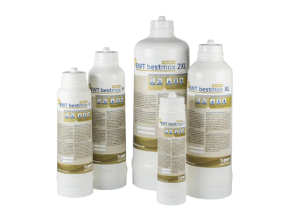
Clean, properly filtered water is key for taste and compliance.
Onboard tanks or filtration systems to ensure consistent quality
Plumbing setup that meets local health codes
Easy-access connections for quick maintenance and refill
Efficient cold storage and organized prep areas support smooth operations.
Compact refrigeration for milk and perishable ingredients
Storage bins for cups, lids, and supplies within easy reach
Workflow layout that minimizes staff movement and service delays
With these core components in place, your mobile coffee setup is ready to support consistent drinks, smooth workflow, and reliable service. Next, we’ll dive into the specific equipment choices that bring this backbone to life.
Choosing the right espresso machine is crucial for a mobile coffee business. These machines must deliver consistent shots, handle peak service, and fit compact spaces while supporting high-quality beverage service.
Below are a few Pro Coffee Gear espresso machine options suited for coffee carts, compact counters, and mobile setups with limited space.
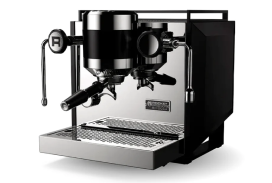
The Rocket R58 Cinquantotto is a strong fit for low-volume mobile operators who want a compact size with more control than a basic prosumer machine. It uses a dual boiler setup, programmable PID, rotary pump, and digital shot timer, which helps operators manage espresso consistency in a tighter mobile workflow.
Best for: Premium carts, office pop-ups, and low-volume mobile setups that need compact performance
Workflow benefit: Dual boilers help separate brewing and steaming demands
Consistency benefit: PID temperature control supports more repeatable espresso
Installation note: The rotary pump can draw from the internal reservoir or connect to an external water supply, which gives operators more setup flexibility
This machine is not the highest-volume option on the list, but it gives small mobile businesses a more capable compact setup than many entry-level machines.
The Sanremo Cube R works well for operators who need a compact machine with a stronger feature set than a simple home espresso setup. It includes a heat exchanger boiler, E61 group, rotary pump, removable water tank, and mechanical pre-infusion.
Best for: Boutique carts, compact mobile bars, office coffee service, and hybrid prosumer-commercial use
Footprint benefit: Its compact body fits tight counters and smaller cart builds
Workflow benefit: The removable water tank helps with flexible mobile setups
Service note: The heat exchanger design supports brewing and steaming from one compact machine
The Cube R is a practical crossover option when a cart needs professional-style workflow without stepping into a larger commercial frame.
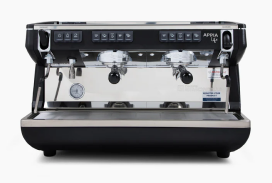
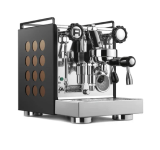
The Appia Life Compact is built for mobile operations that need reliable, commercial grade output in a small footprint. It features a heat exchange boiler, semi-automatic operation, and 110–120V compatibility.
Automated Cleaning: Automated cleaning is a feature of machines. The barista can choose which group or groups to clean using the digital display.
Compact size: Fits limited counter space
Operator ease: Intuitive controls for quick learning
The BOXER TIMER EVO 1 GROUP is a single-group option designed for high-quality mobile espresso service. It includes a heat exchanger, programmable shot timer, and boiler capacity.
Precision: Timer supports consistent espresso extraction
Space efficiency: Single-group setup fits small carts
Durability: Built for frequent daily use
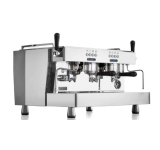
The RE Doppia suits mobile operations that handle higher volume or need dual-group flexibility. It features dual boilers, PID temperature control, and a 7.4L steam tank with two 1.7L brew tanks.
Rush-hour benefit: Two groups support clustered drink demand
Milk-drink performance: Separate steam boiler provides powerful, rapid steam recovery for cappuccinos and lattes.
Capacity note: Best for teams running larger mobile setups or premium programs
Also read: Understanding Espresso Shot Measurements: Grams and Ounces
Running a mobile coffee operation goes beyond brewing—it’s about keeping machines powered and compliant. Planning energy needs and health requirements upfront ensures smooth, reliable service and legal operation.
Mobile setups rely on dependable electricity to run espresso machines, grinders, refrigeration, and POS systems without downtime. Consider:
Shore power access for event or street hookups
Generators or battery systems sized with extra capacity for peak periods
Buffer capacity to handle simultaneous equipment use and prevent service interruptions
Voltage and amperage checks to match your machines’ requirements
Meeting local health regulations ensures your mobile coffee business can operate smoothly and legally. Key considerations include:
Plumbing for handwashing and beverage prep sinks
Wastewater tanks for gray water management
Sanitation fixtures and chemical storage compliant with health codes
Regular cleaning routines to maintain hygiene and license compliance
With solid power planning and strict health compliance, your mobile coffee setup can run reliably through busy events, pop-ups, and daily routes, keeping drinks consistent and customers satisfied.
Coffee cart equipment goes beyond the espresso machine and grinder. The right support tools help reduce order errors, keep supplies organized, and make busy service periods easier to manage.
|
Equipment Area |
What to Include |
Why It Matters |
|---|---|---|
|
POS and order management |
Digital POS, menu display, cashless payment options, sales reporting |
Speeds up transactions, reduces order mistakes, and helps track sales trends |
|
Serving and packaging supplies |
Cups, lids, sleeves, syrups, pumps, stirrers, condiment station |
Keeps drink service organized and helps staff restock quickly during rushes |
|
Storage and prep organization |
Storage bins, trays, labeled containers, under-counter storage |
Keeps supplies within reach and reduces unnecessary movement inside the cart |
|
Cleaning and maintenance tools |
Knock box, group head cleaner, grinder brush, steam wand cleaner, towels |
Keeps equipment clean, supports drink quality, and reduces avoidable service issues |
|
Spare parts and accessories |
Gaskets, screens, water filters, pitcher rinser parts, backup tools |
Helps your team handle small issues before they interrupt service |
Also read: Best Espresso Tamper for Perfect Coffee
Choosing new or renewed coffee cart equipment impacts costs, reliability, and long-term operations. New machines offer the latest tech and full warranties, while renewed units save money without compromising commercial performance.
Understanding these trade-offs helps operators match investment to budget and service needs.
Selecting brand-new gear ensures predictable performance and integration into custom mobile setups
|
Factor |
New Equipment Consideration |
|---|---|
|
Warranty |
Usually includes full manufacturer warranty coverage |
|
Features |
Gives access to the latest technology, controls, and design updates |
|
Performance |
Offers predictable output during peak coffee cart service |
|
Cart Integration |
Easier to plan around custom coffee cart layouts and build requirements |
|
Cost |
Typically requires a higher upfront investment |
Renewed coffee cart equipment can give early-stage businesses access to professional-grade gear at a lower investment:
Significant cost savings compared with new units
Fully tested and inspected for reliability
Supported by warranty coverage (e.g., in-house renewal programs)
Ideal for trial runs, smaller routes, or budget-conscious expansions
Maintains commercial performance without the premium price
Evaluating your operational needs, service volume, and financial flexibility will guide whether new or renewed equipment is the right fit, ensuring your mobile coffee operation remains efficient, reliable, and profitable.
Also read: Important Features to Consider When Buying an Espresso Machine
Running a mobile coffee operation has unique challenges, and small equipment missteps can disrupt service or increase costs. Proper sizing and meeting power and plumbing needs keep workflows smooth and drinks consistent.

Selecting machines that are too large can strain power systems and occupy valuable space, while undersized equipment may fail to meet peak demand. Balancing capacity with workflow ensures consistent service without overtaxing staff or infrastructure.
Underestimating circuits, generator sizing, or water system capacity can cause service interruptions and costly delays. Confirming energy and plumbing needs ahead of purchase prevents downtime and avoids emergency upgrades during operation.
Neglecting local health code requirements for sinks, wastewater, and sanitation fixtures can delay licensing and add unexpected costs. Planning for compliance early ensures a smooth launch and uninterrupted daily operations.
Anticipating these mistakes allows mobile operators to streamline setup, avoid costly setbacks, and keep their coffee cart equipment aligned with both operational and regulatory demands.
Designing a mobile coffee workflow requires smart planning. Limited space and high volume mean layout impacts speed, staff efficiency, and consistent service.
Organize your coffee cart into clear zones for prep, brewing, and service. Place grinders and espresso machines for clear workflow, with storage and refrigeration accessible yet out of traffic.
Ask yourself: Can staff reach everything they need in one sequence? Are service areas free from congestion during rushes?
Plan for high-volume periods by staging ingredients, cups, and POS terminals efficiently. Use queue flow and order staging strategies to prevent backups, and consider dedicated spaces for pickup and cashless payments.
Anticipating customer flow and timing drink preparation reduces wait times and keeps service consistent, even during the busiest events.
Pro Coffee Gear helps mobile coffee operators choose coffee cart equipment based on space, service volume, power access, and daily workflow. Instead of picking items one by one, we help you build a setup where the machine, grinder, water system, refrigeration, and accessories work together.
We can help you:
Compare compact commercial espresso machines that fit your cart footprint and drink volume
Match grinders to your espresso machine, menu, and expected rush periods
Review water filtration, plumbing, and refrigeration needs before purchase
Explore new and renewed equipment based on budget, warranty, and condition
Build equipment bundles for machines, grinders, cleaning tools, and accessories
Plan for replacement parts and maintenance items so small issues do not stop service
Review trade account options if you are buying for multiple carts or future expansion
Pro Coffee Gear helps operators compare coffee cart equipment, trade options, and support paths based on real business needs. Whether you are building one cart or expanding a mobile setup, we can help you find machines, grinders, filtration, and accessories that fit your workflow and budget.
With Pro Coffee Gear’s guidance, find mobile coffee equipment that fits your workflow and budget, from espresso machines to grinders and power systems. Get in touch today!
Key equipment includes a commercial espresso machine, reliable grinders, water filtration, refrigeration for milk and perishables, and organized storage. Supporting tools like POS systems, serving supplies, and cleaning kits keep operations smooth and drinks consistent.
Consumer machines often lack the durability, volume capacity, and thermal stability needed for commercial use. Mobile operators benefit from commercial-grade machines to maintain uptime and consistent beverage quality.
Assess the combined power requirements of espresso machines, grinders, refrigeration, and POS. Include buffer capacity for peak service and ensure voltage and amperage match your equipment. Plan for shore power, generators, or battery systems to avoid interruptions.
Yes. Dedicated filtration protects the machine from scale, maintains consistent water quality, and helps meet local health codes. Mobile setups may use onboard tanks or inline systems depending on water access and cart size.
Focus on workflow, space, and accessibility. Equipment placement, storage solutions, and easy access to maintenance tools support faster service and reduce staff strain during busy periods.
Our team can help you find the best fit based on your space, volume, and budget.
Talk to a Specialist

