


110V Espresso Machines: Voltage Compatibility Guide for US Buyers
|
|
Time to read 11 min
Your Cart
Your cart
Favorites





Shop by Brands

Shop by Brands
Shop by Brands


Shop by Brands


Shop by Brands
Shop by Brands
|
|
Time to read 11 min
Running a coffee operation involves juggling multiple challenges, but matching your machine to the right power supply shouldn’t be one of them. The right voltage helps cafés, food trucks, and mobile coffee trailers maintain smooth service and reduce downtime risk.
A mismatch between machine voltage and your power setup can lead to slow service, equipment failure, and inconsistent espresso quality. Understanding power requirements and how they affect performance is essential before investing in equipment.
This guide will walk you through commercial espresso machine power requirements, from 110V compatibility to long-term reliability. By the end, you'll have the knowledge to make an informed decision that supports your operational needs and minimizes risks.
Understanding power requirements is essential for smooth café operations. Voltage is the electrical power level a machine is built to use. For installation planning, check voltage, wattage, plug type, circuit capacity, and espresso machine amp requirements. Choosing the right electrical setup helps maintain performance and avoid downtime.
U.S. standard voltage is 110V-120V for smaller setups, while commercial machines often require 220V-240V or three-phase power for higher demands.
Higher-voltage machines can support larger heating systems and faster recovery, which is why many high-output commercial machines require 208V, 220V, or 240V.
Higher-voltage machines heat faster, recover pressure more efficiently, and maintain better temperature stability during busy service periods.
In the U.S., most small cafés use single-phase 220–240V power, while large multi-group machines may require three-phase service. Confirming your machine power configuration before purchase is essential.
Using the wrong electrical setup can lead to poor performance, breakdowns, and costly repairs. If your machine is not receiving the right power supply, it can overheat, heat slowly, or break down, creating repair costs and service delays.

Keeping voltage in check ensures your equipment runs efficiently and avoids downtime that impacts your bottom line.
An undersized power supply can slow heat recovery, reduce machine efficiency, and strain key components over time. For cafés and mobile operators, the biggest risks usually show up during peak service.
Slower heat-up and recovery times
More strain on heating elements and pumps
Greater risk of service delays and repair costs
Electrical setup is also a safety and compliance issue. Before installation, confirm machine requirements with a licensed electrician and check local code requirements.
Voltage, amperage, plug type, and circuit capacity
Outlet, breaker, and wiring compatibility
Local electrical and inspection requirements
Also read: How to Make Coffee with an Espresso Machine
Incorrect voltage can lead to significant operational issues, from inefficient performance to costly repairs, which can disrupt your business. Now that we've covered the risks, the next focus is on where 110V machines fit best, and where they may fall short.
For steady performance, you need to know where 110V machines fit and where they fall short.
A 110V commercial espresso machine is often chosen for easier installation and compatibility with standard U.S. power outlets, but it can have limitations in high-demand commercial settings.
Let’s look at where 110V machines fit best and where a higher-power setup may be necessary.
A 110V commercial espresso machine can work well when space, mobility, and installation simplicity matter more than maximum output.
Small cafés with light-to-moderate espresso demand
Coffee carts, trailers, and food trucks with limited power access
Offices or pop-up setups that need simpler installation
Suggested read: Top 10 High-End Espresso Machines: A Comparison
During heavy service, 110V machines may struggle to keep pace with repeated brewing and steaming. This matters most for cafés with constant milk drinks or clustered rush periods.
Slower heat recovery during peak demand
Lower steam capacity for back-to-back milk drinks
Limited fit for multi-group or high-volume service
Dual-voltage machines and converters can add flexibility, but they need careful review before purchase. Imported machines also require extra attention because frequency, plug type, and continuous-duty ratings may differ.
Dual-voltage machines can help operators work across different power setups.
Converters should be checked by a qualified electrician before use.
Understanding when a 110V espresso machine suits your business and when it doesn't can help you make the right choice. The next step is to evaluate the specific voltage needs of your commercial espresso machine to ensure it fits your operations seamlessly.
When choosing the right espresso machine for your café or business, it's important to know which 110V models deliver the best performance without compromising efficiency. Here are 110V machines that fit different business needs, from mobile carts to compact café setups.
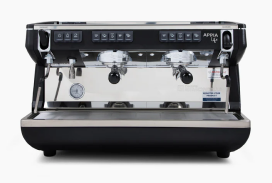
The Appia Life Compact Nuova Simonelli is a high-performance espresso machine tailored for small cafés and mobile setups. It combines commercial-grade features with a compact design, making it perfect for businesses with limited space.
Pre‑Infusion Chamber: Ensures even extraction for balanced flavors.
Semi‑Automatic & Volumetric Options: Choose manual control or automated shot volumes for ease of use.
Energy‑Efficient Design: Reduces power consumption compared to larger machines.
Compact Footprint: Fits easily in tight spaces, perfect for smaller setups or coffee trailers.
Four‑Hole Steam Wand: Produces consistent steam for milk-based drinks.
Voltage: 110V
The Appia Life Compact is a practical fit for small cafés, coffee trailers, and moderate-volume operators that need compact commercial performance without complex installation demands.
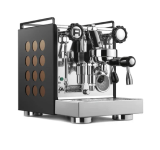
The Rocket Espresso R58 Cinquantotto is a single-group espresso machine engineered with commercial-grade components and precise control features, making it a strong choice for business owners who need café-quality performance in a compact footprint. It blends Italian craftsmanship with reliable thermals and flexible operation for light commercial environments like small cafés, offices, or coffee carts.
Dual Boiler Configuration: Independent boilers for espresso brewing and steaming help maintain stable temperatures for consistent shots and smooth milk production.
Heated E61 Group Head: Promotes temperature stability across shots, contributing to repeatable extraction quality.
Rotary Pump: Delivers steady pressure and quieter operation, suitable for frequent use and optional plumbing setups.
PID Controller: Offers precise temperature control so baristas can fine-tune brewing conditions.
Shot Timer: Built‑in timer helps staff monitor extraction duration for consistency.
Voltage: 110V/120V
The R58 fits small cafés, offices, and coffee carts that need strong espresso control in a compact setup, especially when staff can manage a more hands-on workflow.
The Musica Nuova Simonelli is a compact, single-group commercial espresso machine designed to bring reliable café-style performance into small cafés, coffee trailers, offices, or other professional settings where space is limited. It combines programmable shot dosing with solid steam capacity and professional brewing technology in a streamlined package.
Backlit Soft‑Touch Control Panel: Programmable volumetric and manual dosing buttons for up to three shot volumes, with brightness adjustment to suit different environments.
Insulated 2L Heat Exchanger Boiler: Provides steam power that supports brewing and steaming simultaneously, keeping consistency across drinks.
Thermo‑Compensated Group: Continuous hot water circulation at the group head helps maintain stable brewing temperature for more repeatable shots.
Pre‑Infusion System: Allows fuller extraction, helping balance flavor and reduce extraction variability.
Indicator Lights & Ergonomic Steam Lever: Water level and heating status are easy to monitor, and the steam lever offers barista‑friendly handling.
The Musica is a useful option for low-to-moderate volume businesses that want programmable dosing, compact size, and staff-friendly operation.
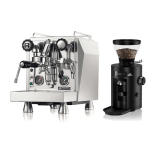
The Rocket Giotto Cronometro R is a heat‑exchanger espresso machine built with commercial‑grade components adapted from Rocket’s larger café-focused machines. It combines precise temperature control, flexible water options, and reliable performance in a compact footprint that suits small cafés, offices, or satellite coffee stations.
Programmable PID Controller: Maintains consistent boiler temperatures and lets you adjust settings to suit different coffee profiles.
Heat Exchanger Boiler: Supports simultaneous brewing and steam production for high‑quality espresso and milk drinks.
E61 Group Head: Provides stable thermal mass, which helps with repeatable extraction across shifts.
Rotary Pump with Dual Water Source: Quiet, steady pressure and the flexibility to use the built‑in reservoir or a direct water line.
Digital Shot Timer & Adjustable Feet: Aids shot consistency and lets you fit the machine neatly into your workspace.
Cool‑Touch Stainless Steel Steam Wand: Rocket’s patented design keeps the wand safe to handle during busy service.
Voltage: 110V
The Giotto Cronometro R is a compact fit for operators who want hands-on espresso control with flexible installation options.
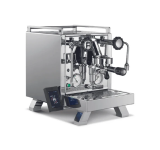
The Rocket R Nine One (R91) is a single‑group commercial espresso machine that brings professional-level control and consistency into smaller café environments, coffee bars, or specialty coffee service points. It blends Rocket’s traditional Italian build quality with advanced temperature stability and pressure profiling, helping operators maintain repeatable results across shifts.
Dual Boilers: Independent brew and steam boilers (1.9L brew, 3.6L steam) help maintain stable temperatures and support simultaneous brewing and steaming. (Pro Coffee Gear)
Volumetric Dosing: Programmable shot volumes help ensure repeatable extraction and streamline busy service.
Pressure Profiling: Up to five programmable pressure profiles—or full manual control—allow operators to experiment with pre‑infusion and extraction curves.
PID Temperature Control: Digital temperature regulation supports consistent brew conditions and adaptation to different coffee beans.
Intuitive Touch Display: Easy adjustments of temperature, profiles, and shot settings offer precision without technical complexity.
Premium Build: Stainless steel frame, case, and portafilters provide professional durability and aesthetic appeal.
Voltage: 110V-120V
The R Nine One fits specialty-focused operators that need advanced control in a compact commercial format.
Each of these 110V espresso machines brings unique benefits to coffee businesses, offering efficiency and quality while maintaining ease of use and durability. The right machine depends on your business needs, workflow, and volume demands.
Choosing the wrong power configuration can lead to slow recovery times, inconsistent espresso quality, and damage to the machine or electrical system.

Knowing how to match machine power configuration with your commercial power supply helps you plan installation and avoid service issues.
Start with your workflow needs before comparing machine power requirements:
Expected drink volume: High-volume cafés and restaurants will require more power to handle the demand during peak hours.
Boiler capacity: Larger boilers need higher voltage to heat water quickly and maintain a consistent temperature for multiple espresso shots.
Peak service levels: If your business regularly experiences surges in demand, like during lunch rushes or special events, you’ll need a machine that can handle higher power demands to avoid delays.
Choosing the right voltage helps maintain a steady workflow while ensuring your espresso machine can perform under pressure.
Before committing to a machine, use this checklist to review your existing electrical setup:
Confirm your available voltage, such as 110V, 208V, 220V, or 240V.
Check whether your panel has enough capacity for the machine.
Review espresso machine amp requirements with a licensed electrician.
Confirm the correct plug type, outlet, and breaker setup.
Ask whether your space needs wiring, circuit, or panel upgrades.
Factor any electrical upgrades into your installation timeline and budget.
A reliable electrical setup helps protect your equipment, support safe installation, and reduce avoidable service issues.
For coffee trailers and food trucks, power planning becomes even more critical:
Generator sizing: Ensure your generator can provide stable power to your espresso machine, considering peak usage times.
Power stability: Unlike stationary businesses, mobile setups may face fluctuations in power supply, so using machines with voltage flexibility can be crucial.
Special needs: Some trailers may have limited access to high-power outlets, so a 110V commercial espresso machine or dual-voltage option may provide more flexibility.
Also read: Choosing the Right Coffee Machine: Espresso, Bean-to-Cup, and Drip Machines
Taking these factors into account will help prevent disruptions in your service while maintaining consistency and quality in every cup.
When picking a machine, balance upfront cost, long-term reliability, and power compatibility. Knowing each machine’s voltage specs can help avoid unexpected service costs or performance issues.
Use this table to compare new and renewed options before deciding.
|
Option |
Best Fit |
Key Advantages |
What to Check |
|---|---|---|---|
|
New Machines |
Businesses that need current specs, predictable setup, and manufacturer warranty coverage |
Newer control features, clear electrical configuration options, and full manufacturer-warranty coverage |
Confirm voltage, amperage, plug type, circuit needs, and installation requirements |
|
Renewed Machines |
Buyers who need commercial equipment at a lower listed price |
Lower upfront cost, commercial capability, and added confidence when condition and testing are clear |
Verify electrical requirements, prior modifications, condition, warranty terms, and support availability |
Pro Coffee Gear’s renewal process includes cleaning, testing, performance checks, and a 1-year parts warranty. Whether you choose new or renewed, the machine should match your power supply, workflow, and service volume before purchase.
Choosing the right machine is not just about the initial price. Your electrical setup can affect energy use, installation costs, maintenance planning, and service reliability.
A machine with mismatched power requirements may strain components, slow recovery, or increase repair needs. Before purchase, check voltage, wattage, amperage, plug type, and circuit capacity with a licensed electrician.
Total cost of ownership includes the machine price, power setup, energy use, maintenance, and downtime risk. The right power configuration helps your café plan costs clearly and avoid preventable service disruptions.
Choosing the right power setup can feel daunting, but understanding electrical compatibility helps keep café operations smoother. By considering your space, service needs, and power setup, you can select the most efficient and reliable equipment for your business.
Whether it’s balancing energy consumption with performance or avoiding costly maintenance from mismatched voltages, making an informed choice will help prevent disruptions and maintain consistent quality, all while reducing operational stress.
At Pro Coffee Gear, we’re here to support you through every step of your equipment journey.
Our team is ready to provide expert advice on voltage compatibility and help guide you toward the perfect espresso machine for your needs.
Visit our commercial espresso machine category for a range of voltage-compatible options, or reach out to us for personalized guidance and long-term support tailored to your business.
In the U.S., espresso machines typically run on 110V, 208V, or 220V-240V, depending on café espresso machine electrical requirements. 110V works for small setups, while 220V or three-phase is better for high-volume cafes. Choose based on your location’s electrical capacity, drink volume, and service style.
A 110V commercial espresso machine can handle light to moderate demand but may struggle with high-volume service, slow heat recovery, and inconsistent steam. For busy cafés, a 220V machine may be a better fit for stronger recovery and steam performance.
Yes, if importing a machine with a different voltage standard (e.g., 220V), you’ll need a voltage converter. Confirm that it matches the machine’s frequency and continuous-duty ratings to reduce damage risk.
Using the wrong voltage can void your warranty and cause operational issues. Always confirm the machine is connected to the correct power supply to support warranty coverage and service.
If only 110V is available, a 110V commercial espresso machine can work well for carts, offices, small cafés, and light-to-moderate volume, but output depends on boiler size, wattage, and amperage. Consider dual-voltage options or upgrading your power supply for better performance.
Our team can help you find the best fit based on your space, volume, and budget.
Talk to a Specialist

