


What is a Volumetric Espresso Machine? (Cafe & Commercial Guide)
|
|
Time to read 9 min
Your Cart
Your cart
Favorites





Shop by Brands

Shop by Brands
Shop by Brands


Shop by Brands


Shop by Brands
Shop by Brands
|
|
Time to read 9 min
Busy cafés and restaurants need equipment that balances speed, quality, and reliability. Choosing the right espresso machine is critical to maintain workflow efficiency and minimize downtime during peak hours.
Volumetric espresso machines automate water dosing for each shot, helping standardize volume and streamline service. While automation handles shot volume, final espresso quality still depends on grind, dose, tamping, and regular machine calibration.
This guide explains how volumetric machines work, key considerations when selecting one, and how they compare to other machine types.
Volumetric Machines Automate Shot Volume: They use flow meters to stop water output at a programmed volume, while grind quality, dose, tamp, and calibration still affect final espresso quality.
Less Manual Shot Timing: Programmed shot volumes reduce how often staff need to monitor each extraction.
More Repeatable Drinks: Programmed volumes help different operators follow the same espresso recipe across shifts.
Shorter training curve: Newer staff can learn shot operation faster because dosing is less manual.
Better Value Over Time: Though they may have a higher upfront cost, the efficiency, consistency, and reduced labor costs make them a worthwhile investment for busy cafés.
Ideal for High-Volume Operations: Volumetric machines are designed to handle large volumes, ensuring both quality and speed are maintained, especially in fast-paced commercial settings.
A volumetric espresso machine controls the water volume per shot via a built-in flow meter. It automates shot volume while allowing baristas to manage grind, dose, and tamp, supporting efficient and reliable service during busy periods.
Volumetric machines measure the water flow for each shot using a built-in flow meter. Once the set volume is reached, water stops automatically. While this controls water quantity, shot quality still depends on:
Grind size and uniformity
Proper dosing
Tamping pressure
Machine calibration and maintenance
This combination of automation and operator input ensures both efficiency and high-quality espresso.
Also read: How Does a Flat Burr Grinder Work: A Complete Guide
If your café struggles with shot variation or slow service during busy hours, a volumetric espresso machine may help. These machines offer a blend of automation and precision, tackling common challenges faced in high-demand environments.
Here’s why they’re worth considering for your business.

|
Benefit |
How it Helps |
|---|---|
|
Uniform Shot Volume |
Flow meters stop water at preset volume, reducing variation across baristas. |
|
Streamlined Workflow |
Staff spends less time manually stopping shots, improving throughput. |
|
Easier Staff Training |
Automated dosing reduces complexity for new baristas. |
|
Scalability |
Handles high-volume service efficiently without sacrificing consistency. |
|
Operational Value |
Reduces labor variability and supports predictable drink quality over time. |
Choosing the right espresso machine for your commercial operation depends on your business needs and priorities.
Here’s a table comparing the key differences between volumetric, manual, and other espresso machine types:
|
Machine Type |
Automation Level |
Best For |
Pros |
Cons |
|---|---|---|---|---|
|
Manual |
None |
Artisan or specialty cafés |
Full control over extraction |
Requires a skilled barista, slower in high volume |
|
Semi-Automatic |
Partial (start/stop water) |
Small to medium cafés |
Balance of control and repeatable results |
Still skill-dependent, training needed |
|
Volumetric |
Water dosing automated |
High-volume cafés |
Steady quality shots, faster training, reduced errors |
Less flexibility for experimentation, less control over final volume nuances |
|
Fully Automatic |
Water and basic brewing cycle automated |
Quick-service or high-volume bars |
High repeatability, minimal barista input |
Flavor complexity may be reduced, with less manual control |
|
Super-Automatic |
Bean-to-cup automation, including milk |
Offices, hotels, or low-touch cafés |
Fully automated, minimal training required |
Limited customization, potential flavor variation |
This table highlights the control, automation, best use cases, and the key pros and cons of each machine type, helping businesses choose based on their volume, speed, and craftsmanship needs.
When selecting a volumetric espresso machine, it’s important to consider several key factors to ensure the machine fits your café’s needs.
Here’s a breakdown of what to look for:

Single group head: Suitable for lower-volume operations or mobile setups.
Two group heads: Ideal for medium-volume cafés, small restaurants, or tight counters.
Three group heads: Supports high-volume environments with multiple baristas.
Here's a table to understand the comparison better.
|
Setup Type |
Best Fit |
Notes |
|---|---|---|
|
Plumbed |
High-volume cafés & restaurants |
Requires water line, filtration, professional installation |
|
Reservoir |
Smaller, flexible, or mobile setups |
Manual refills, close monitoring required |
Here's what you could consider:
|
Option |
Best Fit |
What to Check |
|---|---|---|
|
New |
Buyers needing the latest specs, warranty, and exact configuration |
Installation, budget, warranty terms |
|
Renewed |
Cost-conscious buyers needing commercial reliability |
Condition, testing, warranty coverage, support for parts |
By evaluating these factors, group head count, water supply setup, and new vs. renewed options, you can choose a volumetric espresso machine that fits your café’s needs and budget.
Selecting the ideal volumetric espresso machine for your company requires striking the ideal mix between dependability, performance, and efficiency.
These are a few of Pro Coffee Gear's best choices, designed to satisfy the unique requirements of commercial coffee operations.
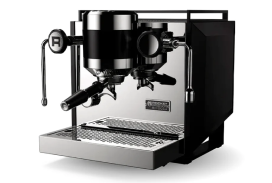
Group Heads: 2
Best For: Medium to high-volume cafés or small mobile bars
Workflow Focus: Streamlined two-barista workflow with programmable shot times, ideal for fast-paced brunch or peak-hour service
Key Feature: LED display for easy shot timing adjustments, supporting standardized service across multiple staff members
Build: Sturdy stainless steel for frequent daily use
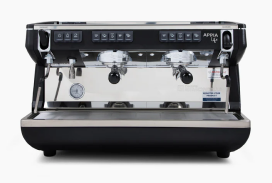
Group Heads: 2
Best For: Small cafés or space-limited counters
Workflow Focus: Optimized for tight spaces while maintaining dual-group service; supports efficient two-barista shifts
Key Feature: Compact design with intuitive interface, perfect for pop-ups or cafes with limited counter space
Ease of Use: Quick learning curve for new baristas
Group Heads: 2
Best For: High-performance cafés with steady traffic
Workflow Focus: Dual-group service with programmable dosing, allowing multiple drinks to be prepared simultaneously without staff bottlenecks
Key Feature: Touch interface simplifies recipe adjustments; excellent for smooth workflow during peak periods
Durability: Handles sustained use with minimal maintenance
Group Heads: 2
Best For: Standardizing service across multiple baristas
Workflow Focus: Maintains even performance across baristas, helping reduce mistakes during busy service
Key Feature: Robust build with modern controls for predictable performance
Design: Sleek and professional appearance suitable for visible café bars
Group Heads: 3
Best For: High-volume cafés or restaurants with multi-barista teams
Workflow Focus: Triple-group configuration allows simultaneous orders; perfect for high-turnover brunch or lunch periods
Key Feature: Advanced temperature stability and extraction technology ensures uniform quality for multiple simultaneous drinks
Build: Stainless steel with excellent heat retention
Group Heads: 1
Best For: Small cafés or mobile setups
Workflow Focus: Single-group operations in compact footprints; great for mobile carts or low-volume bars
Key Feature: Digital programmable dosing ensures repeatable shots with minimal supervision
Portability: Compact, professional feel for small-space deployment
Group Heads: 2
Best For: Specialty-focused cafés needing precise extraction control
Workflow Focus: Supports nuanced brewing while maintaining volumetric consistency; ideal for latte art or espresso-forward menus
Key Feature: Professional pressure profiling allows baristas to fine-tune extraction
Build: Premium stainless steel with high-end ergonomics
Group Heads: 2
Best For: Mid-volume cafés with space constraints
Workflow Focus: Efficient two-group operation in a compact machine; suitable for cafés where speed and ergonomics matter
Key Feature: Adjustable volumetric dosing and easy interface for quick barista training
Design: Modern aesthetic for visible café environments
These machines are all designed to optimize your café's workflow, ensuring that your team can serve customers quickly without sacrificing quality. Depending on your café’s size and volume, Pro Coffee Gear has the perfect volumetric espresso machine for your needs.
Let's have a look at this table that highlights key features and differentiators for each machine, helping commercial buyers make an informed decision based on their café's needs.
|
Machine |
Group Heads |
Best For |
Workflow Focus |
Key Feature |
Build/Design |
|---|---|---|---|---|---|
|
BOXER TIMER EVO - Rocket Espresso |
2 |
Medium to high-volume cafés, small mobile bars |
Streamlined two-barista workflow with programmable shot times |
LED display for shot timing adjustments |
Sturdy stainless steel |
|
Appia Life Compact - Nuova Simonelli |
2 |
Small cafés, space-limited counters |
Efficient two-barista shifts in tight footprint |
Compact design, intuitive interface |
Space-saving, compact |
|
Appia Life - Nuova Simonelli |
2 |
High-performance, steady-traffic cafés |
Dual-group service, simultaneous drinks |
Touch interface for recipe adjustments |
Durable, minimal maintenance |
|
Pratic Avant Xtra SAE - Astoria |
2 |
Multi-barista cafés standardizing service |
Consistent output across baristas |
Modern controls for predictable performance |
Sleek, professional |
|
D8 - Sanremo |
3 |
High-volume cafés with multiple baristas |
Triple-group for simultaneous orders |
Advanced temperature stability |
Stainless steel, heat retention |
|
BOXER TIMER EVO 1 GROUP - Rocket Espresso |
1 |
Small cafés, mobile setups |
Single-group, compact operation |
Digital programmable dosing |
Compact, portable |
|
RE Doppia - Rocket Espresso |
2 |
Specialty cafés needing extraction control |
Brewing with precise shot control |
Professional pressure profiling |
Premium stainless steel |
|
ZOE COMPACT - Sanremo |
2 |
Mid-volume cafés with space constraints |
Efficient two-group operation |
Adjustable volumetric dosing, easy interface |
Modern aesthetic |
Running a coffee business means balancing equipment performance, reliability, and long‑term cost, all while keeping service fast and consistent.

Pro Coffee Gear helps mobile coffee businesses maintain performance, reliability, and uptime with tailored support:
Expert Guidance: Advisors help choose the right machine based on volume, staff skill, menu, and space.
Renewed Machines with Warranty: Professionally tested machines include a 1-year parts warranty for peace of mind.
Parts & Maintenance Support: Access to parts, maintenance advice, and compatible accessories reduces downtime.
Trade & Wholesale Options: Bundles and trade accounts provide predictable pricing and stock for multi-location operators.
By pairing consultative support with tested equipment and long-term access to parts and expertise, Pro Coffee Gear helps your business achieve high-quality performance and uptime without unnecessary complexity.
A volumetric espresso machine may be a strong fit if your café needs more repeatable shots and a simpler bar workflow. For high-volume environments, it can reduce manual shot timing while still leaving baristas in control of grind, tamping, and drink preparation.
But is it the right fit for your unique setup?
Volumetric espresso machines are designed to simplify and streamline the brewing process, offering efficiency, but finding the right fit for your setup requires careful consideration of key factors like throughput, capacity, and long-term support.
At Pro Coffee Gear, we understand the challenges that come with outfitting a commercial operation. That's why we're here to help guide you every step of the way. Whether you're looking for the latest in volumetric technology or reliable, renewed machines that offer the best value, we provide expert advice tailored to your café’s workflow.
For coffee businesses ready to find the perfect volumetric espresso machine, visit our commercial espresso machine collection or connect with a Pro Coffee Gear expert today for personalized guidance.
Volumetric machines can support faster throughput during busy periods by reducing manual shot timing. By automating the dosing process, they eliminate the need for baristas to manually stop the shot, saving valuable time. This automation allows your team to focus on other tasks, improving overall service speed and reducing wait times for customers.
To maintain consistency across different drinks on your menu, you should calibrate your volumetric machine to dispense specific shot volumes based on the coffee type. Adjusting the flow rate, shot timing, and pre-infusion settings allows you to fine-tune the extraction for each drink style. Regular checks will ensure that the espresso quality stays consistent, regardless of the time of day or barista.
Volumetric machines can help reduce waste by controlling shot volumes across operators. This approach lowers product loss and increases the yield from your coffee beans. Additionally, automated dosing simplifies the learning curve for new baristas, leading to shorter training times and fewer errors on the job.
Volumetric espresso machines are built to handle high volumes of use, making them ideal for busy commercial environments. With proper maintenance, these machines can last for many years. Routine servicing and part replacement, such as group seals or pumps, will keep the machine in top condition. Many businesses choose a volumetric machine for its longevity, ensuring they get a reliable performance for the long term.
Volumetric machines may have a higher upfront cost compared to manual or semi-automatic models due to their added automation features. However, their ability to streamline operations, reduce labor costs, and enhance consistency often makes them a more cost-effective option in the long run. The investment pays off in reduced training time, minimized waste, and faster service, ultimately improving your café’s profitability.
Our team can help you find the best fit based on your space, volume, and budget.
Talk to a Specialist

