


What Does a Puck Screen Do for Espresso?
|
|
Time to read 11 min
Your Cart
Your cart
Favorites





Shop by Brands

Shop by Brands
Shop by Brands


Shop by Brands


Shop by Brands
Shop by Brands
|
|
Time to read 11 min
Espresso consistency is one of the biggest factors that separates a smooth, repeatable workflow from unpredictable results in restaurants and even serious home setups. When shots vary too much, it affects drink quality, service speed, and overall customer experience. Even when grinders and machines are well calibrated, small variables in water distribution and puck preparation can still create uneven extraction.
This is one reason puck screens have become increasingly popular. Once considered a niche accessory, they are now widely used in both specialty cafés and advanced home setups. A puck screen sits on top of the coffee puck during extraction and helps manage how water interacts with the coffee bed.
In this guide, we will break down what puck screens are, how they work, the different types available, and how they affect espresso extraction.
Key Takeaways:
A puck screen is a thin mesh or perforated disc placed on top of the coffee puck to help regulate and even out water flow during espresso extraction.
It is used to address natural inconsistencies in espresso brewing, helping reduce uneven extraction, espresso channeling prevention concerns, and shot variation.
It improves extraction by spreading water more evenly, stabilizing the coffee bed during brewing, and supporting more consistent espresso shots.
Different types include mesh, perforated, ultra-thin, precision laser-cut, multi-layer, and reinforced designs, each suited to different workflows and machine setups.
Proper use involves placing the puck screen after tamping and maintaining regular cleaning, while the right choice depends on machine fit, build quality, and daily brewing needs and workflow requirements.
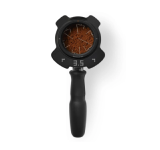
A puck screen is a reusable, thin mesh disc placed directly on top of the coffee puck before brewing espresso. It sits between the shower screen and the coffee bed. Its main role is to help regulate water distribution as it enters the portafilter.
In practical use, it acts as an additional water-dispersion layer. Instead of water hitting the coffee puck unevenly from the group head, it spreads the flow more evenly across the surface. This can help stabilize extraction, especially in machines where water dispersion is less uniform.
Puck screens exist because espresso extraction is not perfectly uniform by default. Even a well-tamped coffee bed can develop weak points at the surface where water pressure is uneven.
Here’s why it matters:
Even water flow: Water from the shower screen can hit the puck unevenly, and a puck screen helps spread it more consistently across the coffee bed. This is one of the most practical espresso water distribution benefits.
Puck stability: It reduces direct water impact on the surface, helping the coffee puck stay more intact during the first stage of extraction.
Shot consistency: In multi-barista or high-volume settings, it helps reduce small variations in technique that can affect espresso repeatability.
Supports workflow consistency: It supports a well-prepared puck but does not replace proper grinding, distribution, or tamping technique.
Cleaner group head: It reduces coffee splash-back and buildup on the shower screen, helping keep the machine cleaner over time.
Overall, it helps create a more stable extraction environment without changing the core brewing technique.
Also Read: Common Coffee Machine Problems and Solutions: A Practical Troubleshooting Guide
Puck screens are not all built the same. They vary in thickness, mesh density, material quality, and edge design. Each type affects flow resistance and cleaning convenience differently.
The most common types include:

Mesh puck screens are made from tightly woven stainless steel layers that create a fine, filter-like surface. This structure helps distribute water more evenly as it enters the coffee puck.
They are lightweight and flexible, making them easy to place and remove during busy workflows. In most setups, they help reduce direct impact from the group head and soften the initial water contact with the coffee bed.
Over time, fine coffee particles can get trapped in the mesh, so regular rinsing is needed to maintain performance and hygiene.
Best For: Cafés and home baristas who want a simple, affordable consistency upgrade without changing their espresso workflow.
Perforated disc screens are made from a solid stainless steel sheet with evenly drilled holes. Unlike mesh designs, they are rigid and maintain their shape even after repeated high-pressure use.
They offer more uniform water dispersion due to consistent hole spacing, which helps stabilize extraction. These screens are also easier to clean since coffee residue does not embed as easily in the structure.
The main consideration is fit. Because they are rigid, proper sizing is important to ensure they sit correctly inside the portafilter basket.
Best For: Commercial cafés and high-volume espresso environments that prioritize durability, repeatability, and simple maintenance.
Ultra-thin puck screens are designed to minimize impact on portafilter headspace. They sit almost flush on top of the coffee puck and take up very little vertical space.
These are useful in setups where dose flexibility is limited or where baskets have tight clearance. Despite their thin design, they still help improve surface-level water distribution and reduce puck disturbance during extraction.
Because they take up less space, they are often easier to use in baskets where headspace is tight.
Best For: Home espresso setups and compact machines where headspace is limited, and dose adjustment is not ideal.
Precision puck screens are manufactured using laser cutting or etching techniques that create highly uniform micro-perforations across the entire surface.
This results in more controlled and consistent water flow compared to basic stamped or mesh designs. The uniformity helps reduce weak points in extraction and improves shot-to-shot repeatability.
They also tend to clean more easily because of their smooth, precise finish, making them suitable for professional environments where hygiene and consistency matter.
Best For: Specialty coffee professionals and cafés focused on extraction precision and long-term consistency.
Multi-layer puck screens are built using two or more stacked stainless steel layers. These layers work together to improve water distribution while maintaining structural strength.
The top layer typically handles initial water dispersion, while the inner layer further diffuses flow before it reaches the coffee puck. This dual-action design helps reduce channeling risk more effectively than single-layer screens in some setups.
They also offer strong durability, as multiple layers reinforce each other under pressure. However, they can take slightly more effort to clean since coffee particles may accumulate between layers if not rinsed properly.
Because of their structure, they are often used in more performance-focused espresso setups where consistency is prioritized over simplicity.
Best For: High-end home baristas and specialty cafés that want maximum extraction stability and are comfortable with extra cleaning effort.
Reinforced puck screens use thicker stainless steel and stronger edge support to withstand repeated high-pressure use in commercial environments.
They hold their shape very well over time and are less likely to warp compared to thinner alternatives. This makes them reliable in busy cafés where equipment is in constant rotation.
The trade-off is slightly reduced headspace, which may require minor dose adjustments depending on basket size and machine type.
Best For: High-volume commercial cafés and espresso bars where durability and long-term reliability matter most.
The primary role of a puck screen is to improve water distribution across the coffee puck during extraction. While it may seem like a simple accessory, its impact comes from basic espresso flow behavior inside the portafilter.
Puck screens are best viewed as a consistency tool rather than a guaranteed flavor upgrade.
A key function of a puck screen is helping spread water more evenly when it enters the portafilter. Instead of water hitting specific weak points in the coffee bed, the mesh structure disperses it more uniformly.
What this changes in practice:
Reduces uneven saturation at the top layer of the puck
Helps minimize early-stage channel formation
Creates a more stable extraction surface
In simple terms, it acts like a diffuser layer. While the machine’s shower screen already distributes water, a puck screen adds another layer of balance before water reaches the coffee. This helps when small differences in prep affect shot results.
Channeling happens when water finds low-resistance paths through the coffee puck. Even a well-dosed and tamped shot can develop channels under pressure.
A puck screen may help reduce channeling caused by uneven water distribution, though proper grinding, distribution, and tamping remain the primary factors.
How it helps during extraction:
Softens the direct water impact on the coffee bed
Helps maintain puck structure during pre-infusion and early flow
Reduces “hot spots” where water punches through unevenly
This does not eliminate channeling caused by grind or distribution issues. It only reduces the variation caused by water hitting the puck. For busy cafés or multi-barista environments, this added stability improves shot consistency across users.
The moment water hits the coffee puck, the structure begins to expand and shift. Without any barrier, this can lead to slight disruptions on the surface of the bed.
A puck screen helps stabilize this interaction by acting as a physical buffer between the shower screen and coffee.
What this means for workflow:
Keeps the puck surface more intact during extraction
Reduces disturbance from high-pressure water bursts
Supports more predictable flow rates across shots
This stability is especially useful in commercial environments where machines run continuously. Small changes in puck behavior can add up over many shots.
Beyond extraction behavior, puck screens also serve a practical maintenance function. They reduce the amount of fine coffee particles and oils reaching the group head.
Operational benefits:
Less buildup on the shower screen over time
Reduced frequency of deep cleaning cycles
Cleaner portafilter and basket after each shot
This is a major advantage in cafés and high-volume setups where cleaning time directly affects workflow efficiency. It does not replace backflushing, but it reduces daily residue buildup.
One of the most noticeable outcomes of using a puck screen is not a dramatic flavor change, but improved repeatability.
Once distribution, grind, and tamp are already consistent, the puck screen reduces small environmental variables in extraction.
Where this shows up:
More consistent shot times across different baristas
Less variation during rush hours or back-to-back pulls
Improved predictability in dialing in espresso
This is why many professionals see puck screens as a workflow stabilizer rather than a flavor modifier. It improves consistency more than it changes taste outcomes.
Also Read: Best Office Coffee Maker Guide 2026: How They Work & What to Consider
Using a puck screen correctly is simple, but small mistakes in placement or workflow can reduce its effectiveness. Proper use ensures better extraction consistency and easier cleanup.
Here’s how to use it correctly in a practical espresso workflow:

Dose & distribute: Start by dosing espresso into the portafilter and distributing the grounds evenly. A level coffee bed ensures the puck screen can work effectively without correcting uneven preparation.
Tamp evenly: Apply a firm, level tamp to compress the coffee bed. Proper tamping is still essential because the puck screen does not fix poor distribution or weak puck structure.
Place screen: Gently place the puck screen on top of the tamped coffee puck. It should sit flat without pressing into the grounds to maintain even water dispersion.
Lock & brew: Insert the portafilter into the machine and begin extraction. The puck screen helps spread water more evenly across the puck surface during brewing.
Remove & rinse: After extraction, remove the puck screen and rinse it immediately. This prevents coffee oils and fine particles from building up and affecting performance.
Deep clean regularly: Periodically soak and deep clean the puck screen depending on usage volume. In busy environments, this helps maintain consistent flow and long-term reliability.
Choosing the right puck screen depends on your machine type, brewing volume, and desired level of consistency. Not every screen performs the same across different setups.
Key factors include:
Size fit: Most commercial machines use 58mm baskets, but always confirm your exact portafilter diameter. The screen should sit flat without movement during extraction.
Thickness choice: Thin screens are easier to use and need no dosing changes. Thicker screens are more durable but may reduce headspace in the basket.
Build quality: Stainless steel is the standard for durability and heat resistance. Poor-quality metal can warp or clog over time, reducing consistency.
Hole pattern: Fine, evenly spaced perforations help distribute water more uniformly. Less uniform patterns may slightly impact flow behavior in high-precision setups.
Workflow fit: In busy cafés, speed and ease of cleaning matter most. In controlled setups, precision and consistency take higher priority than handling convenience.
Daily usability: The puck screen should not slow down dosing or cleaning. Choose one that fits naturally into your existing espresso routine.
The right choice is not about maximum performance alone. A thicker screen may offer durability, but it can also reduce available basket headspace and affect puck expansion, so some setups may need dose adjustments..
A puck screen is a simple but effective tool that helps improve water distribution, stabilize the coffee puck, and reduce extraction inconsistencies. It works by creating a more even flow of water through the coffee bed, which can lead to more predictable and repeatable espresso shots.
If you are evaluating whether a puck screen fits your workflow, it is important to consider your machine setup, service volume, and consistency needs. Small workflow improvements can contribute to greater consistency but only when they support a well-structured espresso system.
To explore compatible espresso machines, grinders, and workflow tools that work well alongside accessories like puck screens, you can connect with us at Pro Coffee Gear. We help coffee professionals build setups that prioritize consistency, reliability, and long-term performance.
A shower screen is built into the espresso machine and disperses water over the coffee puck. A puck screen is an aftermarket mesh disc placed on top of the coffee bed to improve water distribution and reduce channeling during extraction.
You need a puck screen that matches your portafilter size, usually 51mm, 54mm, or 58mm. Most home and professional machines use 58mm. Always measure your basket diameter before buying to ensure proper fit and even water flow.
No, puck screens are typically made from stainless steel mesh, but quality varies. Higher-end screens use finer, food-grade stainless steel with better durability and filtration. Cheaper versions may have rough edges or inconsistent mesh density, affecting performance.
A puck screen should be rinsed after each use and deep cleaned regularly, especially in busy cafés or frequent home setups. Regular cleaning prevents coffee oils and fine particles from building up and helps preserve espresso water distribution benefits.
Yes, puck screens work well alongside WDT. WDT evenly distributes coffee grounds before tamping, while the puck screen improves water dispersion during extraction. Together, they help reduce channeling and produce a more consistent, balanced espresso shot.
Puck screens do not directly change flavor. Their primary benefit is improving extraction consistency, which can lead to more balanced and repeatable results over time.
Our team can help you find the best fit based on your space, volume, and budget.
Talk to a Specialist

