


French Press vs Stovetop Espresso Maker: Comparing Classic Coffee Brewing Methods
|
|
Time to read 15 min
Your Cart
Your cart
Favorites





Shop by Brands

Shop by Brands
Shop by Brands


Shop by Brands


Shop by Brands
Shop by Brands

|
|
Time to read 15 min
If you’ve ever stood in your kitchen trying to decide if you should use a French Press or a Stovetop Espresso Maker for your morning coffee, you’re not alone. So, what’s the real difference between the French Press and the Stovetop Espresso Maker?
Both are classic brewing methods that coffee lovers rely on, but they create completely different experiences. From the flavor they bring out to the texture and caffeine strength, each cup has its own character.
Both make delicious coffee, but the way they brew, the taste they produce, and the overall feel of the drink set them apart. In this guide, you’ll learn how each method works, the kind of flavor you can expect, and which one suits your daily coffee routine and taste preferences best.
Key Takeaways:
Brewing Method: The Moka Pot uses steam pressure, while the French Press relies on immersion brewing.
Flavor: The Moka Pot produces a bold, intense cup with a slightly bitter edge, whereas the French Press gives you a fuller-bodied, smooth flavor.
Caffeine: The Moka Pot offers higher caffeine concentration per ounce, while the French Press delivers a more balanced caffeine level in larger servings.
Convenience: The French Press is quick and easy to clean, while the Moka Pot requires more precision and patience.
Let’s begin by exploring how the French Press and Stovetop Espresso Maker brew their coffee magic.
Every coffee lover knows that how you brew your cup changes everything, the aroma, the depth, even the aftertaste. The Stovetop Espresso Maker vs French Press brewing prove this perfectly.
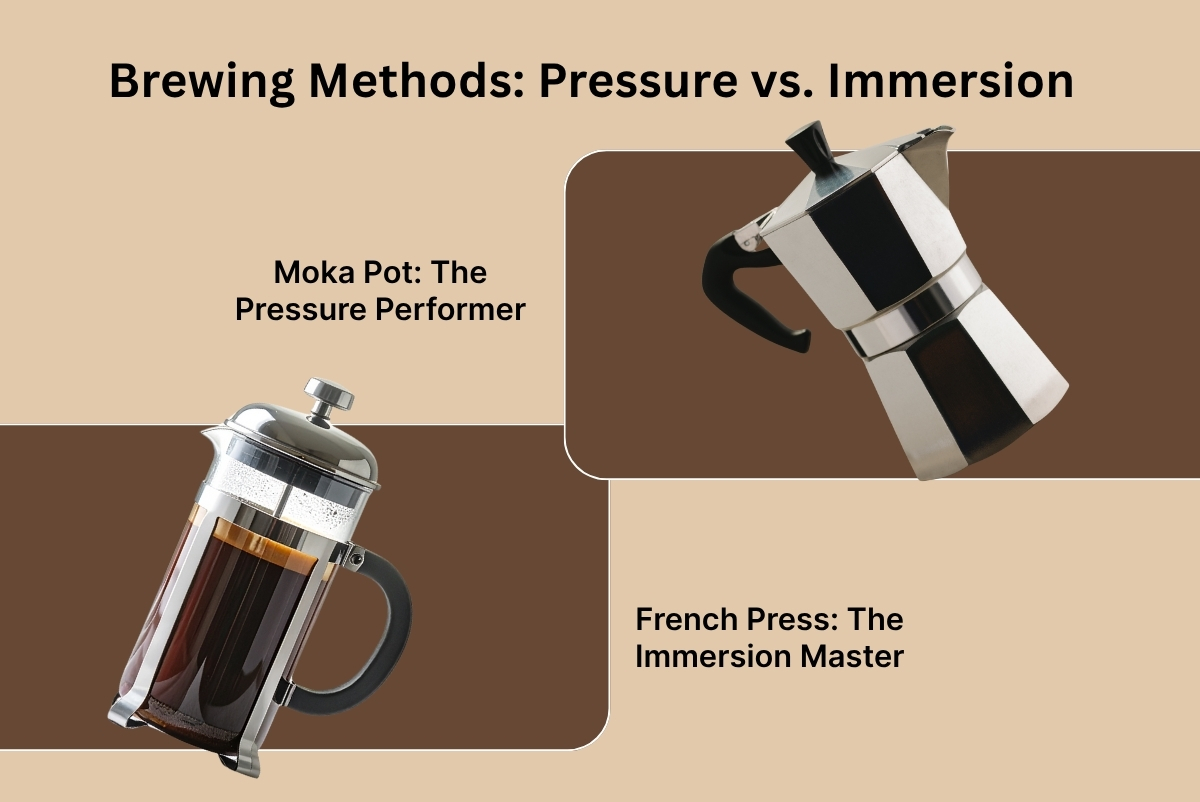
One creates bold, concentrated coffee using steam pressure, while the other coaxes out rich, velvety flavors through slow immersion.
Here’s where things get interesting:
Invented in Italy in the 1930s, the Moka Pot, also known as a stovetop espresso maker, is an icon of rich, aromatic coffee. It consists of three parts: a bottom chamber for water, a middle funnel for coffee grounds, and a top chamber where the brewed coffee collects.
Here’s how it works:
When the pot is heated on the stove, steam pressure builds in the bottom chamber and pushes hot water upward through the grounds into the top chamber.
The result is a small but mighty brew that’s bold, intense, and layered with crema-like foam.
Because the brewing temperature is high and the extraction process is quick, Moka Pot coffee is strong and concentrated, offering a flavor that truly packs a punch.
The French Press, also known as a press pot or plunger pot, was created in France in the 19th century and is loved for its simplicity. It uses full immersion brewing, meaning coffee grounds steep in hot water for several minutes before being pressed down with a metal filter.
This process allows the coffee’s natural oils and fine particles to stay in the brew, giving it a rich, full-bodied texture. There’s no pressure involved, only time, water, and patience.
Compared to the Moka Pot’s sharp, robust flavor, French Press coffee feels rounder and smoother, ideal for anyone who enjoys a mellow, aromatic cup.
If your café is looking for efficient and ergonomic brewing gear, explore Pro Coffee Gear for professional-grade espresso machines and manual coffee tools that deliver consistent performance in every pour.
Brewing techniques play a major role in how coffee tastes, but the real difference comes down to how each one feels on your palate. Let’s see what makes them unique in flavor and which one could be your next favorite.
When it comes to making great coffee, grind size and bean type play a major role in how your cup turns out. The texture, aroma, and balance of flavors all depend on how well your grind matches your brewing method. Choosing the right beans and grind ensures you get the most out of every sip.
Now take a closer look at how coffee grinder and bean choices differ:
If you’re brewing with a French Press, a coarse grind is your best friend. The larger coffee particles slow down extraction and keep fine grounds from slipping through the mesh filter. This results in a clean, full-bodied cup with a silky texture and natural oils intact.
Medium to dark roast beans work beautifully for this method, offering comforting flavors of chocolate, caramel, and mild nuttiness.
It’s a style that brings out the cozy, well-rounded side of coffee is ideal for those who enjoy a smooth and balanced cup.
Moving on to the Moka Pot, precision matters a little more. It performs best with a medium-fine grind finer than French Press but not as powdery as espresso.
This grind allows the steam pressure to extract rich flavors efficiently without clogging the filter.
Medium roast beans tend to deliver the perfect balance here, producing an intense, aromatic brew with layers of sweetness and spice.
The result is a strong, espresso-like coffee that wakes up your senses and pairs beautifully with milk or enjoyed black.
For barista-level performance, explore the Atom W 65 Eureka Grinder at Pro Coffee Gear. Its 65mm hardened steel flat burrs and high-capacity system make every grind smooth, consistent, and ready for perfect extraction.
And since the foundation is set, now check out how brewing time and process influence the final cup.
When it comes to brewing coffee, timing and technique can completely change how your cup tastes. Both the French Press and Moka Pot use distinct processes that influence everything from aroma and texture to strength and smoothness. Whether you enjoy a slow, mindful brew or a quick, bold shot, each method has its own charm.
Here’s where they stand apart:
The French Press is a calm and steady process that takes about 4 minutes. Add coarsely ground coffee to the beaker, pour in hot water just below boiling, and stir gently to let the flavors open up. Let it steep before pressing the plunger down slowly and evenly.
The key is patience. Too short, and your coffee will taste weak; too long, and it can turn bitter.
When brewed for the right amount of time, the French Press gives you a full-bodied, aromatic cup with the natural oils of the coffee still intact.
The Moka Pot, on the other hand, is quicker and produces a concentrated, espresso-style coffee in just 5 to 7 minutes.
Fill the bottom chamber with water, add finely ground coffee to the filter basket, and place it on low to medium heat.
As pressure builds, the brewed coffee rises into the top chamber, signaling that it’s ready.
It may take a few tries to get the grind and heat level just right, but once you do, the Moka Pot consistently delivers strong, flavorful coffee with an intense aroma.
If you want to upgrade your setup, explore Pro Coffee Gear’s range of espresso machines, stainless steel French Presses, and precision grinders. Their high-quality equipment ensures consistent results and durability, perfect for both home and café use.
Brewing techniques matter, but convenience also plays an important part. Next, let’s see which method is simpler for everyday use.
How easy your coffee maker is to use can make all the difference in your daily routine. Some brewing methods are effortless, while others take a little trial and error before you get that perfect cup. So, which one is easier to get the hang of?
A quick look at the differences:
The French Press is as straightforward as coffee brewing gets. You don’t need fancy tools or precise measurements. All you need are coarsely ground coffee, hot water, and a few minutes of patience.
Its simplicity makes it ideal for beginners. Even if you don’t get the ratios exactly right the first time, you’ll still end up with a full-bodied, flavorful cup.
Once you’ve tried it a couple of times, you can easily adjust the steeping time or coffee strength to suit your taste.
If you prefer a hands-on yet forgiving brewing experience, the French Press is your best friend.
The Moka Pot, on the other hand, asks for a bit more attention to detail. Getting the perfect cup depends on mastering a few key elements such as grind size, water level, and heat control.
It might take a few tries to strike the right balance, but once you do, it rewards you with rich, espresso-like coffee and a satisfying brewing ritual.
For those who enjoy a little experimentation and don’t mind fine-tuning the process, the Moka Pot becomes second nature with practice.
If you want something quick and beginner-friendly, go for the French Press. But if you enjoy the craft of brewing and want that strong, aromatic flavor, the Moka Pot is worth understanding.
Next, let’s talk about cleanup and maintenance, because great coffee is even better when the cleanup is easy.
When it comes to brewing coffee, the process doesn’t end when your cup is ready. Cleanup plays a big part in how convenient each method feels day to day. If you want your brewer to last long and deliver great flavor every time, keeping it clean is key.
So, here’s how it stacks up:
Cleaning a French Press is quick and simple, but it does require a bit of attention to detail. After you’ve finished your brew, just empty the used coffee grounds, rinse the beaker, and wash the mesh filter.
However, it’s important not to rush the process. If the filter or plunger isn’t cleaned properly, leftover coffee oils can build up over time and affect the taste of your next brew.
Giving it a thorough wash every few uses keeps your coffee tasting fresh and your French Press in great condition.
The Moka Pot might have more parts, but it’s surprisingly easy to maintain once you get used to it.
Each section, the top chamber, the funnel, and the base, should be rinsed with warm water after every use.
Avoid using soap since it can strip away the natural coffee seasoning that gives Moka-brewed coffee its signature depth.
Make sure to dry every part completely before reassembling to prevent oxidation, especially if it’s made of aluminum.
With a bit of care, a Moka Pot can last for years while consistently brewing rich, aromatic coffee.
If you prefer a quick rinse-and-go cleanup routine, the French Press is simpler. But if you don’t mind a little extra care for long-term durability and flavor, the Moka Pot rewards you with every brew.
Now, let’s see how these two classic brewers compare when it comes to portability.
When it comes to choosing between a French Press and a Moka Pot, your lifestyle plays a big role. Whether you’re brewing your morning cup in the comfort of your kitchen or sipping coffee outdoors, portability and durability can make all the difference.
And here’s what it comes down to:
The French Press is often designed for home use. Most models are made of glass or ceramic, which look stylish but can be fragile.
If you prefer a sturdier option, stainless-steel French Presses are a great choice, they’re tough, retain heat longer, and are less likely to break.
They’re ideal for those who want a rich, smooth brew at home or the office. However, because of their size and delicate build,
French Presses aren’t the easiest to pack for outdoor trips or travel. Even travel-friendly designs can feel a bit bulky compared to other brewing tools.
If you value flavor and simplicity in your daily coffee routine, a French Press fits perfectly into a home setup.
The Moka Pot is built for adventure. Compact, sturdy, and usually made from aluminum or stainless steel, it’s practically unbreakable. Its durable design makes it ideal for camping, hiking, or simply brewing coffee wherever you go.
You can toss it in your bag without worrying about cracks or damage. Plus, since it works directly on stovetops or portable gas burners, it’s incredibly easy to use outside the kitchen.
Despite its rugged look, the Moka Pot delivers espresso-style coffee with impressive consistency.
It’s the go-to choice for coffee lovers who want a portable brewer that can handle a bit of travel and still deliver a strong cup every time.
If you enjoy a cozy morning coffee at home, the French Press is your reliable companion. But if you’re always on the move and need something durable and travel-ready, the Moka Pot easily takes the win.
Now, it's time to understand how these two compare in terms of serving sizes.
When deciding between a French Press and a Moka Pot, serving size plays a big role in which brewer fits your lifestyle. Whether you’re preparing a big batch to share or want a quick solo cup, both methods have their own advantages.
Here’s the gist of comparison:
The French Press is perfect for those who like to brew multiple cups in one go. It’s ideal for households, brunch gatherings, or anyone who prefers making coffee in batches.
Most French Press coffee machine models can brew anywhere from three to eight cups at once, depending on size.
The process is simple: add your coffee, pour hot water, and let it steep. Within minutes, you’ll have enough coffee to serve everyone without needing to brew again. You can even store leftover coffee in a thermos or fridge for later.
If you enjoy slow mornings or like having coffee ready throughout the day, the French Press is your go-to. It’s all about convenience and control, letting you adjust the quantity and strength with ease.
The Moka Pot, often called the stovetop espresso maker, leans toward smaller, stronger servings. It’s built for intensity, brewing rich, concentrated coffee in batches of one to six cups, depending on the pot size.
This makes it a great choice for those who enjoy single servings or prefer making coffee fresh each time.
The Moka Pot also works well if you love mixing espresso-style drinks like cappuccinos or lattes at home.
Because it brews less coffee but delivers a powerful flavor, it’s ideal for people who value quality over quantity. Its compact size and fast brewing process make it both practical and efficient for everyday use.
Both the French Press and Moka Pot cater to different coffee habits, one focuses on quantity and convenience, while the other emphasizes strength and precision.
If you’re looking for reliable brewing equipment, explore professional-grade French Presses and Moka Pots at Pro Coffee Gear, designed to bring café-quality results straight to your kitchen.
When it comes to your coffee budget, the cost of a French Press and a Stovetop Espresso Maker might seem similar, but they can add up differently depending on how often and how much you brew. Let's break it down:
The French Press is generally the more affordable option. It’s simple to use, requires no electricity, and doesn’t need paper filters or extra accessories. All you need are coarsely ground coffee beans and hot water. Most people already have what’s needed at home, which keeps cost of a coffee machine low.
You’ll use less coffee per batch compared to espresso-style brewing, making it cost-effective for regular use.
A standard French Press can brew multiple cups at once, which is perfect if you make coffee daily.
Since it’s reusable and easy to clean, the only ongoing cost is your coffee beans. Buying beans in bulk and grinding them at home can save even more money in the long run.
The Stovetop Espresso Maker, also known as the Moka Pot, may require a slightly higher initial investment. Stainless steel models are durable but cost more, while aluminum versions are cheaper but need extra care to prevent corrosion.
It uses finely ground coffee and a higher coffee-to-water ratio, which can make each brew a little more expensive per cup.
However, it produces a concentrated coffee similar to espresso, so you can stretch your servings by adding milk or water.
Replacement parts like gaskets and filters are inexpensive, and maintenance costs are minimal.
So, let’s see, which one wins in terms of cost?
If you want a low-cost, easy-to-maintain option, the French Press is the winner. It’s affordable, durable, and delivers great flavor without extra effort.
But if you prefer a stronger, espresso-like coffee without investing in a full espresso machine, the Moka Pot is a smart choice that offers lasting value.
Now that we’ve compared the brewing process, flavor, and cost, it’s clear that both the French Press and Stovetop Espresso Maker have their strengths. The choice comes down to your taste and brewing style. Which one will you try next?
If you’re still deciding between the French Press and the Stovetop Espresso Maker, this quick suggestions helps you pick the one that fits your taste, workflow, and budget.
You prefer a heavy, full-bodied cup with richer natural oils.
You want to brew multiple servings in one go.
You like a simple, low-effort method with minimal technique.
You want great-tasting coffee without spending much on gear.
You enjoy strong, concentrated coffee similar to espresso.
You want higher caffeine in smaller servings.
You like being more hands-on timing, heat control, and technique.
You need a durable, metal brewer that travels well and lasts for years.
Choosing between the French Press and the Stovetop Espresso Maker comes down to the kind of coffee experience you enjoy. If you like a fuller cup with natural oils and a calmer brewing pace, the French Press fits that style well. If you prefer a punchier, espresso-like flavor with more intensity, the Moka Pot will feel more at home in your routine.
No matter which one you go for, using reliable tools makes the biggest difference in your cup.
Explore premium grinders, brewers, and accessories at Pro Coffee Gear provides premium tools and accessories to enhance your setup with gear built for consistent, high-quality results.
Yes, you can, but grind size matters for each method. For a French Press, go for a coarse grind to avoid sediment and achieve a clean cup. For a Stovetop Espresso Maker or Moka Pot, use a fine or medium-fine grind for proper pressure and extraction. The grind size defines how your coffee tastes and feels.
The Stovetop Espresso Maker brews stronger, espresso-style coffee with an intense flavor and aroma. The French Press delivers a smoother, more full-bodied cup with natural oils retained. If you prefer bold, concentrated coffee, go for the Moka Pot; for a balanced and rich brew, the French Press is ideal.
Yes, the French Press is easier to clean since it has fewer parts, a beaker, plunger, and filter. The Stovetop Espresso Maker has multiple components like a gasket, filter plate, and water chamber that need frequent cleaning to prevent residue buildup and maintain flavor quality.
Not exactly. The French Press doesn’t generate the pressure required for true espresso. However, you can brew a stronger cup by using more grounds and letting it steep longer. The Moka Pot or Stovetop Espresso Maker comes closer to espresso in strength and texture.
The French Press is often better for beginners because it’s simple and forgiving. You just add grounds, pour hot water, steep, and press. The Stovetop Espresso Maker needs more control over heat, grind, and timing. If you want convenience, choose the French Press; if you enjoy experimenting with strong brews, try the Moka Pot.
Our team can help you find the best fit based on your space, volume, and budget.
Talk to a Specialist

