

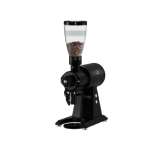

Macap Grinders: A 2026 Buyer's Guide for Espresso Precision
|
|
Time to read 11 min
Your Cart
Your cart
Favorites





Shop by Brands

Shop by Brands
Shop by Brands


Shop by Brands


Shop by Brands
Shop by Brands

|
|
Time to read 11 min
In espresso, your grinder controls the outcome more than most people realise. Small changes in particle size can shift shot time and taste quickly, even if you keep the recipe the same.
Macap is best known for espresso-focused grinders built for consistent dial-in, repeatable dosing, and long-term use in café-style workflows. If you are comparing Macap grinders for home espresso versus café volume, this guide breaks down what changes across models and what to buy based on how you actually use your setup.
Macap models are built for different workloads, not just different prices. Match the grinder to your daily shot volume, not just brand reputation.
Dial-in control matters more than size or power. Fine adjustment is what keeps espresso consistent, not oversized motors.
Grind speed should support your workflow, not slow it down. Cafés need throughput; home setups need repeatability.
Buying "bigger for later" often adds cost without improving shots. Capacity only helps if you actually use it.
The right Macap grinder can anchor your setup for years. Choose well once, and it will support future machine upgrades without becoming the weak link.
Macap grinders are engineered with one primary goal: delivering consistent espresso extraction over the long term. While entry-level grinders are designed for multiple brew methods, Macap is best known for espresso-focused grinders and café workflows, with an emphasis on consistency, durability, and repeatable dial-in.
Espresso requires a narrow particle-size distribution to prevent channeling and ensure balanced extraction. Macap grinders use flat steel burrs sized to produce a uniform particle distribution at fine settings.
This precision helps eliminate inconsistencies in shot time and flavor, ensuring that every espresso shot is stable, even when grinding continuously in a high-demand environment.
Many Macap grinders use commercial-grade motors designed for continuous duty. Instead of focusing on RPM alone, Macap designs prioritize airflow and thermal management to maintain stable grinding temperatures during extended use.
Excess heat can alter grind size and disrupt extraction timing, so maintaining stable temperatures helps ensure consistent results, shot after shot, which is essential for cafés pulling dozens of shots per hour.
One of the standout features of Macap grinders is their stepless or micro-adjustment systems. This allows for extremely fine control over grind size, making it easy to dial in the perfect shot. Even minor adjustments can drastically affect the flavor, crema, and shot consistency.
Whether you're a home barista or working in a fast-paced café, Macap's precise adjustments enable a smooth workflow without the frustration of resetting grind settings with every shot.
Macap grinders are designed for on-demand grinding, so you grind only what you need for each shot. This approach reduces waste by ensuring coffee grounds remain fresh, which is especially important for both home brewing and café service.
Whether you're brewing at home or handling a café rush, this feature keeps things predictable, saving time and reducing the likelihood of stale grounds compromising your brew.
Also Read: Basics of Grinding Coffee Beans at Home
Now, let's step into comparing models side by side.
Below is a refined comparison of the top Macap grinder models. This gives a clear picture of the available options and helps you choose the right grinder for your espresso workflow.
Use this table to quickly identify which grinder best matches your espresso volume, workflow, and dial-in needs. Specs and prices are based on current listings from Pro Coffee Gear and manufacturer pages for Macap.
|
Model |
Price (USD) |
Target Use Case |
Notes / Highlights |
|---|---|---|---|
|
$718.11 |
Home espresso & light use |
Compact profile, good entry-level Italian grinder with precise control |
|
|
$564.69 |
Value/refurbishment option |
Same as above at reduced cost (open box) |
|
|
$1180.52 |
Prosumer/café |
Excellent balance of performance and café durability |
|
|
$1282.80 |
Prosumer/café |
Enhanced aesthetic and control options |
|
|
$1365.49 |
Café / frequent use |
Larger burrs and faster grind rate |
|
|
$1437.30 |
Café / frequent use |
Extra refinement and design touches |
|
|
$1488.44 |
Café / high-volume use |
Pro-focused features and durability |
|
|
$1745.21 |
Commercial & busy cafés |
Highest capacity and daily workload support |
Prices current as of February 2026 and may change based on availability and configuration. This comparison highlights key pricing and features in brief. Let's get into each in detail to understand its specifications:
The Macap Leo 55 is a well-balanced grinder for espresso lovers. It's not as large as the MI series but delivers solid performance with 55 mm burrs and good portafilter clearance. This makes it ideal for homes or small commercial counters.
Think of it as the right‑size grinder that squeezes pro performance into a smaller footprint.
Specifications:
Manufacturer: Macap
Burr Type: Flat
Burr Diameter: 55 mm
Coffee Bean Hopper: 0.66 lbs
Voltage: 110 V
Wattage: 390 W
Weight: 13.7 lbs
Best use: Home baristas and boutique coffee shops.
Outcome: Clean grind profiles that support nuanced espresso flavors.
With a 55 mm flat burr and touchscreen controls, the new open-box Leo 55 offers both precision and efficiency. It's an excellent choice for baristas seeking a high-performance grinder that doesn't take up much counter space.
The digital interface allows users to easily control grind time and size adjustments for more consistency in every shot.
Specifications:
Manufacturer: Macap
Burr Type: Flat
Burr Diameter: 55 mm
Coffee Bean Hopper: 0.66 lbs
Voltage: 110 V
Wattage: 390 W
Weight: 13.7 lbs
Best Use: Home baristas and small coffee shops that require compact equipment.
Outcomes: Consistent, high-quality espresso grounds with minimal clumping.
If you are choosing between Leo 55 and MI20, start with workload. The Leo 55 fits home espresso and light service where compact size and dial-in control matter most. The MI20 is better suited to regular daily service, with more stability under repeated grinding and a workflow designed for café use.
The MI40 family sits in the sweet spot for cafes and serious home users. It features 65 mm flat burrs, a 3.5″ touchscreen, and customizable dosing. You can program multiple doses and quickly refine grind settings with the intuitive interface.
With plenty of hopper space and strong motor performance, these machines are comfortable all‑day grinders.
Specifications:
Manufacturer: Macap
Burr Type: Flat
Burr Diameter: 65 mm
Coffee Bean Hopper: 2.65 lbs
Voltage: 110 V
Wattage: 480 W
Weight: 19.62 lbs
Best use: Full‑service cafés or home bars seeking café-quality without overkill.
Outcome: Consistent dosing and smooth grind quality shift after shift.
The Macap MI20 family allows users to easily program dosing presets, making it a great option for both high-demand commercial environments and home espresso setups. Its robust motor provides excellent power, while the grinder's build ensures long-term durability.
Specifications:
Manufacturer: Macap
Burr Type: Flat
Burr Diameter: 58 mm
Coffee Bean Hopper: 1.1 lbs
Voltage: 110 V
Wattage: 300 W
Weight: 16.53 lbs
Best Use: Mid-size cafes, offices, and serious home users looking for a digital, programmable grinder.
Outcome: Precise, uniform grinds that help create consistent espresso shots
The Macap Supra Grinder is one of the most powerful commercial grinders from Macap. With programming capabilities and an innovative grind target system (CTS), it ensures precise doses for a professional coffee experience.
The Supra is available in Supra 68 and Supra 83 versions, with burr size and motor power varying by configuration.
The Supra's quick access to burrs and motor makes it easy to maintain, ensuring minimal downtime in busy coffee shops or roasteries.
Specifications:
Manufacturer: Macap
Burr Diameter: 68 mm or 83 mm (depending on model)
Wattage: varies by version
Best Use: High-demand commercial coffee shops, roasteries, and cafes where speed, consistency, and volume are key.
Outcome: Fast and consistent grinding, ideal for environments that need to produce large quantities of coffee daily.
The MI40 range suits cafés that need fast, consistent espresso grinding through regular service blocks. Supra steps up for higher-volume environments that prioritise maximum daily throughput and easier maintenance access. Choose based on your busiest hour, not just your average day
Choosing the right Macap grinder comes down to how you brew espresso day-to-day. Shot volume, workflow, and consistency expectations matter more than simply buying the largest model available.

Below is a breakdown of real-world use cases for the grinders in our Macap collection.
If you're pulling a few espresso shots a day and regularly dialing in, a compact Macap grinder makes sense.
Models like the Macap LEO 55 are designed for precision without occupying excessive counter space. The stepless adjustment allows fine-tuning, which is critical when small grind changes can shift shot time by several seconds.
A 55 mm flat burr set paired with a stable motor delivers repeatable results without excess heat buildup. This setup works well if espresso is your primary brew method and you value accuracy over volume.
For cafés that pull espresso throughout the day, consistency under moderate load is the priority.
Mid-range Macap models like the MI20 and MI20 Luxe are built for this environment. These grinders balance burr size with a responsive touchscreen interface and durable Italian engineering to deliver consistent service without sacrificing shot quality.
Instead of manually timing doses, baristas can rely on consistent output, reducing training time and improving drink-to-drink consistency.
Busier cafés and espresso bars should consider higher-capacity models such as the MI40 series or Macap Supra. These grinders are designed for continuous grinding with minimal performance degradation. Larger burrs increase throughput, while more solid motors support sustained use during rush periods.
At this level, heat management and durability are key. For high-volume environments, this reliability directly impacts both drink quality and operational efficiency.
At Pro Coffee Gear, we carry top collections of Macap grinders selected to match each of these use cases. Whether you're upgrading a home espresso setup or outfitting a café, choosing the right model upfront helps you avoid unnecessary compromises later.
By the time most people consider Macap grinders, they already understand that grind quality matters. The mistakes at this stage are usually subtler and driven by misaligned expectations, not by a lack of knowledge.
These are the issues we see most often when buyers choose an espresso grinder without aligning it to their actual workflow.
1. Assuming All Macap Models Perform the Same at Espresso Settings
Macap grinders share a strong reputation, but performance scales by model. Smaller burr sets and motors behave differently under load than commercial models do.
A grinder that feels stable at three shots a day may struggle during a busy service window. Treating the lineup as interchangeable often leads to inconsistent extraction during peak use.
2. Underestimating How Grind Speed Affects Shot Timing
Grind speed is not just about convenience. Faster grinders reduce dwell time, which can impact particle uniformity and shot consistency.
In café environments, slower grind speeds can also create bottlenecks during rush periods. Matching grind speed to your service pace helps maintain both quality and workflow efficiency.
3. Choosing Programmable Dosing Without Reviewing Barista Workflow
Programmable dosing is helpful, but only if it fits how shots are actually prepared. In some setups, manual dosing offers more flexibility during recipe changes or single-origin rotations.
In others, programmable dosing reduces errors during peak hours. The mistake is choosing dosing features without considering who is using the grinder and how often recipes change.
4. Overlooking Retention When Dialing in Espresso
Retention becomes more noticeable when dialing in or switching coffees. Grinders with higher retention may require purging between adjustments, which increases waste and slows service.
For home baristas who frequently experiment with different beans, this can be frustrating. For cafés, it affects efficiency and cost control.
5. Expecting One Grinder to Cover Every Brew Method
Macap grinders are designed primarily for espresso. Expecting a single grinder to perform equally well for espresso, pour-over, and batch brewing often leads to compromise.
Espresso-focused grinders perform best when used for their intended purpose. Adding a dedicated grinder for other brew methods usually delivers better results than forcing a single grinder to handle everything.
Avoiding these mistakes helps narrow your choice to a Macap grinder that fits your real-world needs, not just the spec sheet.
Also Read: Espresso Grinder vs Coffee Grinder: Key Differences
Dialing in espresso is all about control and repeatability. From grind consistency to workflow efficiency, the grinder you choose directly affects how predictable your shots are, especially as volume and expectations increase.
Macap grinders are built with that reality in mind. They're not designed to do everything. They're designed to do espresso well, day after day. Getting the match right helps you avoid inconsistent shots, wasted coffee, and premature upgrades.
At Pro Coffee Gear, we focus on helping you make that decision with confidence. We carry Macap grinders selected specifically for espresso-focused use in the US market, and we guide you toward the model that fits your workflow, not just your budget.
Ready to move from research to results? Shop Macap grinders now and choose the right tool to bring consistent, café-quality espresso into your daily routine.
If you're pulling only a few shots a day, the key question is workflow, not size. Many home users choose larger Macap grinders, thinking they'll get better shots, but consistent dialing and adjustment control matter more than capacity. A compact Macap grinder can deliver the same shot quality without added cost or space issues.
Macap grinders retain their grind settings well, but switching beans often requires minor adjustments. Different roast levels and densities affect flow rate. The advantage with Macap is that stepless adjustment makes these changes precise and predictable, so you're not guessing or overshooting the setting.
The difference isn't just power. Café-oriented Macap grinders are built to maintain grind consistency under continuous use, while home-focused models prioritize control and compact design. If your grinder won't see back-to-back shots for hours, a commercial model may not add meaningful value.
Most Macap espresso grinders deliver a single dose in a few seconds, depending on burr size and model. Faster grind times help reduce waiting during busy service, but for home users, consistency matters more than speed alone. Stable shot timing is the bigger benefit.
Yes, and this is where Macap grinders make sense long term. A capable grinder often outlasts multiple machine upgrades. As long as you choose a Macap model aligned with your expected shot volume, it will continue to support higher-end machines without becoming the bottleneck.
Our team can help you find the best fit based on your space, volume, and budget.
Talk to a Specialist

