


Mahlkönig E80S / E80T Grinder Review for Busy Cafés
|
|
Time to read 8 min
Your Cart
Your cart
Favorites





Shop by Brands

Shop by Brands
Shop by Brands


Shop by Brands


Shop by Brands
Shop by Brands
|
|
Time to read 8 min
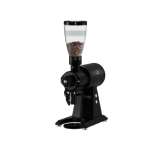
If espresso grinders had a “don’t blink” mode, the Mahlkönig E80S and E80T would be running it nonstop. These are the grinders you notice when the bar is slammed, shots are flying, and somehow the espresso still tastes dialed in. No drama. No slowing down. Just relentless consistency where it matters most.
In this e80s / e80t grinder review, we’re not easing into the features or rehashing spec sheets. We’re looking at what actually separates these grinders from the pack: why cafés choose them for peak-hour service, and how they handle speed without sacrificing consistency.
If you’re deciding whether the E80S or E80T is just “bigger hardware” or a genuine workflow upgrade, keep reading.
Built for High-Volume Espresso: The E80S and E80T are designed to handle nonstop service with stable grind quality and consistent output.
Same Power, Different Philosophy: The E80S offers hands-on control, while the E80T adds Grind-by-Sync automation to reduce manual corrections.
Strong Burr Performance: 80 mm flat burrs support uniform extraction and reliable flavor across busy service windows.
Workflow-Focused Design: Both grinders prioritize speed, thermal stability, and ease of use in real café environments.
Best for Growing and Busy Cafés: Ideal for operators who need a grinder that keeps up as volume and complexity increase.
At high volume, grinders don’t fail all at once; they fail quietly. Shots start drifting. Baristas compensate without realizing it. Waste creeps up. Service slows, not because the grinder stopped working, but because it stopped being predictable.

That’s the moment most cafés realize their grinder isn’t built for the way they actually operate.
Before we get into the E80S and E80T, it’s worth reframing what “high-performance” really means. It’s not just bigger burrs or faster motors. It’s about how a grinder behaves when conditions are imperfect.
With that in mind, these are the non-negotiables we look for in a grinder.
Consistency That Holds When Conditions Change
We don’t judge a grinder by its first ten shots. What matters is how it behaves after hours of service, when humidity shifts, beans age, and multiple baristas are making small adjustments.
A high-output grinder should protect consistency even when conditions aren’t perfect.
Speed That Actually Improves Service
We look beyond raw grind speed. The real value comes when a grinder keeps pace without forcing baristas to rush or compensate, helping the bar stay calm and efficient during peak volume.
Burr Performance Designed for Espresso, Not Just Size
Bigger burrs alone don’t guarantee better espresso. What we care about is how burr geometry supports even extraction across heavy usage, reducing channeling and dialing drift as volume increases.
Adjustments That Don’t Create New Problems
We want grind changes to be predictable and recoverable. In real cafés, settings get touched often — a grinder should make it easy to return to known points without guesswork or wasted shots.
Thermal Control That Protects Flavor Over Time
Heat buildup is one of the fastest ways to lose consistency. We value grinders that manage temperature well enough that the espresso tastes the same late in the rush as it did at the start.
Workflow That Supports the Team, Not Just the Machine
A grinder should reduce cognitive load. Clear interfaces, intuitive portafilter handling, and easy cleaning all matter because they keep baristas focused on service, not troubleshooting.
Built for Years, Not Just the Warranty Period
We look for grinders engineered for long-term commercial use: durable components, accessible maintenance, and predictable wear patterns that make ownership easier over time.
Also Read: Important Features to Consider When Buying an Espresso Machine
With those expectations set, let’s take a closer look at how the E80S and E80T perform when put to work in real espresso environments.

This is the point where most grinder reviews slow down. Specs get listed, buzzwords get repeated, and everything starts sounding the same. We’re not doing that. The E80S and E80T weren’t built to look good on a product page; they were built to survive the kind of service where mistakes add up fast.
In this section, we’re focusing on what actually changes when these grinders are on the bar.
If your bar buzzes from opening to close, the E80S and E80T are aimed squarely at you. This isn’t a “nice-to-have” espresso grinder; it’s designed for operators who depend on performance every single service shift.
The 80 mm special steel flat burrs and powerful motor with active temperature control make it well-suited for:
Busy cafés and high-volume espresso bars where throughput and consistency are non-negotiable.
Multi-barista environments where repeatability across shifts matters.
Menu diversity setups that push grinders through espresso shots, decaf runs, and complex menus.
Operators that want commercial durability without complexity.
Bottom line: this grinder is built for cafes and baristas who need reliable performance during real service, not just good looks on a promo page.
There’s a reason the E80S / E80T keeps showing up behind serious espresso bars: it’s about consistency and control in equal measure.
Robust Burrs + Precise Grind Control: 80 mm special steel burrs produce uniform particles that support consistent extraction and flavor clarity.
Active Temperature Management: A powerful motor with cooling maintains stable performance across long pull sessions, helping shots stay dialed even under pressure.
Disc Distance Detection (DDD): This patented tech lets you fine-tune grind size more reliably than guesswork, improving repeatability and reducing waste.
Modern, Cafe-Ready Design: Quiet operation, large hopper capacity, and intuitive controls make it a comfortable fit for busy countertops and barista workflows alike.
Real chatter from coffee communities gives a grounded perspective beyond specs and sales copy:
Some baristas appreciate Mahlkönig’s legacy but note that build quality isn’t flawless — “glitchy pieces of plastic” and maintenance issues come up in real-world discussions about the E-series grinders.
reddit.com/r/espresso/comments/1awjwr8/whats_the_deal_with_mahlkonig/
In grinder comparisons with other top commercial options, users highlight the E80 family’s power and capacity, even if opinions on nuances vary among setups.
reddit.com/r/Coffee/comments/mdpy4d/mythos_2_mahlkonig_e80_supreme_or_e65s_gbw_grinder/
First impressions shared by another user point to performance potential, though real refinement comes with hands-on experience and workflow fit.
reddit.com/r/espresso/comments/121wkz2/new_grinder_feat_mahlkonig_e80/
What this tells us: experienced operators know the E80S/E80T has serious capability, but practical performance still comes down to how you use it.
Before you commit, here are real, decision-shaping points worth keeping in mind:
Build vs. Price Expectation: Some baristas feel certain components lean toward plastic compared to price point expectations, worth knowing if tactile robustness matters to you.
Tolerance & Dose Control: In high-volume settings, users sometimes report wider tolerances than ultra-precise targets, meaning small adjustments or workflow tweaks may be needed.
Maintenance Awareness: Like all high-output grinders, routine cleaning and burr checks are essential; these grinders don’t maintain themselves.
Footprint & Workflow Fit: While compact for its power class, it still demands real counter space and workflow planning, especially if paired with other commercial gear.
Training & Workflow Integration: Leveraging features like DDD takes a bit of learning. If your team isn’t used to advanced grinders, factor in time to train for consistency.
Dial in faster, eliminate grind inconsistency, and keep shots stable during rush hours with the E80S / E80T’s high-speed burrs and temperature-controlled motor.
With a clear picture of how the E80S and E80T perform in real-world service, the next step is deciding whether they’re the right fit for your bar and workflow.
At first glance, the E80S and E80T look nearly identical: same footprint, same burrs, same unmistakable Mahlkönig presence on the bar. But once you start using them day to day, the differences show up fast. Not in flashy ways, but in how much thinking, correcting, and recalibrating your baristas have to do during service.
This section breaks down where the E80S and E80T truly diverge.
|
If This Sounds Like You… |
E80S (Timed Dosing) |
E80T (Grind-by-Sync) |
|
You want maximum control and simplicity |
Best fit — straightforward timed dosing keeps everything manual and predictable |
May feel like more automation than you need |
|
Your baristas are highly experienced |
Works well when staff can manage dialing and corrections confidently |
Still helpful, but automation may be underutilized |
|
You want fewer variables during rush |
Requires active attention and occasional corrections |
Sync adjusts dosing automatically, reducing manual tweaks |
|
You rotate baristas across shifts |
Consistency depends on training and discipline |
Automation helps standardize output across staff |
|
You change grind size frequently |
Requires manual re-dialing of the dose |
Sync compensates the dose automatically when the grind changes |
|
You prioritize speed and workflow stability |
Fast, but relies on barista intervention |
Designed to keep service flowing with fewer interruptions |
|
You prefer a proven, traditional setup |
Ideal for classic café workflows |
Feels more modern and tech-driven |
|
You want future-ready automation |
Limited to manual control |
Built to integrate with Sync-enabled ecosystems |
|
You want predictable costs and setup |
Lower complexity, fewer dependencies |
Higher upfront investment with added automation value |
Also Read: Finding the Best Espresso Grinder for Home Use
The right choice simply depends on how much you want the grinder to think for you, and how much you prefer to stay hands-on behind the bar.
What stands out in this E80S / E80T grinder review is that Mahlkönig isn’t offering two versions of the same idea: it’s offering two different philosophies built on the same high-performance platform.
At Pro Coffee Gear, we work closely with cafés facing these exact decisions every day: balancing speed, control, and long-term workflow efficiency.
Explore Pro Coffee Gear to find commercial grinders and espresso equipment built for serious café performance.
Yes, especially in busy cafés. In this E80S / E80T grinder review, one of the biggest workflow benefits is reduced re-dialing, with the E80T going a step further by automatically compensating when grind size changes.
It can be. Even skilled baristas benefit from automation during peak hours. The E80T helps protect consistency when attention is split, while the E80S remains a strong choice for teams that prefer full manual control.
Both grinders handle variable conditions well thanks to stable burr alignment and thermal management. As noted in this E80S / E80T grinder review, the E80T offers an added buffer by adjusting dose output automatically.
Often, yes — but usually for the better. Many cafés find they can tighten recipes or push extraction slightly higher due to improved grind consistency and stability.
They perform well with both. The consistency highlighted in this E80S / E80T grinder review makes them especially useful for cafés rotating single origins while maintaining reliable blend service.
Our team can help you find the best fit based on your space, volume, and budget.
Talk to a Specialist

