


Should I Buy a Refurbished Espresso Machine? Pros and Cons Explained
|
|
Time to read 14 min
Your Cart
Your cart
Favorites





Shop by Brands

Shop by Brands
Shop by Brands


Shop by Brands


Shop by Brands
Shop by Brands
|
|
Time to read 14 min
Every coffee shop owner knows the math: equipment is one of your biggest upfront investments, and your espresso machine is the heart of that investment. When you're already juggling lease deposits, build-out costs, staff training, and inventory, that hefty price tag on a commercial-grade espresso machine can feel like a punch to the gut, especially when you are trying to preserve capital for your first six months of operation.
This is when refurbished equipment starts looking less like a compromise and more like a strategic move.
Should you buy a refurbished espresso machine? If the answer is yes, you can benefit from significant cost savings without sacrificing quality.
A refurbished commercial espresso machine promises to cut your equipment costs by a wide margin, potentially freeing up money that could go toward marketing, hiring an experienced barista, or building your cash reserves. For a new café operating on thin margins, or an established shop looking to add a second location, those savings could be the difference between launching comfortably and stretching yourself dangerously thin.
In this blog, we will explore the pros and cons of buying a refurbished espresso machine, what to look for when buying one, and how to decide if it is the right choice for your business.
What does "refurbished" mean? Understand the difference between refurbished, used, and open-box espresso machine.
Pros of buying refurbished: Discover the major cost savings, access to high-end models, and eco-friendly benefits.
Cons and risks: Learn about shorter warranties, potential wear, and limited availability of parts.
How to decide if it's right for you: Key factors to consider, like your budget, usage scenario, and machine history.
Practical checklist: Steps to inspect the machine, check the refurbishment credentials, and ensure proper functionality.
Why choose Pro Coffee Gear? Explore our certified refurbished machines, backed by expert service and nationwide shipping.
"Refurbished" isn’t just a catch-all phrase. It refers to specific processes and conditions that distinguish these machines from used or open-box models. While these terms are often used interchangeably, they signify different conditions. Let’s break it down.
Refurbished: A machine labeled as refurbished has typically been returned to the manufacturer or a certified service center for a thorough inspection, repair, and restoration. It’s often repaired to meet manufacturer standards and might even have parts replaced with new ones. Refurbished machines usually come with a warranty, which provides some peace of mind for buyers.
Used: A used espresso machine has been previously owned and is sold in its current condition. It may have undergone minimal inspection or repair, but it typically doesn’t have the same level of thorough service as a refurbished model. Used machines often lack a warranty, so buyers are taking on more risk.
Open-Box: Open-box machines are typically brand-new but have been opened for display or returned by the customer. They might have minor cosmetic issues or be missing original packaging, but are otherwise in new condition. These machines are usually priced lower than new but still come with a full warranty.
The primary reason a refurbished espresso machine is priced lower than new ones comes down to the nature of its prior use. Since these machines have had previous owners or have been used for demo purposes, they have already experienced some depreciation. However, their lower price doesn’t mean they’re subpar. Here’s why they are more affordable:
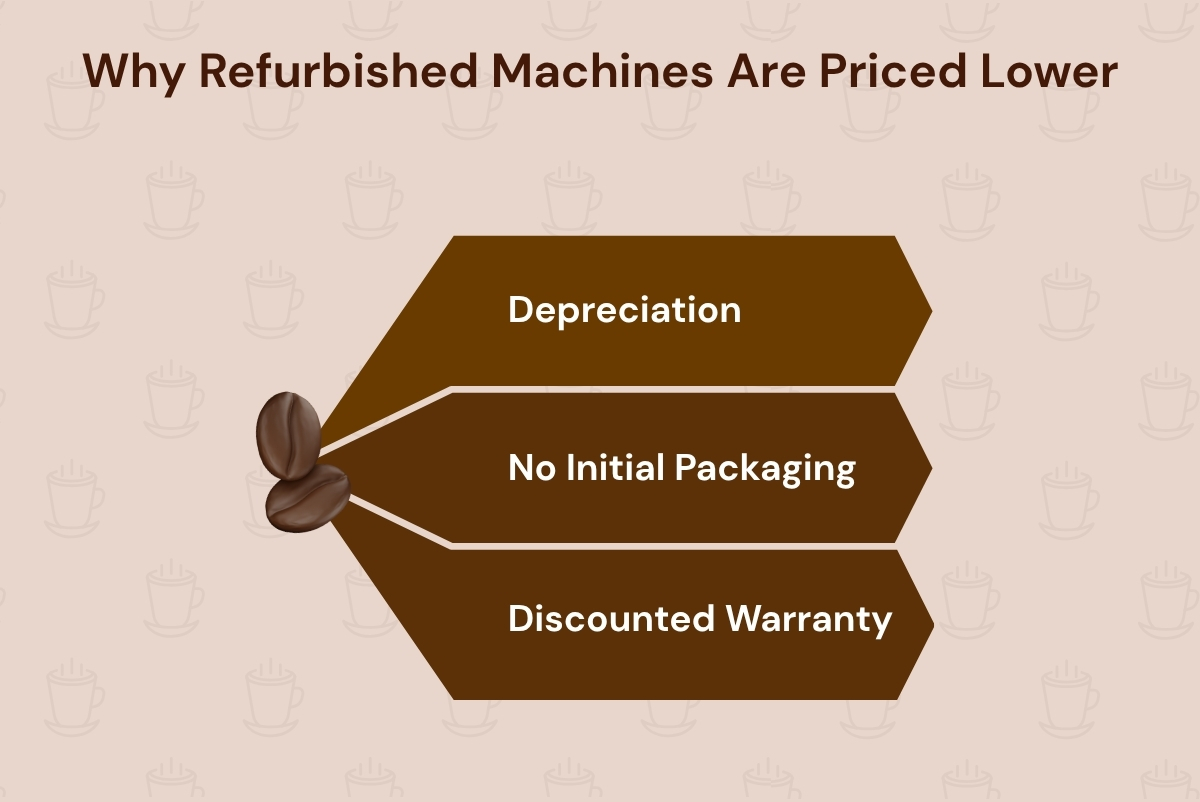
Depreciation: Just like any other product, an espresso machine loses value once it has been used. Even if the machine is restored to near-new condition, it still carries the stigma of being previously owned, which drives down the price.
No Initial Packaging: Many refurbished machines are sold without the original packaging, which means there’s less cost involved for packaging and shipping new products from the factory.
Discounted Warranty or Limited Service: While refurbished machines may come with a warranty, it’s often shorter or less comprehensive than the warranty on a brand-new machine. This reduced service level translates to a lower price.
Knowing exactly what “refurbished” entails leads naturally into what you gain and what you risk when choosing one. In the next section, we will dive into the pros of buying a refurbished espresso machine.
There’s no doubt that buying a refurbished espresso machine offers significant advantages. Whether you are a home barista looking to enhance your coffee-making experience or a café owner needing reliable equipment on a budget, refurbished machines can be a great choice. Here are the main benefits of going the refurbished route.
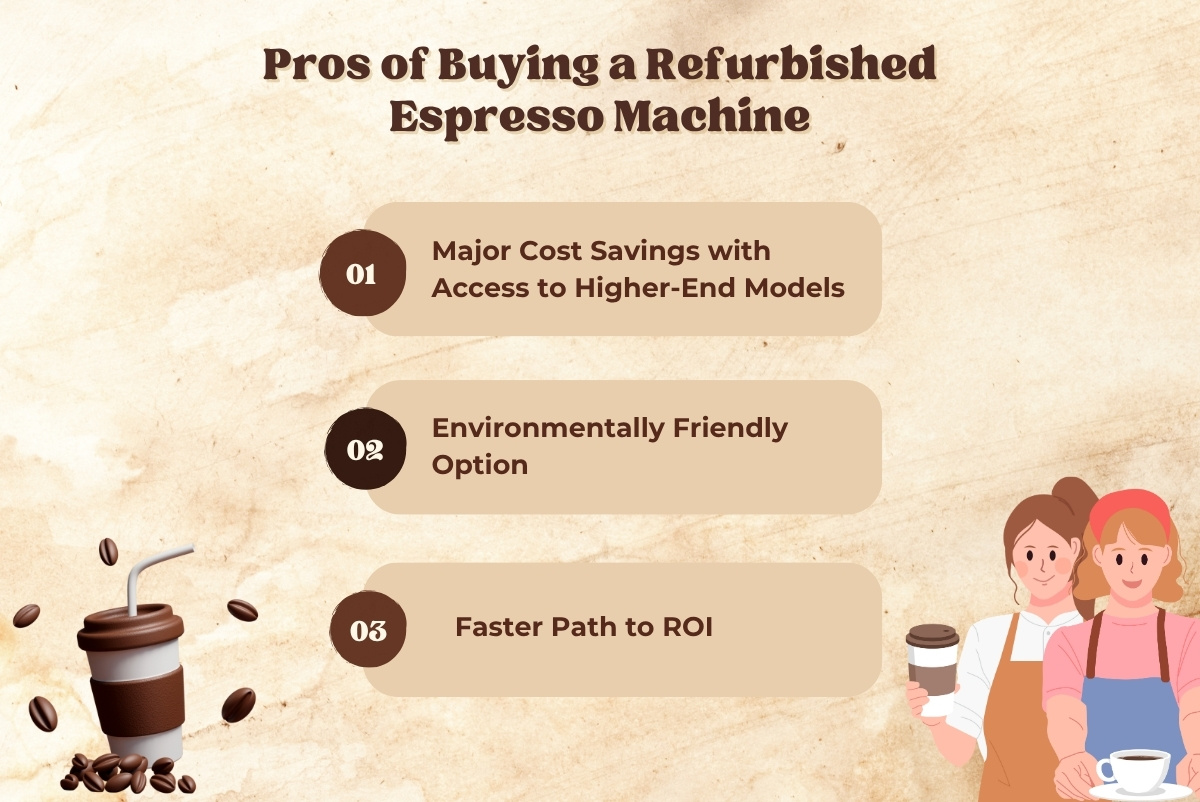
One of the biggest reasons coffee lovers choose a refurbished espresso machine is the significant cost savings. A refurbished espresso machine typically costs significantly less than a brand-new one, which can make a huge difference in your budget, especially for high-end models.
Affordability without compromise: By choosing refurbished, you get the opportunity to enjoy a high-quality espresso machine at a fraction of the price.
Lower entry point: If you're a first-time buyer or starting a coffee business, saving on equipment means you can allocate more of your budget toward quality coffee beans, training, or other operational costs.
Advanced features at a discount: Many refurbished machines come with features typically found in pricier, new models like dual boilers, PID controllers, and better grinders without breaking the bank.
Pro Coffee Gear offers a wide selection of both new and certified-refurbished espresso machines, each rigorously vetted by our team of experts. Check our collection here!
Buying a refurbished espresso machine is a sustainable choice for eco-conscious coffee enthusiasts. Instead of sending machines to landfills, refurbished models are restored, reused, and given new life, reducing waste and your environmental footprint.
Less waste: Refurbished machines divert perfectly good equipment from the waste stream, which helps reduce the overall environmental impact of manufacturing new products.
Energy efficiency: Many refurbished espresso machines are more energy-efficient than newer models, which can save on electricity costs in the long run.
Access to high-end features at a lower price.
Eco-friendly choice with reduced waste.
Faster ROI due to lower upfront costs.
While the appeal is clear, it is equally important to understand the downsides, which we will cover next.
Understanding the risks can help you make an informed decision and avoid any unpleasant surprises down the road. Here are the key cons to keep in mind.
One of the major drawbacks of buying a refurbished espresso machine is that the warranty is often shorter or more limited than the warranty that comes with a new machine. While new machines typically come with warranties ranging from 1 to 5 years, refurbished models may offer a warranty that lasts only 30 days to 1 year, depending on the seller.
Reduced protection: With a shorter warranty, you might be left on your own sooner if something goes wrong. If your refurbished machine breaks down after the warranty expires, you could end up paying for repairs out of pocket.
Varying coverage: Some refurbished machines may have warranties that only cover specific parts, such as the pump or the boiler, while excluding other important components.
One of the main risks when buying a refurbished espresso machine is that some components may have wear and tear from prior use, and the technology may be outdated compared to new models.
Wear and tear: Internal parts like the boiler, seals, and grinder may have hidden damage that affects performance.
Outdated features: Even after refurbishment, the machine may lack the advanced features of newer models, such as improved energy efficiency or modern temperature control.
When you buy a refurbished espresso machine, there’s a chance that parts and service options could be more difficult to come by. Some manufacturers or repair shops may not support older, refurbished models as readily as they do newer, current versions.
Harder to find replacement parts: As espresso machines age, replacement parts may become scarce or more expensive, which can make repairs more challenging.
Lower resale value: If you plan to sell your espresso machine down the road, refurbished models typically have a lower resale value than new machines, making it harder to recover your investment.
Shorter warranties with limited coverage.
Hidden wear or possible unresolved issues.
Potentially outdated technology and lower energy efficiency.
With both the benefits and downsides in mind, the next section walks you through how to decide if refurbished is right for you.
Now that you are aware of both the benefits and risks associated with a refurbished espresso machine, it’s time to think critically about "should I buy a refurbished espresso machine" and whether one is right for you. Here’s how to make that decision.
The first step in deciding whether a refurbished espresso machine is a good fit is to consider your budget and usage scenario. Are you a home barista making one or two cups a day, or are you a café owner who needs a high-volume machine to serve dozens of customers?
Home Baristas: If you're only brewing a couple of cups daily, a refurbished espresso machine can be a great way to get a quality machine without the steep cost of a new one.
Cafés and Businesses: If you're running a café or coffee shop, the demands on your machine are much higher. In this case, you’ll need to ensure that the refurbished machine is up to the task of heavy daily use. You may want to invest in a more robust, new model for peace of mind and the long-term reliability of your business.
Not all refurbishments are created equal. To ensure you’re buying a machine that’s truly up to par, you need to ask about the credentials of the refurbishment.
Who did the work? Look for machines that were refurbished by authorized service centers or reputable repair companies. If the machine was refurbished by a third-party, you might be taking on more risk.
What parts were replaced? Ensure that critical parts such as the boiler, pump, or group head have been properly replaced or repaired. Some refurbished machines are only given a cosmetic touch-up, which could mean important internal components haven’t been addressed.
By ensuring that the refurbishment is thorough and done by experts, you’re protecting yourself from potential future issues.
Pro Coffee Gear’s refurbished espresso machines go through a comprehensive inspection and restoration process to meet the highest standards, ensuring you receive a product that performs like new at a fraction of the price.
A key factor in deciding whether a refurbished espresso machine is a good investment is the warranty and return policy. Unlike new machines, which often come with comprehensive warranties, refurbished machines may have limited coverage.
Warranty: Check how long the warranty lasts and what’s covered. Some refurbished machines might have a 30-day warranty, while others could offer up to a year. Make sure it covers the essential components such as the pump, boiler, and electrical system.
Return policy: What happens if the machine doesn't work as expected? A solid return policy gives you peace of mind if you receive a machine with hidden defects or if it doesn’t meet your needs. Always ask for the return window and any conditions attached.
Another crucial consideration is the age and model/year of the refurbished espresso machine. The older the machine, the more likely it is to have worn-out parts or be difficult to maintain.
Age and model/year: Ask the seller for the year the machine was made, and if possible, the number of hours or shots it has brewed. Machines that have been in service for several years might not be as reliable as newer ones, even after refurbishment.
Parts availability: Some older machines may have fewer replacement parts available, which could make repairs more expensive or difficult. Before purchasing, check that you can still find the necessary parts for the model, especially if you’re buying a machine that’s a few years old.
|
Feature |
New Machine |
Refurbished Machine |
|
Price |
Full price |
30%–50% less |
|
Warranty |
1-5 years |
1 year or less |
|
Lifespan |
Long-lasting (new components) |
May have some wear and tear |
|
Technology |
Latest features |
May lack newer tech (e.g., energy efficiency) |
|
Parts Availability |
Easy access to all parts |
Parts may be harder to find or expensive |
|
Environmental Impact |
Manufacturing waste |
Eco-friendly, reduced waste |
If you’re leaning toward refurbished, this next section outlines practical steps to ensure you make a confident purchase.
Also Read: How long do espresso machines last?
Now that you have weighed the pros and cons of buying a refurbished espresso machine, it’s time to dive into the specifics of what to look for when making your purchase. Having a clear checklist will help you ensure that the refurbished machine you buy will perform well and last for years to come. Follow these practical steps to make an informed and confident purchase.
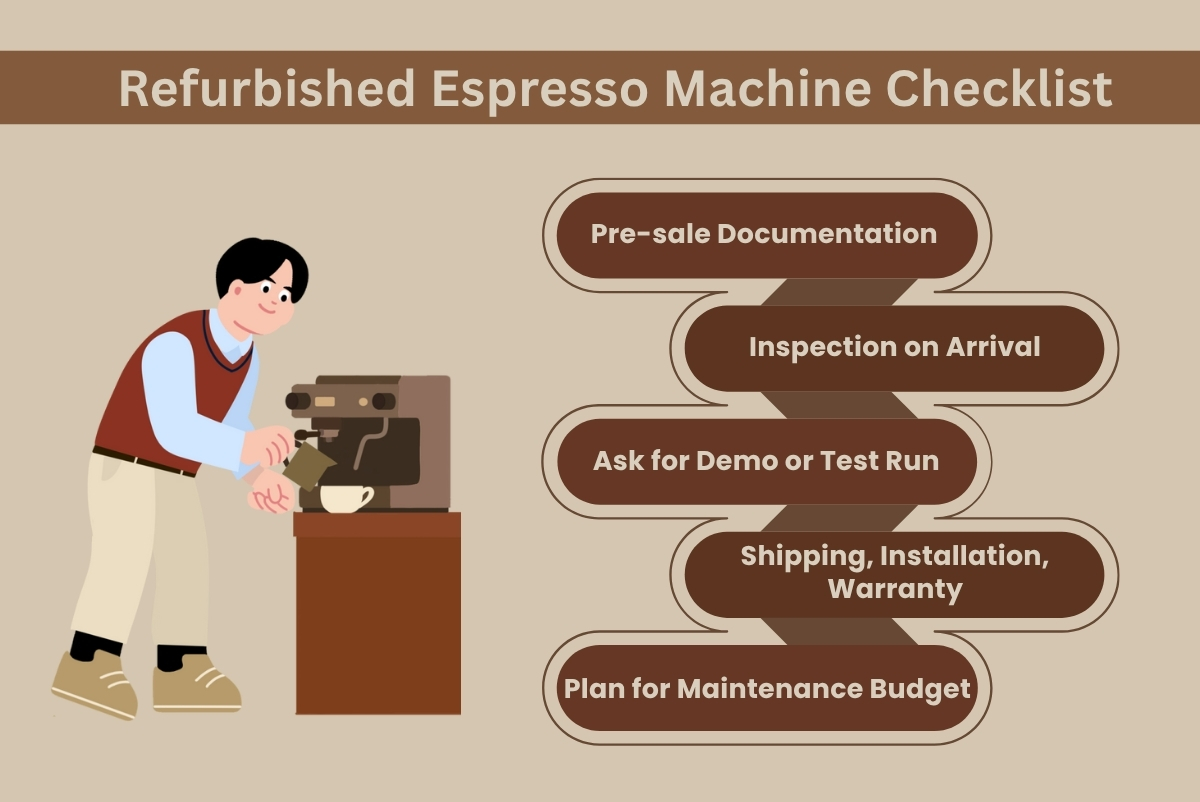
Before committing to a refurbished espresso machine, always ask for key documentation about the machine’s history and condition.
Refurbishment Report: A detailed report from the refurbisher should outline what work was done on the machine, including which parts were replaced or repaired. This document provides insight into the thoroughness of the refurbishment process and whether it meets manufacturer standards.
Hours/Shot Count: Many espresso machines, especially commercial ones, keep track of their shot count or operational hours. A lower shot count typically indicates less wear, but make sure to ask for this information to gauge the machine’s usage history.
Service History: If available, request the machine’s service history. This should include any prior issues, repairs, and replacements. A well-documented service history can help you assess whether the machine has been properly maintained or if there’s a history of recurring problems.
Once your refurbished espresso machine arrives, it’s crucial to inspect it carefully to ensure it’s in good working condition.
Cosmetic Condition: Check the exterior for any visible signs of damage, dents, or scratches. While minor cosmetic wear is normal, significant damage may indicate the machine was mishandled during refurbishment or shipping.
Boiler/Pressure Test: Test the boiler’s ability to reach and maintain pressure. A malfunctioning boiler can lead to inconsistent temperature and poor espresso quality. Run a pressure test to ensure that the machine heats properly and is capable of brewing consistently.
Steam Wand: Ensure the steam wand is functional and able to create rich, velvety foam. A damaged or underperforming steam wand can affect your ability to make specialty drinks like lattes and cappuccinos.
Grinder (If Included): If the machine comes with a grinder, inspect it for functionality. Check for any unusual sounds, sluggish operation, or uneven grinding. The grinder should provide consistent grinds to ensure great espresso extraction.
If you’re buying a refurbished espresso machine for a café or high-volume setting, ask for a demo or a test run before finalizing the purchase. Many reputable sellers will allow you to test the machine to ensure it meets your needs.
Test the machine: During the demo, check for consistency in shot quality, temperature stability, and steam pressure. If the machine is intended for high-volume use, observe its performance over an extended period to ensure it handles stress without issues.
Simulate your daily workflow: If you operate a café, simulate your regular workflow during the demo. Check how the machine performs during peak hours and see if it can handle multiple orders without slowing down.
Before buying, make sure you fully understand the logistics involved in receiving and setting up your refurbished espresso machine.
Shipping: Ask about shipping timelines and any additional fees. For larger machines, make sure the seller arranges proper packaging to avoid damage during transit.
Installation: Some refurbished espresso machines may require professional installation, especially if they’re complex or commercial-grade. Confirm if the installation is included or if you need to hire a technician.
Warranty Activation: Ensure that the warranty is activated upon receiving the machine. Ask for documentation that confirms the start of the warranty period and the specific terms of coverage. A good warranty can give you peace of mind, knowing you’re protected if something goes wrong.
While a refurbished espresso machine offers upfront savings, it’s important to plan for ongoing maintenance to keep the machine in top shape over time.
Maintenance Budget: Setting aside a budget for routine maintenance is essential. Even well-refurbished machines may require parts replacement or occasional service. Keep track of the machine’s age and usage to anticipate when maintenance might be needed.
Maintenance Schedule: Regular cleaning and servicing can extend the life of your espresso machine. Establish a schedule for cleaning the group heads, descaling the boiler, and replacing worn parts. Keeping up with routine maintenance will help avoid costly repairs down the line.
Pro Coffee Gear’s machines come with full service support, so you are never left on your own if something goes wrong. We also offer shipping across the U.S., making it easier than ever to get the right machine delivered straight to your door. Explore our collection of espresso machines!
Also Read: Step-by-step guide on cleaning your espresso machines
Let’s conclude with our final verdict and next steps.
When it comes to the question, “Should I buy a refurbished espresso machine?”, the answer ultimately depends on your unique needs and circumstances.
Refurbished espresso machine benefits are clear, especially for those who want to save money without compromising too much on quality. They offer significant cost savings, allow access to premium models, and become an environmentally friendly choice. However, it’s crucial to weigh the potential risks, such as a shorter warranty, possible wear and tear, and limited support.
With proper due diligence, including checking the refurbishment credentials, inspecting the machine, and understanding the warranty and service history, buying a refurbished machine can be a smart investment. For home baristas and cafés looking to stretch their budget, a refurbished espresso machine can be a reliable option if the right steps are taken.
Ready to find the right espresso machine? Visit Pro Coffee Gear today. We are here to help you choose the perfect espresso machine for your needs. Browse our collection of certified refurbished espresso machines and accessories built for durability.
Warranty coverage on a refurbished espresso machine is typically shorter than the warranty on new machines, ranging from 30 days to 1 year.
A refurbished espresso machine can be reliable for a café, provided it has been thoroughly inspected and refurbished by experts.
A refurbished espresso machine is significantly cheaper than brand-new models, offering significant savings without sacrificing too much in terms of quality and performance.
Yes, you can upgrade or service a refurbished espresso machine much like a new one, although availability of parts and service might vary depending on the model and its age.
Yes, but keep in mind that refurbished machines usually have a lower resale value than new ones. Availability of parts and service can also affect resale.
Ask for a refurbishment report detailing what work was done, including parts replaced and performance tests. Reputable sellers will provide this documentation to assure quality.
Our team can help you find the best fit based on your space, volume, and budget.
Talk to a Specialist

