


Best Coffee Grinder for Pour Over Brewing
|
|
Time to read 17 min
Your Cart
Your cart
Favorites





Shop by Brands

Shop by Brands
Shop by Brands


Shop by Brands


Shop by Brands
Shop by Brands
|
|
Time to read 17 min
You can follow the recipe perfectly, use fresh beans, and still end up with a cup that tastes flat, muddy, or oddly bitter. If you brew pour-over regularly, you’ve probably felt this frustration already. More often than not, the issue isn’t your technique; it’s that your grinder isn’t producing consistent particles, even if it works “fine” for other brew methods.
Pour-over is far less forgiving than espresso or French press. It exposes uneven grinds immediately, where fines over-extract and boulders under-extract in the same brew.
That’s why two cups made with the same beans can taste completely different on different days, even when everything else feels unchanged; your grinder is quietly doing most of the damage. This guide helps you choose the right coffee grinder for pour-over.
Pour-over coffee exposes grind inconsistencies, making the grinder one of the most important factors in cup quality.
Burr quality, grind uniformity, and precise adjustment matter more than brand or price alone.
Different pour-over brewers require different grind sizes to achieve balanced extraction.
Manual grinders suit single-cup, low-volume brewing, while electric grinders fit faster, daily routines.
The best grinder is the one that matches how often and how much you brew, not the most hyped option.
Pour-over brewing relies on water flowing evenly through a bed of coffee grounds. Unlike immersion methods, there is no room for error once the water starts moving. This makes your grinder far more influential in pour-over than in most other brewing styles.
Uneven Grind Leads to Uneven Extraction: When your grinder produces a mix of fine and coarse particles, some grounds extract too quickly while others remain under-extracted, resulting in bitterness and sourness in the same cup.
Pour-Over Exposes Fines More Clearly: Fine particles slow down water flow and cause over-extraction. In a pour-over, this shows up immediately as a stalled brew or harsh flavors.
Consistency Drives Clarity and Repeatability: A grinder that delivers uniform particles allows flavors to shine, improves sweetness, and helps you reproduce the same balanced cup every time you brew.
This is why pour-over drinkers often notice dramatic improvements in taste after upgrading their grinder, even when everything else in their setup stays the same.
Once you know why the grinder plays such a critical role, the next step is understanding what actually separates a good pour-over grinder from an average one.
When you’re choosing a grinder specifically for pour-over coffee, your decision isn’t just about the brand or price; it’s about how consistently and precisely the grinder can produce the particle sizes that make pour-over shine.
The right grinder dramatically affects extraction, flavor clarity, and repeatability. Every element below plays a role in how well your coffee brews from bloom to last drip.

Pour-over success starts with burr grinders, not blade grinders. Burrs crush beans between two abrasive surfaces to produce much more uniform particles, which is essential for balanced extraction. Blade grinders simply chop at random, creating uneven sizes, and that inconsistency is the last thing you want for pour-over precision.
There are two popular burr configurations you’ll encounter:
Flat Burrs: Deliver very uniform particle distribution and great clarity in the cup.
Conical Burrs: Often quieter and more forgiving, and they can produce excellent consistency across medium to medium-fine grind ranges.
Key outcomes to focus on:
Uniform grind size improves flavor clarity and reduces bitterness or sourness.
A consistent particle distribution gives you predictable extraction, so you can dial in your brew more easily.
Burr design influences heat and static behavior during grinding, which both affect extraction quality.
Pour-over brewers such as the Hario V60, Chemex, and Kalita Wave all perform best with a medium to medium-fine grind, but the exact setting that delivers perfect extraction varies by coffee and brewer geometry.
Adjustability: A grinder with a broad and precise range lets you adapt from a V60 to a Chemex with ease.
Fine Increments: The ability to make small adjustments between settings helps you dial in a balanced cup without guesswork.
What makes this especially important for pour-over is that tiny changes in particle size can alter brew rate, flavor balance, and brew time, and a grinder that skips too widely between settings makes dialing in nearly impossible.
Read: Choosing a Good Coffee Grinder: A Simple Buying Guide
Retention refers to how much ground coffee stays trapped inside the grinder instead of reaching your brew basket. Lower retention means:
More accurate dosing: what you weigh in is what you brew.
Fresher grounds, less stale coffee from old particles mixing into your new batch.
Better consistency from one brew to the next.
Many pour-over drinkers prefer single-dosing (measuring beans then grinding only that dose) because it eliminates stale grounds between brews. Hand grinders naturally lend themselves to single-dosing, and even some high-end electric models are designed with minimal retention for this workflow.
Choosing between manual and electric grinders is all about how you brew, how much you brew, and your tolerance for effort vs convenience.
Manual Grinders:
Often offer excellent grind consistency at lower price points, sometimes rivaling much more expensive electric models.
Extremely quiet and often more portable (great for travel or small kitchens).
Ideal for single-dose sessions or pour-over enthusiasts who enjoy the ritual of brewing.
Limited capacity means multiple rounds if you’re making several cups.
Electric Grinders:
Provide speed and convenience, just set and grind.
Typically offer a wider grind range and finer control (especially at higher price points).
Better for grinding larger quantities quickly without physical effort.
May be louder, take up more counter space, and require more cleaning attention.
Overall, both manual and electric burr grinders can produce excellent pour-over grinds, but the right choice depends on your routine, brew volume, and how much control you want over the process.
Now that you know what to look for in a grinder, let’s apply that knowledge to real-world brewing by dialing in grind sizes for common pour-over devices.
Grind size isn’t just a technical detail; it directly affects how water flows through coffee grounds, extraction balance, and ultimately the clarity and sweetness of your pour-over cup. Different pour-over brewers work best with slightly different grind sizes because of their shape, filter thickness, and flow mechanics.
Here’s a clear, structured breakdown of recommended grind sizes for the most popular pour-over methods:
|
Pour-Over Brewer |
Grind Size Description |
Why This Works |
|
Hario V60 |
Medium-fine (like fine sea salt) |
The V60’s cone shape and large hole mean water drains quickly; a slightly finer grind slows it down enough to extract balanced flavors. |
|
Chemex |
Medium-coarse (rough sand) |
Thick filters slow water flow; a slightly coarser grind prevents clogging and keeps brew time in the ideal range. |
|
Kalita Wave |
Medium (between sand and fine sea salt) |
Flat-bottom design provides even bed depth; medium grind balances flow and extraction for consistent results. |
|
Other Cone Drippers (Origami, Similar) |
Medium-fine to medium |
Adjust within this range depending on filter thickness; finer for faster drains, coarser for slower drains. |
Medium-Fine: finer than granulated sugar, similar to fine sea salt.
Medium: similar to regular sand; a balance point for many brewers.
Medium-Coarse: rough sand; ideal for brewers with slower flows (like Chemex).
Why these ranges matter:
If the grind is too fine, water flow slows excessively, extraction becomes bitter, and drawdown time extends beyond ideal. If it’s too coarse, water rushes through and under-extracts, yielding weak or sour flavors.
Adjust within these ranges based on bean type, roast level, and personal taste; lighter roasts often benefit from slightly finer settings, while darker roasts can lean slightly coarser.
Read: Choosing the Right Coffee Machine: Espresso, Bean-to-Cup, and Drip Machines
Understanding grind theory is useful, but choosing the right grinder ultimately depends on how you brew, how often you brew, and what your mornings look like.
Choosing between a manual and an electric grinder isn’t just about price or convenience; it’s about how you brew, how often you grind, and what matters most in your daily coffee routine. Different people have different needs, and understanding where each grinder type excels helps you pick one that fits your pour-over workflow, not just your budget.
Let’s have a look at which grinder you should go for.

Manual grinders are driven by hand, and while that might sound old-school, they have real advantages that matter for pour-over brewing.
Better Value at Lower Price Points: You can often get a manual burr grinder with exceptional consistency for less than an electric model with comparable performance. Because manual grinders don’t have motors or electronics, more of your money goes into burr quality.
Portable and Versatile: Manual grinders are compact and don’t need electricity, making them ideal for travel, camping, or small kitchens.
Excellent for Single Dosing and Freshness: Because you hand-grind exactly what you need for one brew, minimal grind retention and no stale particles are mixed into your fresh grounds.
Quiet and Engaging: Many users appreciate the tactile rhythm of grinding and the quiet operation, a sensory part of the pour-over ritual.
Precise Grind Control at Modest Cost: At similar price points, manual burrs often deliver more even grind size distributions than entry-level electric grinders, making them particularly attractive for pour-over drinkers focused on clarity.
Manual grinders are especially suited for:
Coffee drinkers who brew 1–2 cups at a time
Travelers or weekend brewers
Pour-over purists who enjoy the ritual of hand grinding
Electric grinders use a motor to turn burrs rapidly and automatically. They aren’t just faster; they can change your daily brewing workflow.
Speed and Convenience: With the push of a button, electric grinders produce grounds in seconds, a clear advantage when you need coffee quickly or are making multiple cups.
Consistency at Scale: Higher-tier electric burr grinders offer very uniform particle distribution paired with a wide range of settings, making them great for daily users who switch between brewing methods.
Larger Capacity and Less Effort: Electric grinders can hold more beans and grind them with minimal physical effort, useful when brewing for family, guests, or multiple pour-overs in a row.
Multiple Grind Settings: Many electric models allow quick switching between grind sizes, especially helpful if you also brew espresso, drip, and cold brew with the same grinder.
Electric grinders are especially suited for:
Busy morning routines
Households making multiple cups at once
Brew setups where speed and automation matter
There is no single “best” grinder; it depends on how you use it:
Manual grinders are ideal for those who value control, portability, and lower cost with excellent grind quality. They produce consistent results and add a ritualistic element to your pour-over routine, especially when you brew one or two cups at a time.
Electric grinders make sense when you need speed, capacity, and repeatable grind settings, especially if you regularly brew more than one cup or use multiple brewing methods.
Either grinder style can deliver excellent pour-over results; what matters most is matching the grinder to your daily coffee rhythm and volume. A quality burr grinder, whether manual or electric, will always outperform blade grinders because it produces more uniform particle sizes, leading to balanced extraction and better flavor.
With all the decision-making criteria in place, it becomes easier to evaluate specific grinders based on how well they meet real pour-over needs.
Choosing a grinder for pour-over becomes much easier once you know what to prioritize for your brewing style. The grinders below are selected based on grind consistency, adjustability, and everyday usability for pour-over methods. Each option suits a different type of brewer, making it easier to find a grinder that fits how you brew at home.
Let’s have a look!

The Eureka Atom Excellence 75 is a high-performance burr grinder built for precision, consistency, and minimal noise. Designed to meet the demands of busy home brewers and specialty coffee environments alike, it features strong flat burrs and advanced technology to deliver uniform grind quality with every dose.
Price: $1,599 at Pro Coffee Gear.
Burr Size: 75 mm flat hardened steel burrs
Motor & Speed: 430 W motor at 1400 RPM
Grind Output: 3.3–5.5 g/sec (espresso‑optimized)
Build: Solid metal body, ACE anti‑static system, silent‑grind tech, stepless adjustment.
Key Features:
Stepless Micrometric Adjustment: Infinitely adjustable grind settings allow fine, precise control over particle size to suit different pour-over brewers and beans.
ACE Anti-Static System: Reduces clumping and static during grinding, resulting in fluffier, more even grounds for more predictable extraction.
Ultra-Quiet Operation: Advanced noise insulation and design minimize sound, making it comfortable for home use even early in the morning.
Easy Maintenance: Accessible design allows straightforward burr removal and cleaning without losing your grind setting.
The Compak PK100 is a premium multipurpose burr grinder designed to handle a wide range of grind sizes, from Turkish fine to French press coarse, while maintaining precision and consistency. Its strong build and thoughtful features make it a versatile choice for both pour-over brewing and other coffee extraction methods.
Price: $5,391 at Pro Coffee Gear
Burr Size: 98 mm flat K110 steel burrs with extended durability.
Motor & Speed: 500 W motor with 900 RPM grinding.
Grind Output: ~10 g/sec for filter coffee range.
Build: Cast aluminum body with dual cooling fans.
Key Features:
Single Dose Hopper: Designed for low retention and on-demand grinding, helping preserve freshness and improve consistency.
Stepless Micrometric Grind Adjustment: Provides precise control over grind size, enabling fine-tuning for different pour-over brewers.
Double Ventilation System: Keeps internal temperature stable during extended grinding sessions, which helps preserve grind quality.
Zero-Retention Exit Chute: Minimizes waste and increases dose-to-dose consistency.
Hands-Free Fork and Bag Shaker Extensions: Flexible dosing with portafilter, cups, or bags, making workflow efficient.
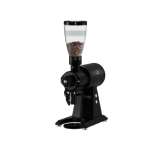
The Mahlkönig X64 SD is a premium home coffee grinder that brings professional-grade performance to everyday brewing. Built around a single-dose workflow with zero retention and stepless control, it delivers consistent particle size and precision across a wide range of grind settings.
Price: $599 at Pro Coffee Gear
Burr Size: 64 mm flat steel burrs
Motor & Speed: 200 W motor at 1950 RPM
Grind Output: 2.5 – 6 g/sec (espresso to coarse)
Build: Stepless adjustment, zero‑retention design, compact single‑dose form.
Key Features:
Stepless Micrometric Adjustment: Infinitely adjustable grind settings allow you to fine-tune particle size for V60, Chemex, Kalita, or other pour-over brewers.
Zero Retention Design: Designed to eliminate retained grounds between doses, improving freshness and repeatability for every brew.
Single-Dose Workflow: Single dosing means you grind exactly what you need for each brew, preventing stale grounds from affecting flavor.
Accessory Kit: Includes magnetic dosing cup, funnel, and bellows to make dosing and cleaning easier and more hygienic.
The Mahlkönig X54 Allround Home Grinder with Free Wood Kit brings professional-grade performance to your kitchen countertop while adding functional style. Built around 54 mm flat steel burrs and stepless grind adjustment, it delivers consistent grind size for pour-over, espresso, and other brew methods.
Price: $599 at Pro Coffee Gear
Burr Size: 54 mm flat special‑steel burrs
Motor & Speed: 120 W, 1050 RPM
Grind Output: 1–2.8 g/sec (espresso to coarse)
Build: Digital display, stepless adjustment, swappable fronts, low‑retention design
Key Features:
Stepless Micrometric Adjustment: Smooth, continuous control lets you dial in grind size precisely for V60, Chemex, Kalita, or other drippers.
Digital Display with Presets: Intuitive LED display and programmable presets help you grind the same dose consistently every time.
Swappable Front Attachments: Grind directly into a dosing cup or portafilter; interchangeable faceplates make workflow flexible and clean.
Free Wood Accessory Kit: Beech wood hopper lid and drip tray add functionality, keeping beans fresh and your countertop tidy.
Quiet, Durable Operation: Quiet motor and strong construction ensure reliable performance for daily brewing at home.
The Baratza Encore is one of the most popular entry-level electric burr grinders for regular home brewing, prized for its simplicity, consistency, and versatility. It’s built around 40 mm conical steel burrs and offers a wide range of grind settings so you can confidently grind for pour-over brewers such as V60, Chemex, and Kalita Wave.
Price: $150 at Pro Coffee Gear
Burr Size: 40 mm conical steel burrs
Motor & Speed: 70 W motor, 550 RPM slow spin
Grind Output: 0.8–1.1 g/sec (slow, home use)
Build: Plastic/metal body, stepped grind dial, easy burr removal for cleaning
Key Features:
40 Stepped Grind Settings: Easy to dial in, from fine for pour-over to coarse for French press, with 40 levels covering most manual brew methods.
Pulse or Continuous Grind: Choose between a pulse grind button for small amounts or a continuous grind for larger doses.
User-Friendly Design: Simple on/off switch, straightforward hopper removal, and burr access for cleaning.
Compact Footprint: Designed to fit comfortably under most kitchen cabinets without taking up too much counter space.
Rather than comparing grinders feature by feature, it helps to step back and look at which types of grinders work best for different brewing situations.
Not every pour-over drinker needs the same type of grinder. Your brewing frequency, budget, and expectations from the cup all influence which grinder will actually work best for you. Looking at grinders by use case, rather than just brand or price, makes the decision clearer and more practical.
Here’s the breakdown:
|
Grinder |
Manual / Electric |
Strength for Pour-Over |
Best For |
|
High-Quality Manual Burr Grinder |
Manual |
Very consistent grind at medium to medium-fine settings; low retention |
Solo brewers, travel, budget-conscious users |
|
Entry-Level Electric Burr Grinder |
Electric |
Faster workflow with acceptable consistency for daily pour-over |
Daily home brewing, convenience-focused users |
|
Single-Dose Focused Electric Grinder |
Electric |
Minimal retention, repeatable grind size, clean flavor clarity |
Enthusiasts dialing in light roasts |
|
Prosumer Flat-Burr Grinder |
Electric |
Excellent particle uniformity and flavor separation |
Advanced home brewers seeking café-level results |
|
Compact Electric Grinder |
Electric |
Space-efficient with reliable medium grind performance |
Small kitchens, casual pour-over drinkers |
|
Travel-Friendly Hand Grinder |
Manual |
Portable, durable, consistent for small batches |
Travel, camping, occasional brewing |
This comparison helps you narrow down options based on how you actually brew, rather than forcing you to sift through long lists of grinders that may not fit your routine.
Read: Important Features to Consider When Buying an Espresso Machine
Even with the right grinder, small missteps can hold your brews back; so it’s worth addressing the most common issues pour-over brewers run into.
Many pour-over brewers assume that once they have a burr grinder, the rest of the process will “just work.” In reality, small grinder-related mistakes can have outsized effects on extraction, clarity, and balance in your cup.
Here are some of the most frequent issues pour-over drinkers encounter, presented in a clear-problem → practical-solution format.
Static Cling and Messy Grounds: Grinders, especially those with plastic catch chambers, can build up static, causing grounds to stick to the chamber or scatter everywhere. Static also makes dosing and tamping less predictable, undermining consistency.
How to fix it: Allow a minute or two after grinding before opening the catch chamber and gently tapping the grinder to release clingy particles. Some brewers lightly mist the beans before grinding to reduce static buildup without affecting extraction.
Clumping Caused by Too Many Fines: If your grinder produces excessive fines (very tiny particles), your pour-over can drain slowly or feel sludgy at the bottom of the cup. Fines also promote over-extraction and bitterness.
How to fix it: Check your burrs for wear or buildup; dull or dirty burrs generate more fines. More frequent cleaning and timely burr replacement help maintain a cleaner grind profile.
Retention Issues Leading to Inaccurate Dosing: Coffee left trapped in the grinder (retention) can mix with fresh grounds and lead to inconsistent brews. High retention is especially problematic when you grind just one dose at a time.
How to fix it: Sweep out retained grounds between sessions using a brush, or choose grinders designed with low retention, particularly if you single-dose. Minimizing retention improves both freshness and repeatability.
Wrong Grind Setting for Your Brewer: Grind size that’s too coarse results in under-extraction (weak, sour notes); too fine leads to over-extraction (bitter, harsh flavors). Even if you think you’re “in the right zone,” slight misadjustments drastically alter pour-over performance.
How to fix it: Start within known medium-fine to medium ranges for popular brewers and adjust gradually based on taste and drawdown time. Keeping a brew journal helps you track which settings work best with specific beans and brewers.
Inconsistent Grind from Environmental Factors: Humidity, bean freshness, and burr alignment can cause the same grinder setting to produce slightly different results day to day. This leads to unpredictable extraction even when the technique is consistent.
How to fix it: Periodically recalibrate your grinder settings to account for seasonal humidity shifts and bean moisture variations. Regular cleaning prevents buildup that can alter burr spacing and grind behavior.
Each mistake above directly impacts your pour-over quality, but none are inevitable. By addressing these grinder-specific issues, you maintain control over the variables that matter most in achieving balanced, repeatable cups.
When it comes to coffee, the coffee grinder for pour-over you choose directly shapes brew clarity, grind consistency, and how reliably you can recreate great results day after day. A well-matched grinder helps you control extraction, bring out sweetness, and avoid the frustration of cups that taste different despite using the same beans and recipe.
Rather than chasing hype or buying the most expensive option available, focus on how you actually brew. Think about how often you make pour-over, how many cups you typically brew, whether you value speed or ritual, and how much control you want over grind adjustments.
From manual grinders to auto tampers and cleaning supplies, Pro Coffee Gear offers everything you need to keep your brewing precise and repeatable. Check out the collection here!
Yes, but it depends on the grinder. Many grinders can technically grind for both, but switching between espresso-fine and pour-over settings can be inconsistent. Dedicated pour-over grinders prioritize uniform medium grinds, while espresso grinders focus on very fine precision. If you brew both often, look for wide adjustment ranges and reliable calibration.
Both matter, but consistency has a bigger impact. Even at the correct grind size, uneven particles cause uneven extraction, leading to bitterness and sourness in the same cup. A consistent grinder ensures water flows evenly through the coffee bed, improving clarity and making your brews easier to repeat.
For regular pour-over brewing, cleaning every 2–4 weeks is ideal. Oils and fine coffee particles build up over time and affect grind consistency and flavor. If you brew daily or use light roasts that produce more fines, more frequent cleaning helps maintain grind quality and taste clarity.
Yes. Light roasts are denser and often benefit from slightly finer grinds to improve extraction. Dark roasts extract more easily and may perform better with slightly coarser settings to avoid bitterness. Adjusting grind size based on roast level helps balance sweetness, acidity, and body in the final cup.
Several factors can cause this, including bean freshness, humidity, and retention from previous grinds. Even small changes in moisture content or leftover grounds can affect extraction. Regular cleaning, consistent dosing, and small grind adjustments help maintain repeatable results from one brew to the next.


