


Batch Brew Coffee Ratio: A Practical Guide for Cafés and Home Brewers 2025
|
|
Time to read 7 min
Your Cart
Your cart
Favorites





Shop by Brands

Shop by Brands
Shop by Brands


Shop by Brands


Shop by Brands
Shop by Brands
|
|
Time to read 7 min
When it comes to brewing coffee, getting the right ratio of coffee to water is the key to unlocking the full potential of your beans. For home brewers, achieving the perfect ratio means discovering the balance between strength and smoothness, while cafés rely on consistent ratios to ensure each cup meets customer expectations.
The challenge lies in calibrating that ratio to suit your taste preferences and equipment, all while maintaining an efficient brewing process. In this guide, we'll walk you through the ideal batch brew coffee ratios, from the basics of coffee-to-water measurements to the tools and techniques that will help you brew consistently better coffee.
Use a coffee-to-water ratio of 1:15 to 1:18 for home brewing and 1:16 to 1:17 for cafés. Adjust based on your preferred strength for a balanced and flavorful cup every time.
Always measure your coffee and water with a digital scale for accuracy, ensuring repeatable results with each batch.
Use a medium grind for balanced extraction and brew for 4-6 minutes (depending on brewer and batch size) to avoid over- or under-extraction, ensuring optimal flavor.
Regularly calibrate your grinder, brewer, and scale to maintain stable performance and prevent flavor inconsistencies in your coffee.
Adjust the coffee-to-water ratio based on your beans' roast and your taste preferences. Lighter roasts may need more coffee (1:15), while darker ones may need more water (1:17).
The batch brew coffee ratio refers to the ideal balance of coffee grounds to water, a critical element in achieving a brew that's neither too strong nor too weak. Finding this balance is essential, as it impacts the extraction process and the overall flavor profile of your coffee.
Too much coffee can contribute to over-extraction, resulting in bitterness, while too little can leave you with a weak and underwhelming cup.
How does it affect the brewing process?
The batch brew ratio directly influences the extraction time and flavor profile. If you use too much coffee, the water will extract more of the bitter compounds, making the coffee taste unpleasant.
On the other hand, too little coffee means the water won't extract enough flavor, leading to a weak and watery brew.
Tip: While it’s tempting to eyeball the measurements, using a digital scale is the best way to achieve consistency and accuracy, ensuring that each batch delivers the same flavor profile, time and time again.
To refine your coffee-making skills, explore popular collections of commercial coffee grinders at Pro Coffee Gear. These are perfect for crafting café-style beverages, or even at your home setup.
Now that we understand the importance of the batch brew coffee ratio, let's explore the recommended ratios for various brewing scenarios.
The proper ratio can vary depending on your taste preferences, the type of coffee being brewed, and the equipment used. Here's a breakdown to help you get started:

For home brewing, a general coffee-to-water ratio of 1:15 to 1:18 is widely recommended. This means for every 1 gram of coffee, you should use 15 to 18 grams of water, depending on how strong you prefer your brew.
1:15 Ratio: This will yield a stronger brew with more intensity, perfect for those who enjoy a bold cup of coffee.
1:18 Ratio: This is a milder, more balanced brew, ideal for a smoother, less intense cup.
For commercial batch brewing in cafés, consistency is key, especially when brewing larger quantities. In these cases, the ideal ratio typically falls between 1:16 and 1:17.
1:16 Ratio: Best for standard café brews, producing a well-rounded flavor profile that works for a variety of coffee styles.
1:17 Ratio: Ideal for a milder brew, this ratio provides a slightly lighter cup, ideal for those who prefer a more delicate flavor.
The ideal ratio can be adjusted depending on your personal preference or specific beans:
If you prefer stronger coffee, consider increasing the coffee amount slightly (toward a 1:15 ratio).
For a lighter brew, you can increase the water, which is especially useful when brewing a more delicate or lightly roasted coffee.
If you're using a pour-over or drip method, these ratios still apply; however, the grind size plays a role in how the coffee extracts. Finer grinds extract faster and may require recipe adjustment, while coarser grinds can handle more.
Achieving the perfect batch brew coffee ratio is also about the tools and equipment you use. Accuracy in measuring both coffee and water is crucial for great coffee.
Let's explore the essential equipment and tools for both home brewers and cafés:
1. Digital Scale:
A high-quality, accurate scale is a must-have for home brewers. It ensures you measure the exact amount of coffee and water, leading to stable results every time. The difference of even a few grams can significantly impact the strength and flavor of your brew.
2. Coffee Grinder:
A consistent grinder is essential for uniform extraction. Opt for a burr grinder over a blade grinder to ensure an even grind size. The grind size will vary based on your brewing method (coarse for French press, medium for drip, etc.).
3. Water Filtration System:
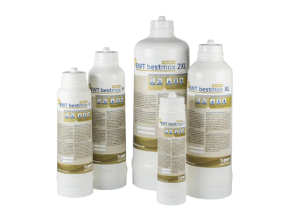
In cafés, a water filtration system is crucial to maintain optimal water quality. The ideal water composition helps achieve optimal extraction and prevents unwanted flavors from affecting the brew.
4. Bulk Coffee Dispensers:
Cafés often use bulk coffee dispensers to ensure they have the right amount of coffee ready for brewing. These dispensers help reduce waste when brewing large amounts of coffee.
Whether you're brewing at home or in a café, using the right tools for measurement is crucial to achieving the ideal coffee-to-water ratio. For precise calibration:
Weigh your coffee and water using the digital scale. Don't rely on estimates or scoops.
Calibrate your equipment (grinders, brewers, and kettles) regularly to ensure optimal performance from each.
Keep track of your brew times and temperature. If you adjust one aspect (e.g., the ratio or grind size), be sure to monitor its effect on the flavor and note your findings for future brews.
Suggested Read: Interesting Coffee Statistics & Facts
Once you have the right equipment and measurements, the next crucial step is ensuring calibration for consistent results.
Calibration is about setting your equipment to its optimal performance level. For example, your grinder needs to be adjusted for a consistent grind size, and your brewer should maintain a stable temperature to extract the coffee correctly.

Even minor inconsistencies in equipment performance can result in flavor imbalances, such as bitterness or weakness.
Here's how to calibrate your equipment:
Grinder Calibration: Begin by adjusting the grinder to match your brewing method (e.g., coarse for a French press, medium for a drip). Test your grind: If the coffee tastes too weak or too bitter, adjust the grind size accordingly.
Brewer Calibration: Ensure that your brewer maintains a consistent water temperature, ideally between 195°F and 205°F. If your brewer doesn’t have a built-in temperature control, use an external thermometer to check the temperature regularly.
Scales Calibration: While digital scales are highly accurate, it's still a good idea to recalibrate them periodically to ensure precise measurements. Some scales have a calibration function; for others, you can use a standard weight for verification.
The ideal ratio may differ slightly depending on personal taste or the specific beans used. To ensure you're getting the perfect cup, conduct test brews:
Brew a batch using the suggested ratio (e.g., 1:16).
Taste and adjust the ratio slightly based on your preferences. If the coffee tastes too weak, add more coffee; if it's too strong, adjust by adding more water.
Pro Tip: If you're brewing large batches in a café, batch brew machines often come with programmable settings. Use these to lock in your preferred ratios and brew times.
Getting the perfect batch brew coffee ratio is essential, whether you're brewing a single cup at home or crafting large batches in a café. From adjusting the ratio based on your personal taste preferences to using the right tools, every step brings you closer to the perfect cup of coffee.
For those looking to take their batch brewing to the next level, Pro Coffee Gear offers top-tier equipment like precision scales, high-quality grinders, and professional batch brewers that ensure café-quality coffee every time.
With the right tools and accessories, you can easily dial in the perfect brew ratio, whether you're brewing at home or serving customers in a café.
For a stronger brew, try a 1:15 coffee-to-water ratio. This means using 15 grams of water for every gram of coffee. This ratio enhances the coffee's intensity without over-extracting, resulting in a bold, full-bodied flavor.
The best way to check is by tasting. If the coffee is too weak, it likely needs more coffee. If it's too bitter, your grind might be too fine, or you’re over-brewing. Start with a 1:16 ratio and adjust based on your taste preferences.
Yes, the ratio can vary depending on the type of bean and the level of roast. Lighter roasts may require a slightly higher coffee-to-water ratio (1:15), while darker roasts can tolerate a bit more water (1:17). Experiment to find the balance that best highlights the flavors of your beans.
To avoid under-extraction, ensure your grind is not too coarse and your brew time is sufficient. A medium grind and a brew time of 4-6 minutes (depending on brewer and batch size) typically yield a consistent, well-balanced brew in a batch brew setup.
Yes, a digital scale is handy for home brewing. It helps you stick to the ideal coffee-to-water ratio, ensuring consistent results every time. Without a scale, it's hard to replicate the same brew quality from batch to batch.
Our team can help you find the best fit based on your space, volume, and budget.
Talk to a Specialist

