


AeroPress vs Pourover: Which Brewing Method Brings Out More Flavor Notes?
|
|
Time to read 8 min
Your Cart
Your cart
Favorites





Shop by Brands

Shop by Brands
Shop by Brands


Shop by Brands


Shop by Brands
Shop by Brands
|
|
Time to read 8 min
What if your brew method mattered just as much as your beans?
AeroPress and Pour-Over might look similar on the surface, but they brew in entirely different worlds. Each method has its own extraction science, flavor signature, and workflow rhythm. Knowing the difference is the key to dialing in the clarity, strength, and consistency you want in every cup.
Both are manual favorites among baristas and home brewers, yet their results couldn’t be more distinct. AeroPress uses pressure-driven immersion to create a bold, full-bodied cup. Pour-Over focuses on controlled flow and clean extraction, perfect for highlighting delicate, complex notes.
This guide breaks down AeroPress vs Pour-Over across flavor, technique, gear, and workflow, so you can choose the method that truly fits your coffee style.
At a glance:
AeroPress brews bold, smooth coffee with low acidity using pressure-based immersion. Fast, portable, and easy to clean.
Pour-Over delivers clean, bright flavors with layered complexity through precise water flow and timing.
AeroPress focuses on body and strength, while Pour-Over highlights clarity and nuance.
Best for: AeroPress suits travelers and quick brews, while Pour-Over fits slow, mindful brewing at home.
Both methods can produce café-quality coffee, depending on whether you value convenience or control.
The AeroPress is a compact, pressure-based brewer that’s become a favorite among travelers, home brewers, and baristas alike. Invented by Alan Adler in 2005, it combines immersion brewing with gentle air pressure to extract rich, full-bodied coffee in under two minutes.
Unlike traditional drip methods, AeroPress fully steeps the coffee grounds before pressing them through a paper or metal filter. This short contact time and controlled pressure create a smooth, low-acidity cup with a bold flavor profile and thick mouthfeel, often compared to a cross between espresso and drip coffee.
The AeroPress stands out for its simplicity, portability, and ability to brew a rich, full-bodied cup in minutes. But like any brewing method, it comes with trade-offs depending on what you value most.
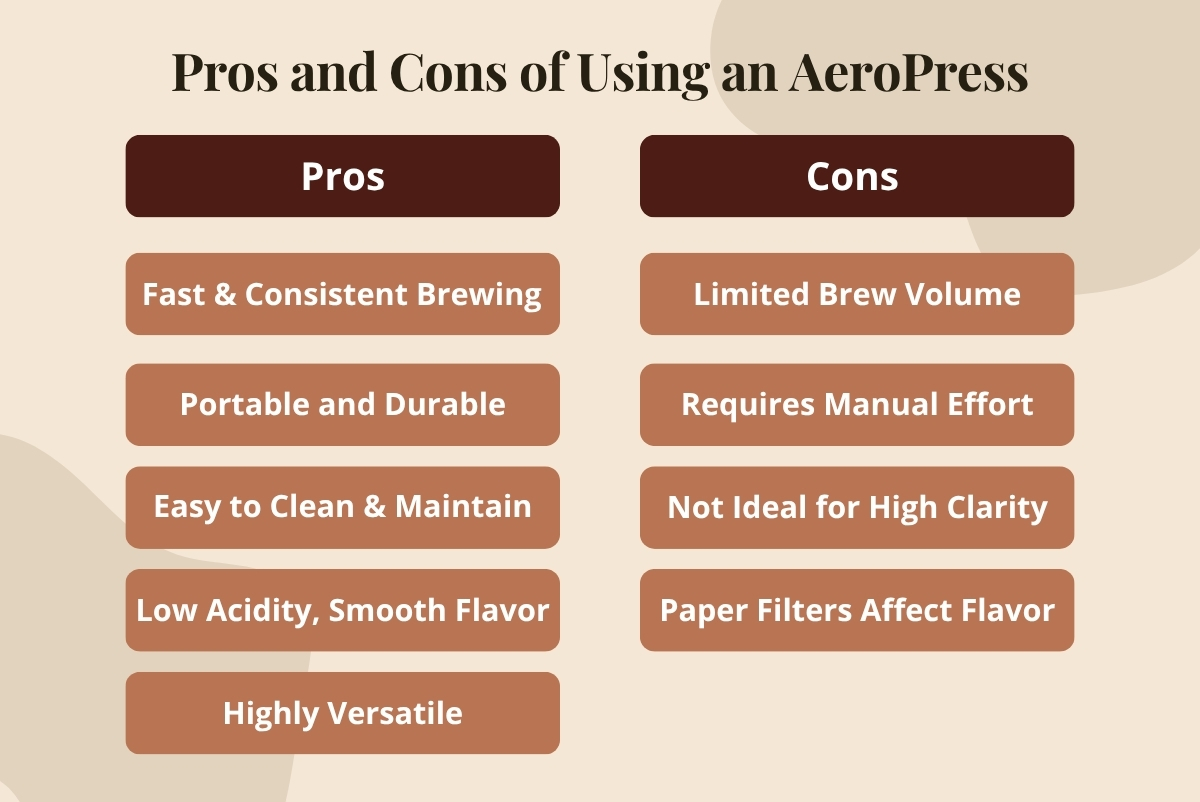
Fast and Consistent Brewing: AeroPress can produce a great cup in under two minutes. The immersion and pressure design allows even extraction and consistent results, ideal for daily brewing or travel.
Portable and Durable: Its lightweight plastic construction makes it easy to carry and nearly unbreakable, perfect for on-the-go brewing or small kitchens.
Easy to Clean and Maintain: Cleanup takes seconds. Just pop out the coffee puck and rinse. No complicated parts or deep cleaning required.
Low Acidity, Smooth Flavor: Because the coffee grounds are fully immersed, the AeroPress produces a round, low-acid cup with a naturally sweet and balanced profile.
Highly Versatile: You can experiment with recipes, grind sizes, water temperatures, and even brew styles (standard or inverted) to suit your preferred strength and flavor.
Limited Brew Volume: AeroPress is designed for single servings or small batches, making it less ideal for brewing multiple cups at once.
Requires Manual Effort: It’s a hands-on method that involves pressing and timing manually, which may not suit those who prefer fully automated brewing.
Not Ideal for High Clarity: While rich and full-bodied, AeroPress coffee tends to have more texture and weight than the crisp, tea-like clarity you get from pour-over.
Paper Filters Affect Flavor: Standard paper filters can absorb some of the oils that contribute to aroma and depth, although this can be adjusted by using a metal filter.
Overall, the AeroPress is a compact powerhouse that balances control, speed, and flavor. It’s perfect for anyone who values a bold cup and a quick, repeatable brewing process without complex equipment.
The Pour-Over method is a classic brewing technique that highlights precision, patience, and clarity. It involves pouring hot water in a slow, circular motion over coffee grounds placed in a conical dripper lined with a filter. The water flows through the grounds by gravity, extracting delicate flavors and aromas into the cup below.
This method gives the brewer full control over flow rate, temperature, and extraction time. The result is a clean, bright cup with distinct flavor layers that reflect the bean’s origin, roast, and grind quality.
Pour-Over brewing is known for its elegance, precision, and ability to highlight coffee’s most delicate flavors. However, that level of control also comes with a learning curve and a bit more effort than faster brewing methods.
Exceptional Flavor Clarity: Pour-Over produces a clean, crisp cup that showcases each note in the coffee’s profile, ideal for appreciating origin characteristics and light roasts.
Full Control Over Extraction: From pour speed to water temperature and grind size, every variable can be adjusted to fine-tune the flavor, giving brewers complete control over the final cup.
Consistent and Repeatable Results: Once you master your recipe and technique, Pour-Over offers predictable, café-quality results with every brew.
Minimal Equipment Needed: A dripper, filter, kettle, and scale are all you need. Despite its precision, the setup is simple and easy to maintain.
Enhances Brewing Skill and Awareness: The manual process encourages focus on timing, pouring, and bloom control, helping you understand extraction more deeply over time.
Longer Brew Time: Compared to methods like AeroPress, Pour-Over takes more time and attention, typically 3–5 minutes per cup.
Technique-Dependent: Consistency relies on the brewer’s skill. Minor errors in pour rate or grind can affect extraction and taste.
Less Body, More Brightness: Pour-Over prioritizes clarity and brightness, which can feel too light for those who prefer rich, full-bodied coffee.
Requires Patience and Focus: It’s not the most convenient option for rushed mornings or multiple cups at once.
Overall, Pour-Over is the go-to method for those who value precision, ritual, and a clean cup that highlights every subtle flavor note in their coffee.
Refine your home brewing setup with Pro Coffee Gear’s curated collection of espresso machines, grinders, and accessories designed for precision, consistency, and better flavor in every cup.
While both AeroPress and Pour-Over rely on manual control, their brewing mechanics and resulting flavor profiles set them worlds apart. One focuses on immersion and pressure, while the other highlights precision and flow. Understanding how these differences play out helps you choose the method that best aligns with your taste preferences and brewing goals.
Below is a quick comparison of AeroPress vs Pour-Over across key factors such as flavor, brew time, control, and convenience.
|
Parameter |
AeroPress |
Pour-Over |
|
Brewing Method |
Immersion with light pressure |
Manual percolation via gravity |
|
Flavor Profile |
Bold, smooth, and low-acid |
Clean, bright, and nuanced |
|
Brew Time |
1–2 minutes |
3–5 minutes |
|
Body and Mouthfeel |
Full-bodied, slightly syrupy |
Light to medium body, crisp texture |
|
Ease of Use |
Beginner-friendly and forgiving |
Technique-sensitive, requires precision |
|
Control Over Variables |
Moderate (time, ratio, pressure) |
High (pour rate, temperature, grind) |
|
Portability |
Extremely portable, durable plastic body |
Less portable, needs extra gear |
|
Cleaning and Maintenance |
Quick and simple |
Requires rinsing filters and dripper |
|
Ideal For |
Fast, rich brews at home or on the go |
Slow, refined brewing and flavor clarity |
|
Batch Size |
Single to small servings |
Single or multiple cups, depending on dripper size |
Suggested read: Differences in Taste: Pour-Over vs French Press vs Espresso Brewing Methods
Here’s a closer look at how these brewing differences influence flavor, workflow, and user experience, helping you decide which one best matches your daily coffee routine.
AeroPress leans toward bold, rounded flavors with a heavier mouthfeel. Its immersion-style brewing extracts more body, giving you a smooth, almost espresso-like intensity. Pour-Over, on the other hand, highlights clarity. Each note in the coffee stands out distinctly, and it’s ideal if you enjoy tasting the full range of a light or single-origin roast.
Speed is where AeroPress shines. You can go from beans to brew in under two minutes with minimal fuss. Pour-Over takes longer and demands attention to pour rate, bloom time, and consistency. It’s less forgiving, but for those who enjoy the ritual, that’s part of the charm.
Pour-Over gives you maximum control over every variable, from grind size to water flow. The trade-off is a steeper learning curve. AeroPress offers moderate control but delivers reliable results even when your technique isn’t perfect. It’s easy to experiment with recipes and repeat them consistently.
If you travel, camp, or just need a no-mess brewer, the AeroPress wins easily. It’s compact, durable, and cleans up in seconds. Pour-Over setups are bulkier and involve more gear, like filters, dripper, scale, and kettle. Cleanup takes longer but suits a slower, at-home setup.
If you value speed, convenience, and a strong, balanced cup, AeroPress is hard to beat. If you prefer control, nuance, and a slower brewing experience that rewards precision, Pour-Over is your method.
Explore professional-grade brewing tools like the Astoria Pratic Avant Xtra SAE or Wega IO EVD at Pro Coffee Gear to elevate your AeroPress or Pour-Over routine with café-level control and flavor clarity.
Whether you’re chasing clarity or depth, precision brewing brings your coffee to life. Try these proven techniques to elevate every cup.
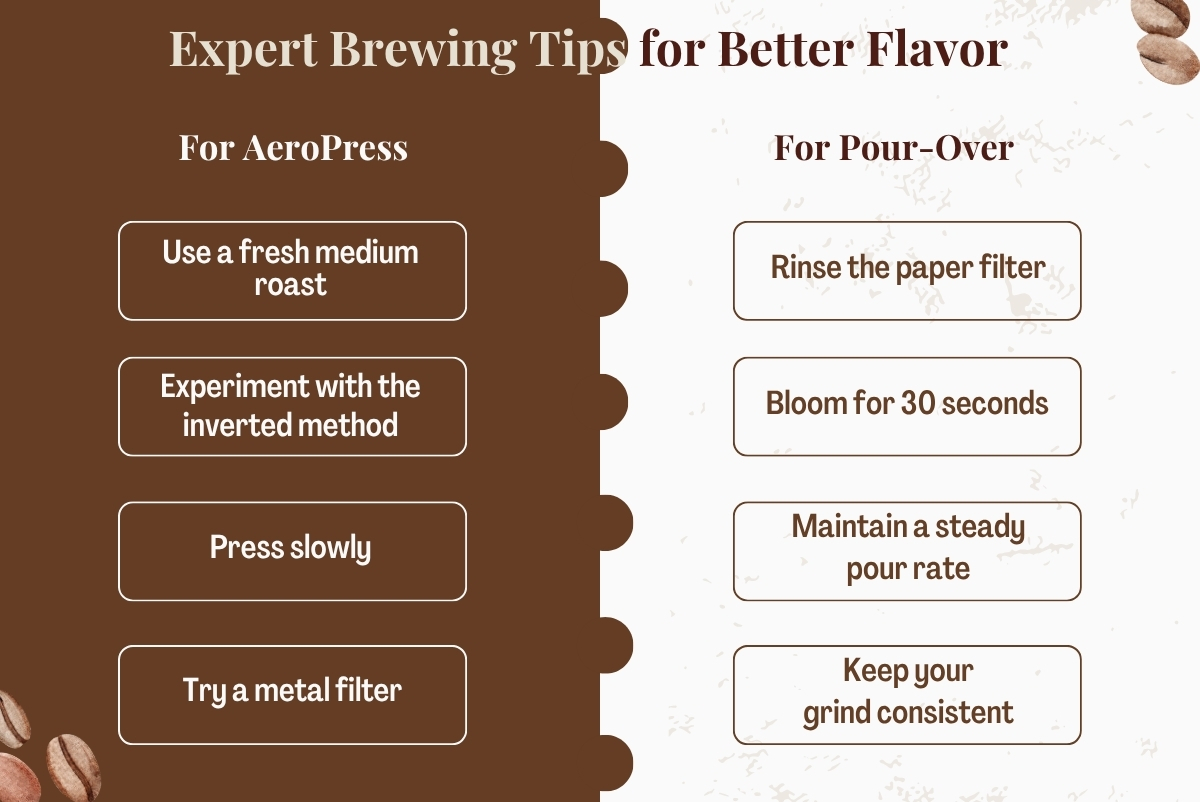
Use a fresh medium roast. The natural oils enhance the body.
Experiment with the inverted method. It allows longer steeping for a more balanced flavor.
Press slowly. Gentle pressure extracts sweetness without bitterness.
Try a metal filter. It increases oils and produces a richer mouthfeel.
Rinse the paper filter. It removes papery taste and preheats the dripper.
Bloom for 30 seconds. Add a small amount of water first to release CO₂ and enhance even extraction.
Maintain a steady pour rate. Pour in concentric circles for even saturation.
Keep your grind consistent. Uneven grind leads to uneven extraction and flavor imbalance.
Pro Tip: Always use filtered water around 200°F (93°C). It’s one of the easiest ways to improve flavor clarity and consistency in any brew method.
Suggested Read: How to Set Up Your Pour-Over Coffee Station
Choosing between AeroPress and Pour-Over ultimately comes down to what you value most in your cup. AeroPress delivers a bold, full-bodied brew with minimal setup and quick cleanup, making it perfect for everyday convenience or travel. Pour-Over offers precision and clarity, rewarding patience with a bright, nuanced flavor profile that highlights every note of your beans.
Both methods share one goal: bringing out the best in your coffee. With the right technique, grind, and water control, you can craft café-quality results right at home.
For brewers who want to perfect their manual brewing setup, explore Pro Coffee Gear’s collection of professional tools, filters, grinders, and accessories. With expert-grade equipment and field-tested recommendations, you can refine your process, control every variable, and enjoy exceptional flavor in every pour.
It depends. AeroPress is fuller and richer; Pour-Over is cleaner and brighter. Choose based on whether you prefer depth or clarity.
Not exactly. AeroPress uses immersion and pressure, but you can mimic Pour-Over by using a coarser grind, shorter steep time, and a gentle press.
It can over-extract if steeped too long and produces smaller cups. Still, it's one of the most versatile and consistent manual brewers.
Yes. Use a medium-coarse grind, cooler water, short steep, and a slow press. This yields a cleaner, more tea-like cup.
Yes. AeroPress brews are more concentrated, with slightly higher caffeine and heavier body.
Pour-Over. It highlights acidity and delicate flavors that immersion-style AeroPress often softens.
AeroPress prefers lower temps (175–195°F) to avoid bitterness. Pour-Over works best hotter (195–205°F) to extract clarity and aromatics.


